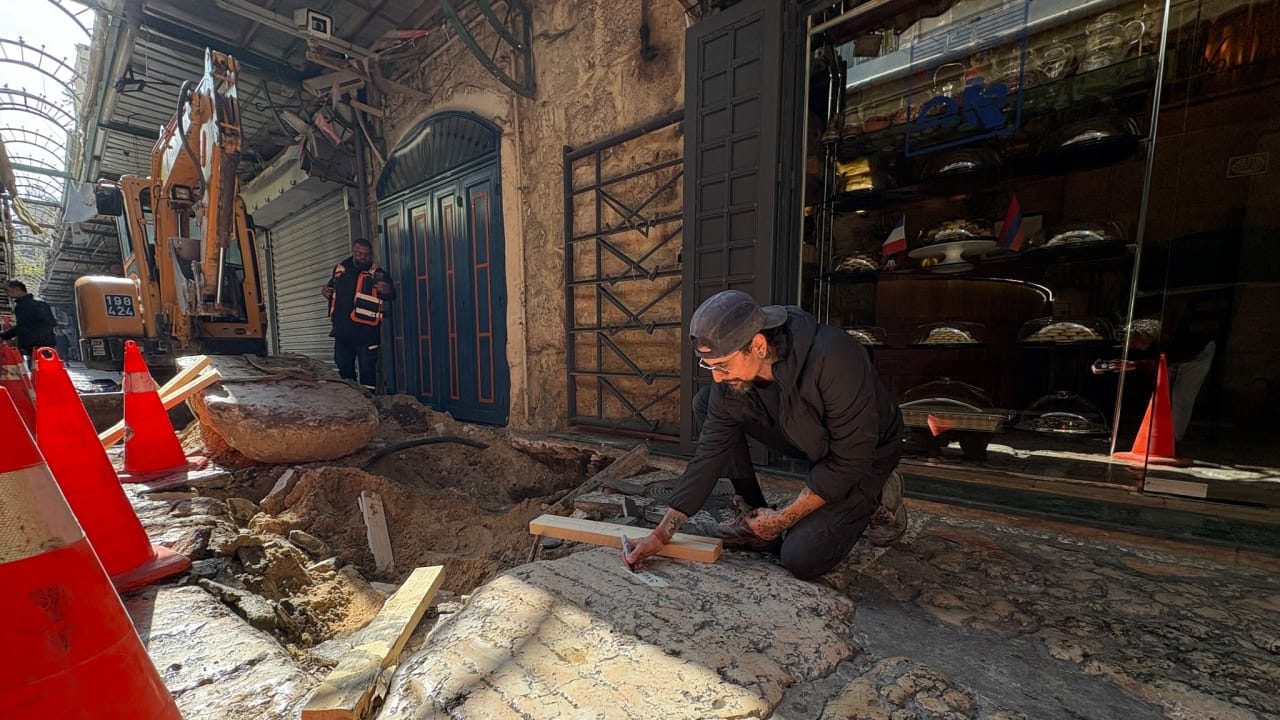
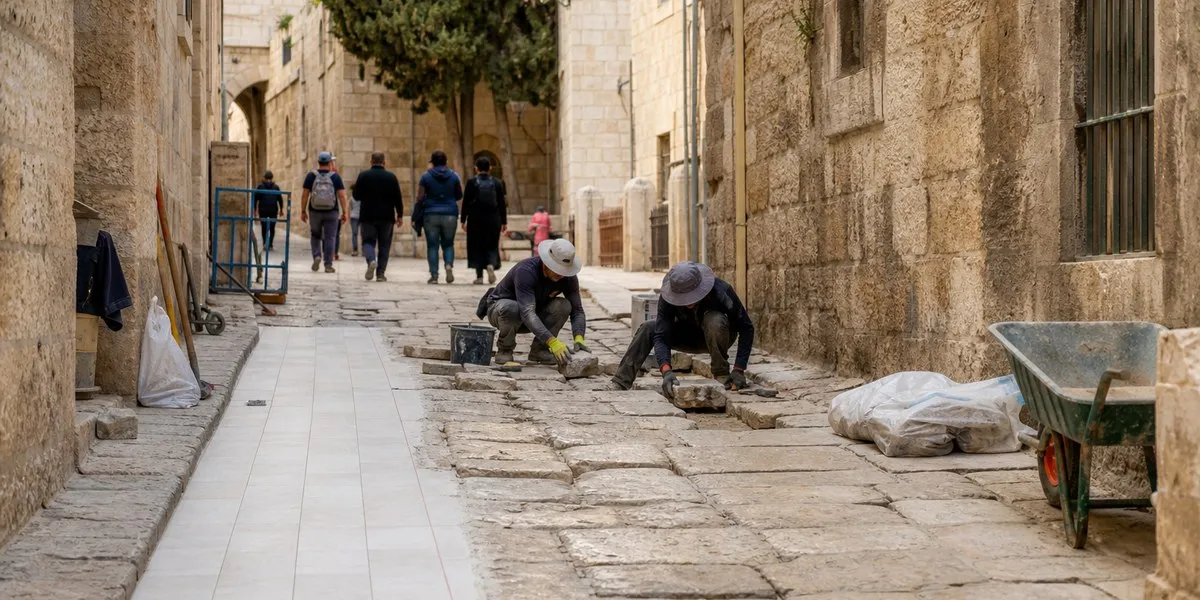
The Jerusalem Municipality and the Jerusalem Affairs Ministry have begun work on Christian Quarter Road, a street whose stones date back to 135 AD, when the city was known under Roman rule as Aelia Capitolina. The project temporarily removes the historic pavement to install a level, accessible lane on the western side of the street, enabling wheelchair users and parents with strollers to navigate the area.
During the construction, paving stones dating back roughly 1,900 years will be dismantled and cataloged by technical teams before the road is reassembled. The Jerusalem Post reported that the work is part of an infrastructure plan planned in 2009 and launched in 2019, coordinated with the Israel Antiquities Authority (IAA) and executed by East Jerusalem Development Ltd. (PAMI).
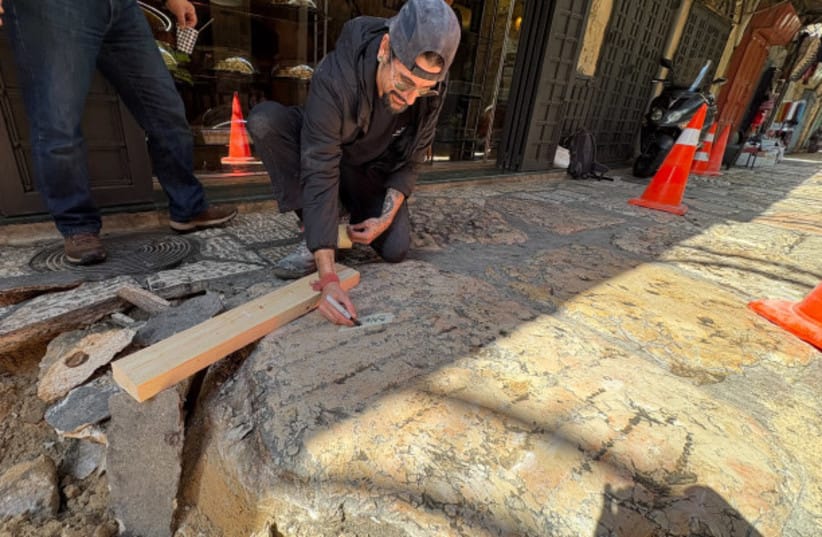
Christian Quarter Road, Jerusalem's Old City. (credit: PAMI)
How will the Roman stones be preserved during construction?
IAA experts mapped 50 Roman-era paving stones along the street. About half were identified as being in a complex conservation state. Following guidelines established by the antiquities authority, the entire historical section will be dismantled stone by stone.
Each stone is numbered, measured, and documented on site before removal. After evaluation, archaeologists determine which stones will return to the street and which will be placed into storage. The eastern side of the street will retain the original Roman stones, while the western side will receive level paving measuring about 1.5 meters wide.
Work crews are also replacing underground water supply, drainage, and electrical networks beneath the street surface. The project includes restorations to building facades and awnings along the street, matching work completed in other sections of the Old City.
Archaeological interest in Christian Quarter Road dates back decades. In 1977, archaeologists Shlomo Margalit, Doron Chen, and Giora Solar conducted excavations during municipal infrastructure upgrades. At a depth of 60 centimeters below current street level, the team uncovered remains of a Byzantine-era roadway.
That discovery in 1977 revealed the ancient Patriarch's Street, referenced on the 6th-century AD Madaba Map mosaic. At the time, workers raised the Roman and Byzantine stones to modern street level, allowing pedestrians to walk on the historical pavement.
The current adaptation seeks to preserve that historical connection while ensuring access for people with mobility challenges. Psalm 122:2 reflects the enduring experience of believers over the centuries, noting that the feet of pilgrims stand within the gates of Jerusalem.
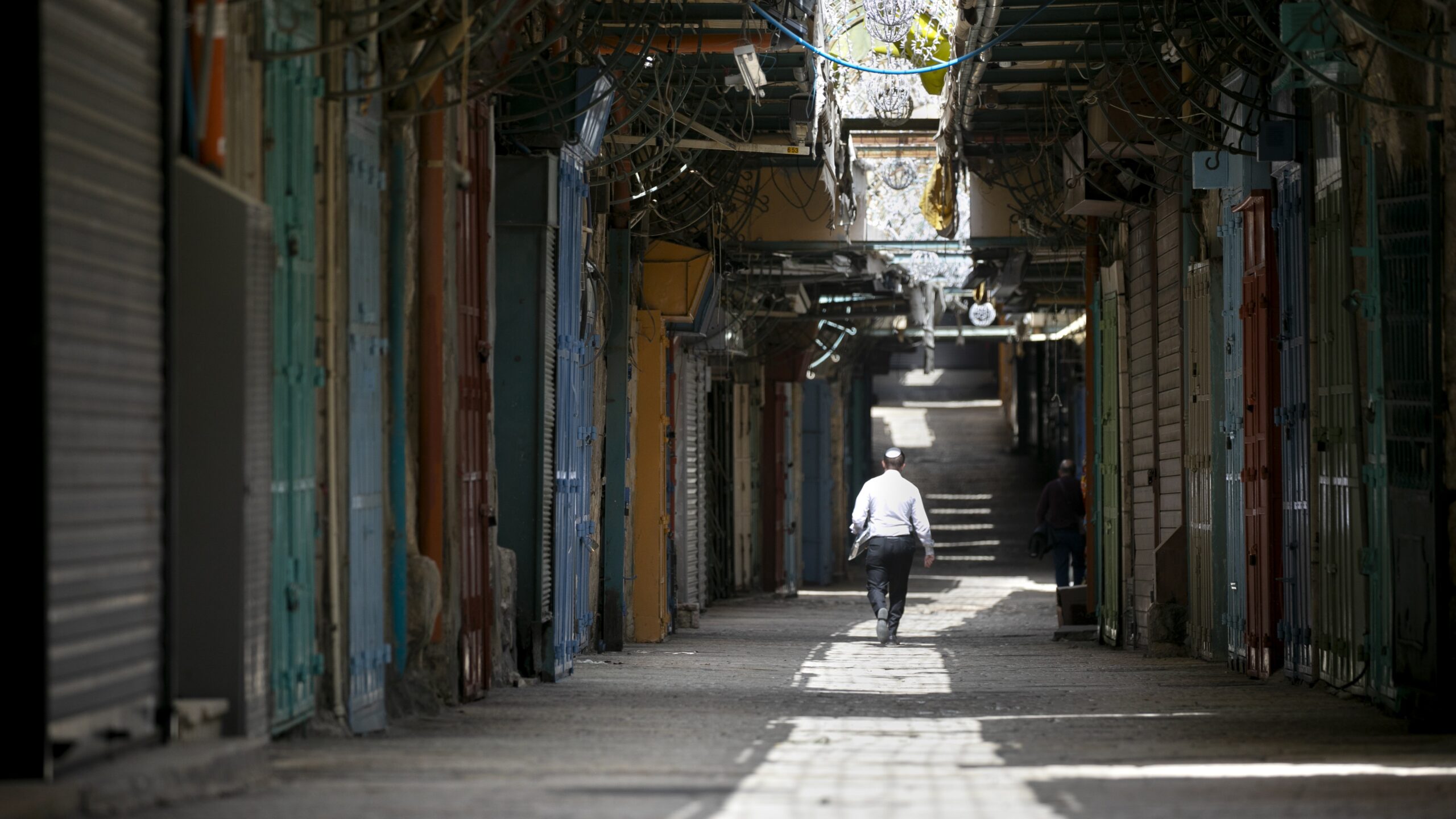
"An alley in the Christian Quarter of the Old City of Jerusalem. Symbolic image: Olivier Fitoussi/Flash90" Photo: Israel Today
Adaptation of six kilometers of historical alleyways
The work on Christian Quarter Road represents a new phase of the urban accessibility program inside the historic city walls. Israel Today reported that about six kilometers of Old City alleyways have already been adapted for accessible movement, covering primary routes used by pilgrims and tourists.
Completed sections include Chain Street, David Street, and portions of the Via Dolorosa. According to project data, the total investment in the accessibility project has reached 80 million shekels.
Jerusalem Affairs Ministry CEO Shimon Elbaum told The Jerusalem Post that the ministry's goal is to make the capital accessible to visitors with disabilities while protecting ancient structures. Mayor Moshe Lion stated that preserving heritage must accompany equal access for all residents and visitors.
The Herald covers what almost no one else does: the persecuted church, the discovery that confirms the Bible, the faith that never makes the evening news. No subscription, no paywall, no outside advertisers. If this story mattered to you, help the next one get written.
The accessibility project on Christian Quarter Road will split the street between original Roman stones on the eastern side and smooth paving on the western side.
Israel Antiquities Authority experts mapped 50 ancient stones for individual documentation and conservation.
The Old City infrastructure program has adapted six kilometers of lanes using an accumulated 80 million shekel budget.
What we don't know yet
The exact number of Roman stones that will be returned to the pavement after evaluation by the Israel Antiquities Authority.
The exact completion date for the construction and infrastructure work on Christian Quarter Road.