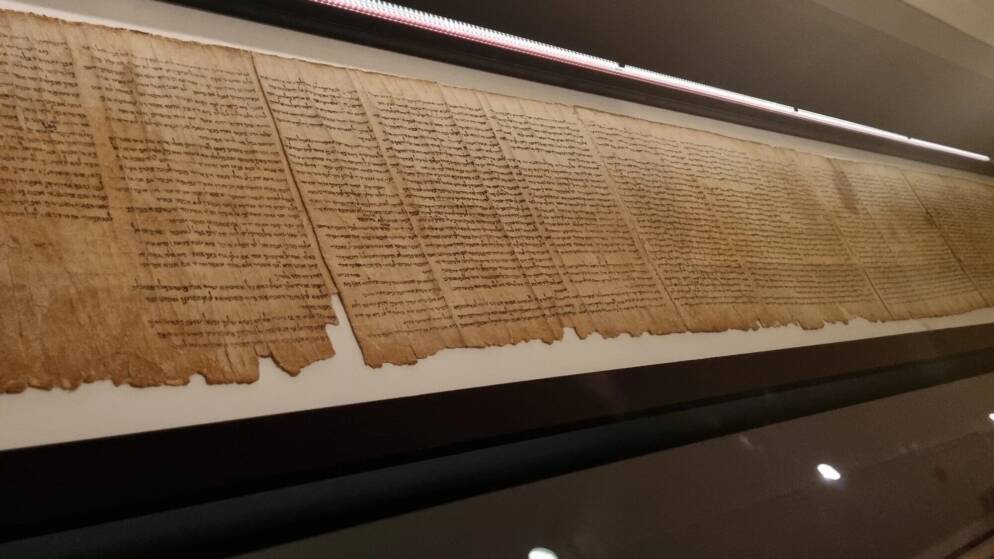
For the first time since 1968, the Israel Museum in Jerusalem has placed the complete Great Isaiah Scroll on public display, exposing the entire 24-foot parchment manuscript dated to approximately 125 BC. Containing all 66 chapters of the Book of Isaiah in Hebrew, the document will remain fully unrolled for four months in the "A Voice from the Desert" exhibition marking the museum's 60th anniversary.
Because ancient parchment degrades under light and humidity, admission to the Scroll Gallery is restricted to 25 visitors at a time for 10-minute viewings. Designated 1QIsaa, the original scroll is normally kept in climate-controlled vaults beneath the Shrine of the Book, while a replica occupies the central display dome.
"This is the only complete biblical manuscript ever found so far," curator Hagit Moaz said following a media preview. The manuscript is considered the crown jewel of the Dead Sea Scrolls recovered from caves near Qumran since 1947.
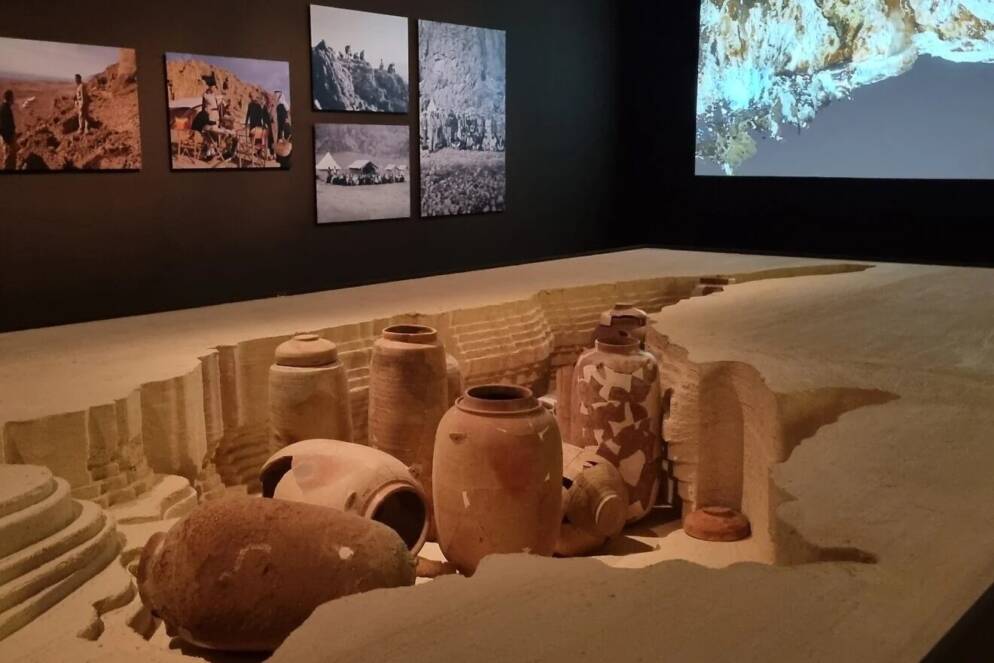
The story began in early 1947 when a young Bedouin shepherd searched for a stray goat among the limestone cliffs above the Dead Sea. Entering a natural cave, he discovered sealed ceramic jars containing parchment scrolls wrapped in linen sheets.
That initial finding prompted years of systematic exploration, resulting in the recovery of more than 900 manuscripts across 11 caves. The Great Isaiah Scroll stands out among the fragments because its 17 stitched parchment sheets remain fully intact, stretching more than 734 centimeters with minimal margin damage.
Radiocarbon dating and paleographic study confirm that the scroll was copied in the second century BC, around 125 BC. Prior to the Qumran discoveries, the oldest complete Hebrew biblical manuscripts dated to the 10th century AD from the medieval Masoretic tradition. The discovery closed a 1,000-year gap in the recorded history of the Old Testament text.
Textual Comparison Shows Up to 98 Percent Accuracy
Analyzing the manuscript's 54 columns of Hebrew script allowed scholars to compare second-century BC readings with medieval copies. Professor Noam Mizrachi of Hebrew University's Orion Center noted that the ancient scroll overwhelmingly matches the Hebrew version used today.
Textual analysis reveals that the Great Isaiah Scroll is 95 to 98 percent identical to the Masoretic Text found in modern Bibles. Differences consist primarily of minor spelling variations, grammatical shifts, and scribal corrections added in the margins.
High-resolution imaging and artificial intelligence handwriting analysis indicate that at least two scribes participated in copying or correcting the manuscript in antiquity. Researchers found no significant theological additions or deletions compared to the traditional biblical text.
How Was the Scroll Used Before Storage?
Scholars connect the preservation of the Qumran manuscripts to a Jewish community of the late Second Temple period, widely identified with the Essenes. The group emphasized prophetic passages regarding divine judgment, redemption, and end-times restoration.
Wear marks and marginal notations show that the scroll remained in active use for several decades before storage in the cave jars. The text includes prominent prophetic passages, such as the vision of nations beating "their swords into plowshares" (Isaiah 2:4) and the call to "Comfort, O comfort My people" in Isaiah 40:1.
Isaiah remains one of the most cited Old Testament books in the New Testament. Following the four-month exhibition, the manuscript will return to dark, climate-controlled storage to prevent further degradation.
The Herald covers what almost no one else does: the persecuted church, the discovery that confirms the Bible, the faith that never makes the evening news. No subscription, no paywall, no outside advertisers. If this story mattered to you, help the next one get written.