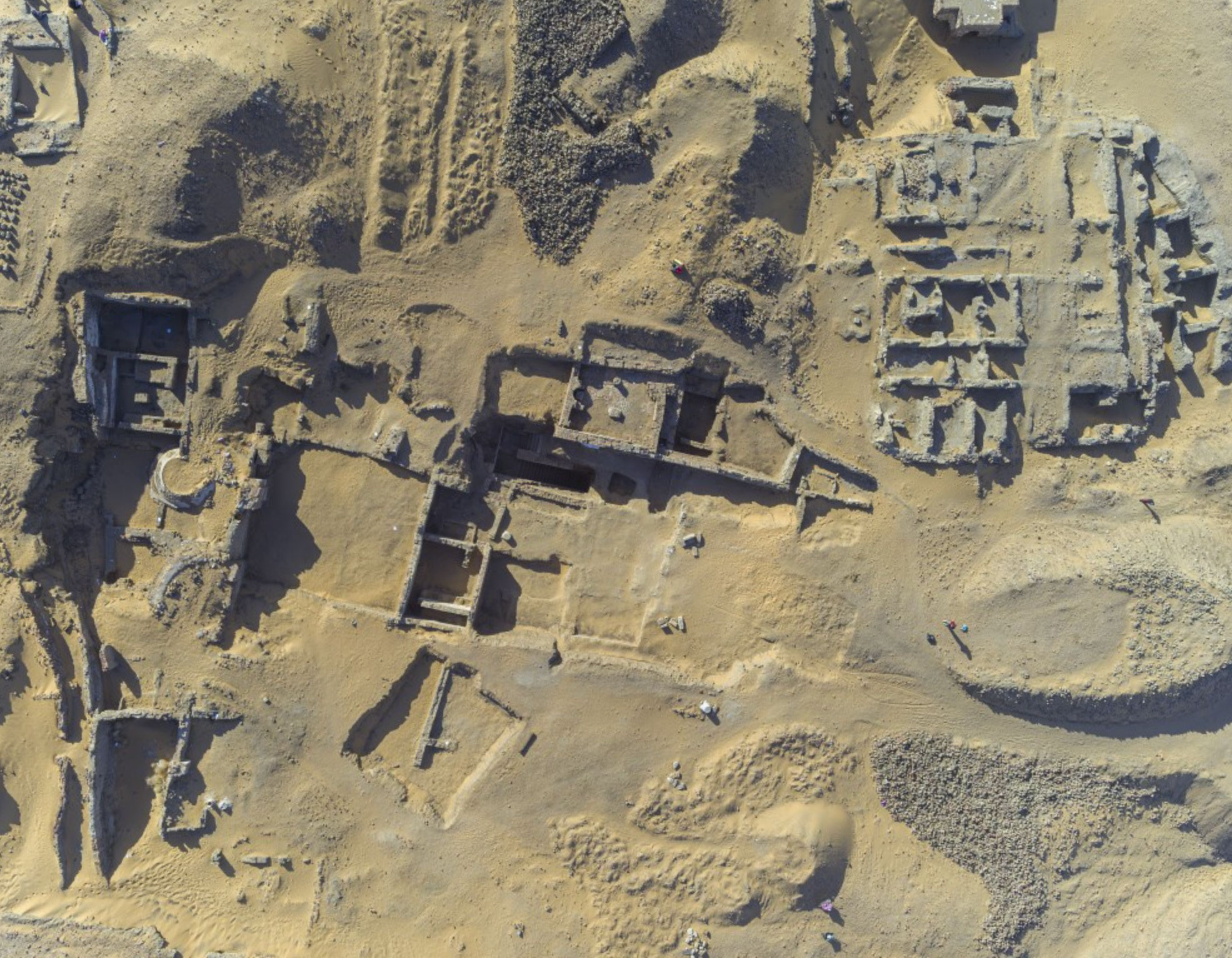
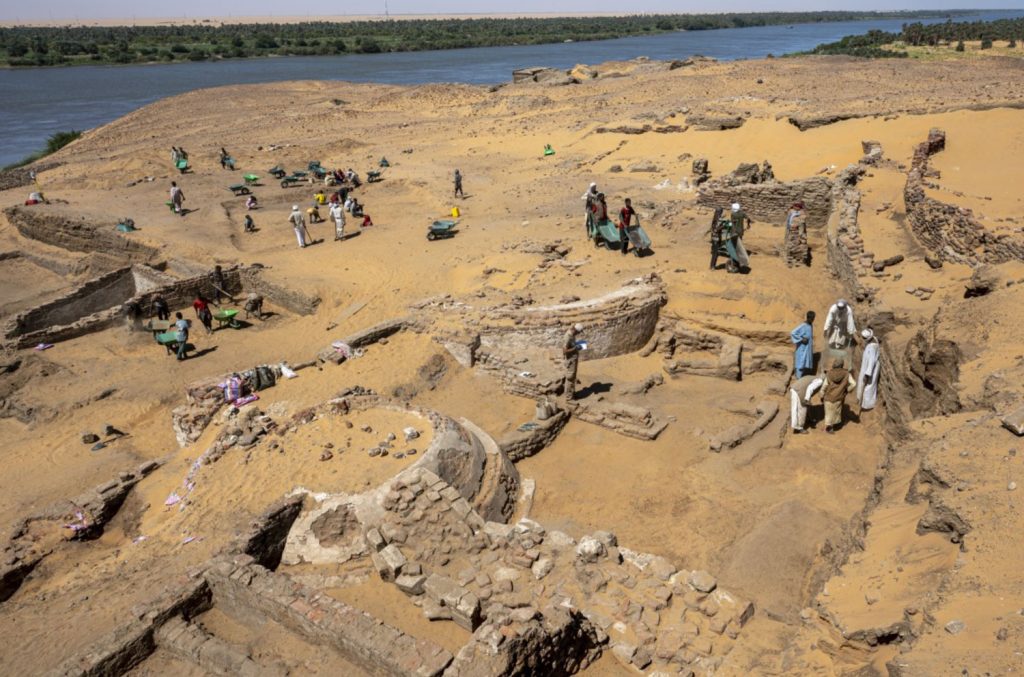
Researchers working at the ancient urban site of Old Dongola in northern Sudan have uncovered the first preserved section of the original floor of the Great Church of Jesus. The structure is recognized as the largest medieval cathedral in the ancient kingdom of Nubia and one of the most prominent religious buildings in sub-Saharan Africa.
The archaeological mission is conducted jointly by the Polish Centre of Mediterranean Archaeology at the University of Warsaw and Sudan's National Corporation for Antiquities and Museums. The team exposed the brick and stone pavement where the local Christian community gathered between the sixth and fourteenth centuries AD, a period of flourishing Christian faith in the region.
Church domes during excavation, Old Dongola, Sudan
The size of the region's largest Christian structure
The Great Church of Jesus dominated the skyline of the ancient metropolis of Old Dongola, which served as the capital of Makuria. The cathedral measured measuring 154 feet wide and 187 feet long, standing over six stories high at its original apex. The dimensions demonstrate unprecedented scale for ecclesiastical architecture in medieval Nubia.
In addition to the floor where medieval worshippers once walked, archaeologists uncovered the base of a vast staircase leading into the sanctuary. The structural remains show how the building's entrance was designed to project prominence across the urban landscape of the Nile River valley.
Why was the cathedral of Old Dongola so important?
Old Dongola served as the political and religious center of Makuria, one of the Christian states established along the Nile. Historians indicate that the cathedral was likely the seat of the Bishop of Dongola, one of the most senior Christian figures in medieval sub-Saharan Africa during the Middle Ages.
The presence of Christianity in northeastern Africa connects to early historical accounts, including the biblical record of the Ethiopian official baptized by Philip in Acts 8:27. As a state power, the kingdom of Makuria officially converted to Christianity in the sixth century AD, preserving its own episcopal traditions and liturgy for centuries.
The expedition director from the University of Warsaw, Artur Obłuski, highlighted the architectural influence of the cathedral on contemporary structures across the region. In statements reported by scientific media, Obłuski compared the cathedral's influence to that of Hagia Sophia in Constantinople, modern-day Istanbul.
According to Obłuski, landmark buildings of this scale set construction and aesthetic standards that smaller communities replicated throughout the Nile valley. The Great Church of Jesus acted as a trendsetter for Nubian church architecture, establishing an African building tradition within medieval Christianity.
Conservation and documentation work at Old Dongola continues, focusing on protecting mud-brick walls and decorative elements uncovered during current digs, as reported by Archaeology Magazine.
The Herald covers what almost no one else does: the persecuted church, the discovery that confirms the Bible, the faith that never makes the evening news. No subscription, no paywall, no outside advertisers. If this story mattered to you, help the next one get written.