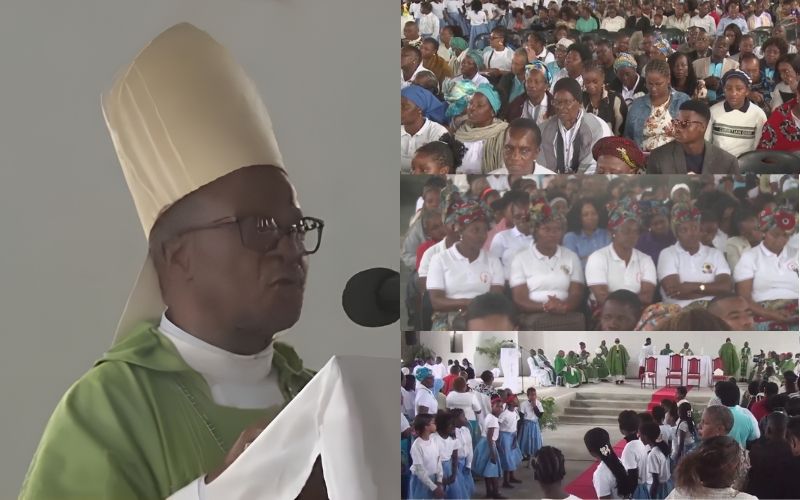
The President of the Episcopal Conference of Mozambique (CEM) delivered a public address highlighting worsening conflicts and social breakdown in parts of the nation. Archbishop Inácio Saúre denounced rising crime and armed violence in Cabo Delgado province during his sermon at Mass on Sunday, November 8, at Holy Guardian Angels Matola Parish in the Archdiocese of Maputo, according to news outlet ACI Africa.
During the service, the Archbishop of Nampula expressed concern regarding declining living standards and the direct impact of suffering on the faithful. The religious leader cited mysterious kidnappings in cities and a systematic rise in violence as factors driving widespread fear. According to the archbishop, the primary danger for Christians is not falling asleep while waiting for the Lord, but allowing hope to become anesthetized in the face of adversity.
Escalating violence in the country has struck Catholic Church leadership directly in recent months. In June, Bishop Osório Citora Afonso of Quelimane Diocese was brutally murdered, and the crime remains unsolved to this day, as Archbishop Saúre recalled to the congregation of priests and lay faithful gathered in Matola.
The episcopal conference president described the bishop's death as a barbaric act that remains an enigma to authorities. The lack of answers regarding the circumstances of the murder keeps the Christian community on high alert, particularly those serving in pastoral ministry across areas affected by regional tensions and persistent insecurity.
Why is Cabo Delgado province facing severe crisis?
The situation in northern Mozambique continues to be the primary point of instability across the national territory. Cabo Delgado province faces extreme violence marked by killings, kidnappings, and political and religious intolerance that have forced thousands of families from their homes, while disrupting pastoral and community work in several towns.
Alongside armed conflict in the north, mysterious abductions in urban areas have reinforced concerns about the fragility of public safety institutions. The Catholic leader stressed that these combined factors generate widespread disillusionment affecting lay believers, priests, and consecrated religious throughout Mozambique.
Deteriorating safety conditions are occurring alongside a severe economic downturn affecting national infrastructure. The multidimensional structural poverty index and fuel shortages have brought commercial activities and essential services to a standstill in several provinces, deepening despair among local residents.
Reflecting on these uncertainties, the Catholic leader linked Christian vigilance to the biblical passage of Matthew 25:1-13 regarding burning lamps and the duty to maintain spiritual readiness. Recalling a reflection from a recent bishops' retreat, Archbishop Saúre stated that darkness is not overcome by cries of revolt, but by lighting a candle of faith to illuminate the path forward.
In his concluding remarks, Archbishop Saúre called on the Church to directly support families victimized by violence and extreme poverty across Mozambique. The archbishop emphasized that the presence of Christ must be recognized in the faces of those disfigured by suffering and loss of hope, calling on the community to overcome isolation and practice brotherly care.
The Herald covers what almost no one else does: the persecuted church, the discovery that confirms the Bible, the faith that never makes the evening news. No subscription, no paywall, no outside advertisers. If this story mattered to you, help the next one get written.