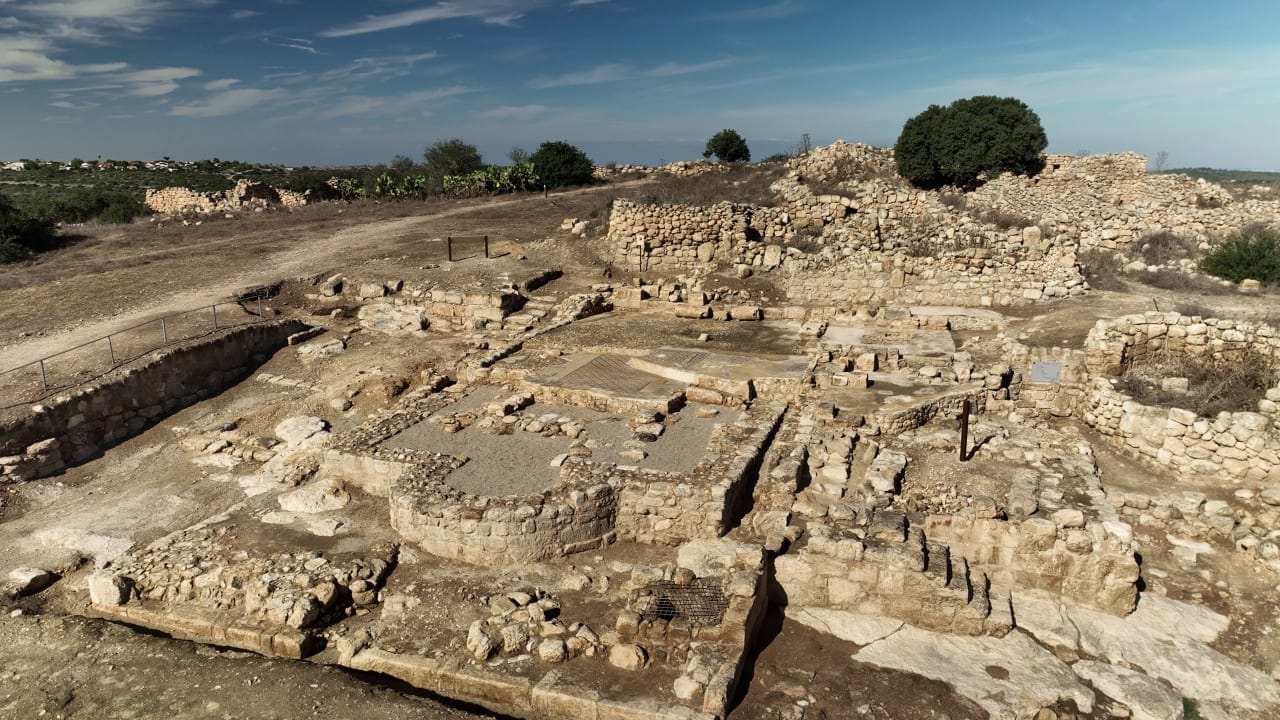
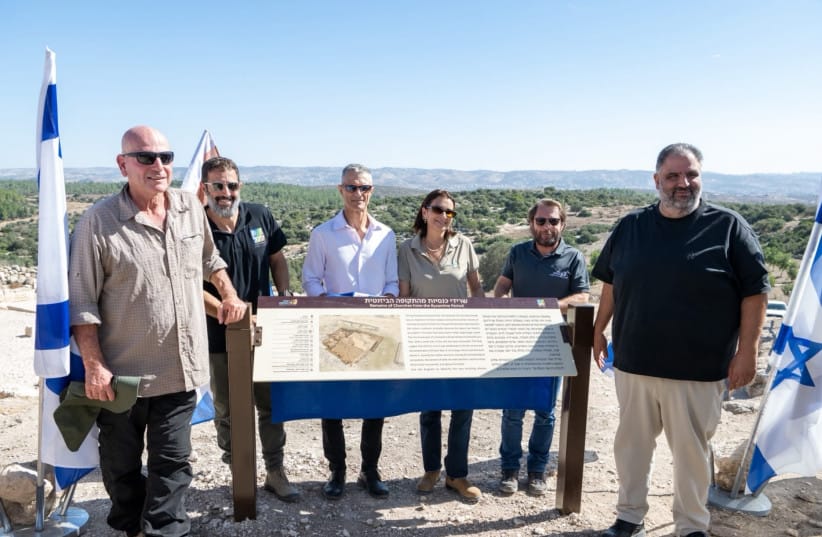
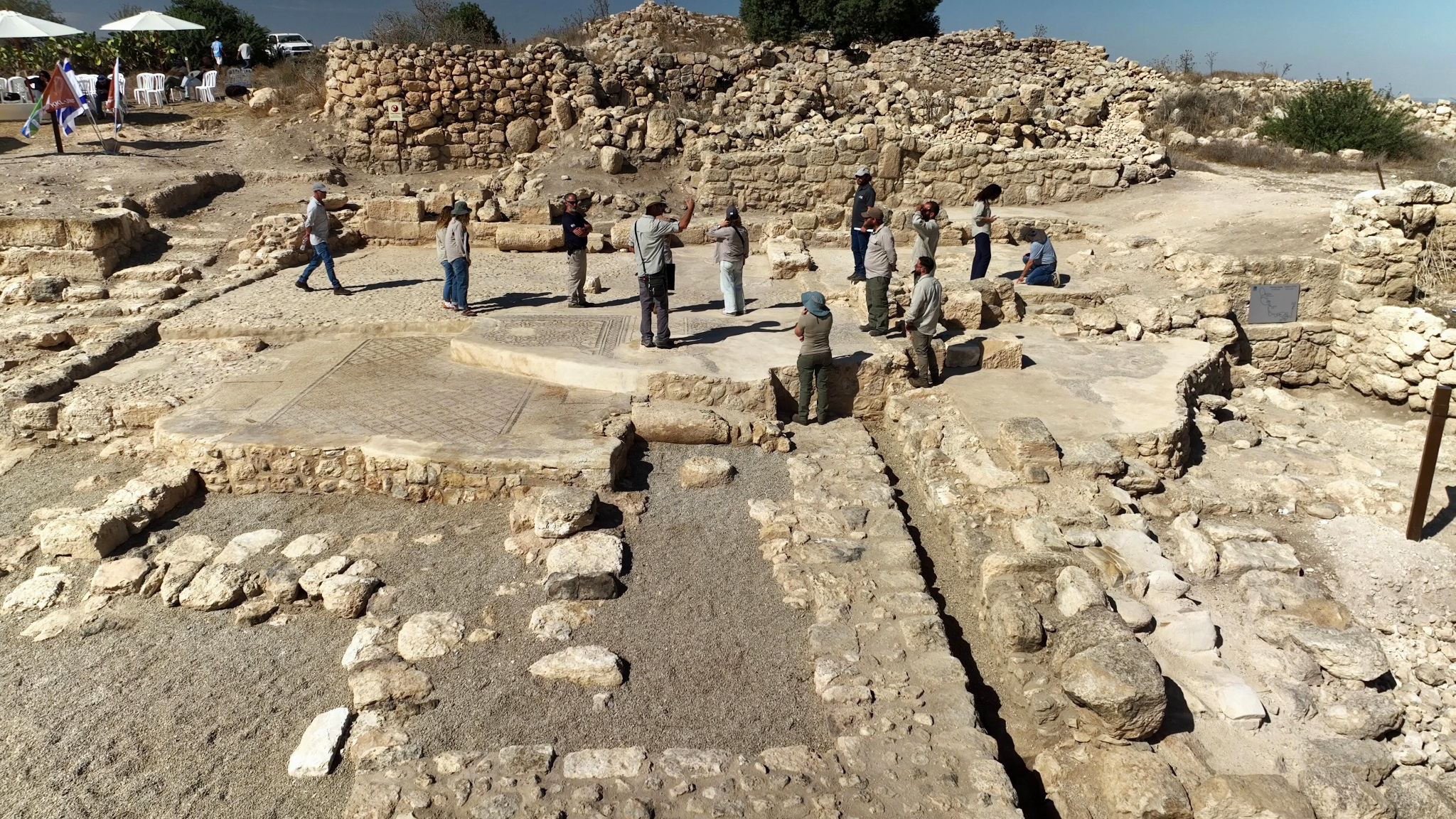
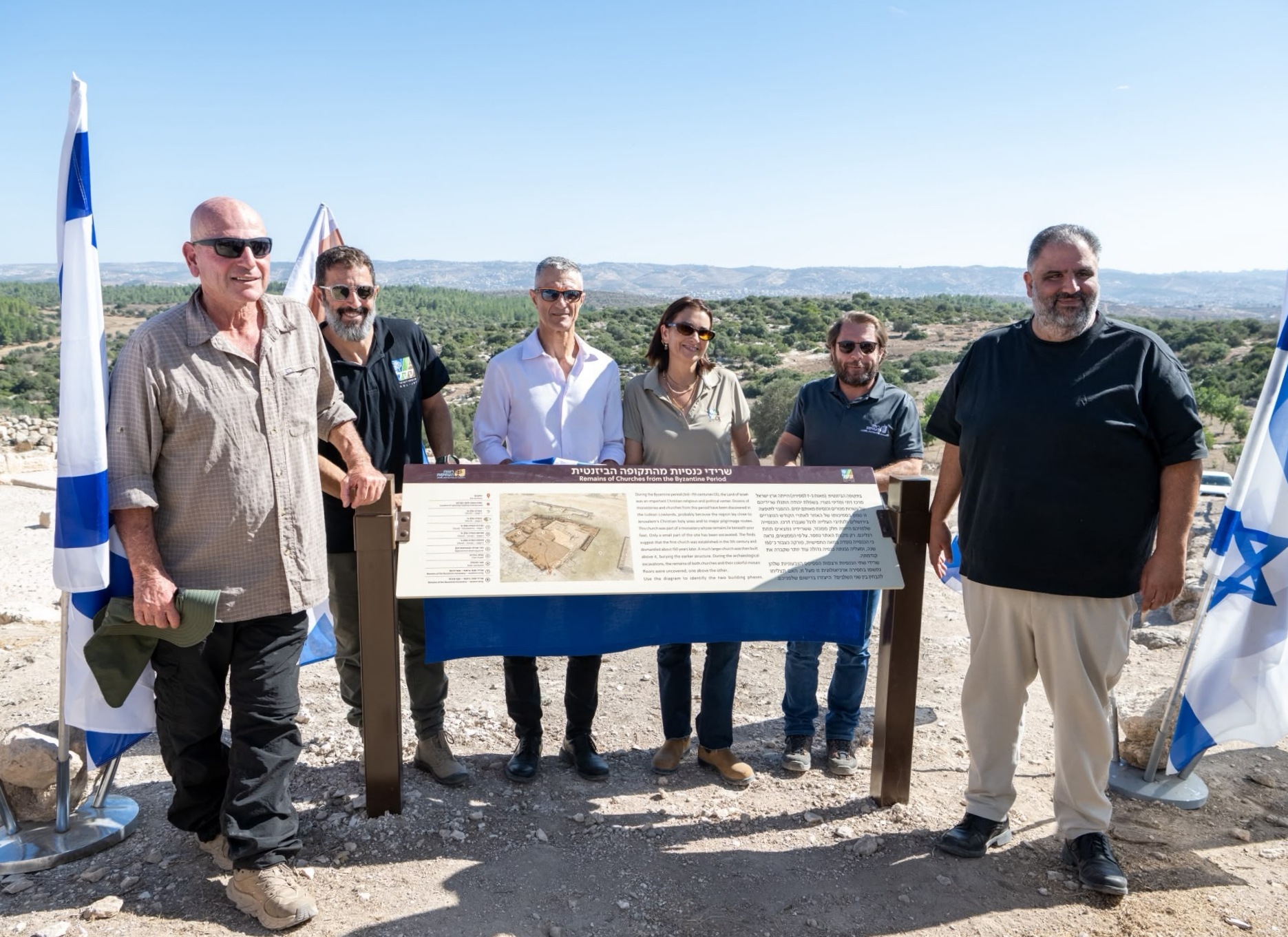
An archaeological complex featuring underground hiding networks hewn into the bedrock for Jewish rebels and a Byzantine-era church decorated with colorful mosaics opened to the public at Adullam–France Park, in the Judean Foothills near Beit Shemesh. The inauguration ceremony was held jointly by Keren Kayemeth LeIsrael–Jewish National Fund (KKL-JNF), the Israel Antiquities Authority (IAA), and the Mateh Yehuda Regional Council following extensive excavation and conservation work.
Previous excavations conducted by IAA archaeologists Dr. Amir Ganor, Alon Klein, and Dr. Peter Gendelman revealed evidence of continuous human settlement from the Second Temple period through Ottoman times. Researchers propose that the Second Temple village corresponds to the village of Caphar Bish, described by historian Flavius Josephus in the first century AD in his chronicles of the Jewish War.
According to Josephus, Caphar Bish possessed formidable walls, leading Roman troops to anticipate a protracted siege before its inhabitants unexpectedly surrendered. During the Early Roman period, anticipating military conflict with Rome, residents carved extensive networks of underground tunnels and chambers directly into the bedrock.
The settlement suffered heavy destruction when Roman forces put down the revolt. It was destroyed by Roman troops during the Bar Kokhba Revolt, between AD 132 and 136. Pagan populations subsequently settled among the ruins, erecting new structures above ground and carving elaborate burial chambers below.
Centuries later, during the Byzantine period, a magnificent church with colorful mosaic floors and a monastic complex was constructed at the site. Excavators also uncovered extensive agricultural infrastructure surrounding the sanctuary.
Discoveries around the site confirm that local residents engaged in pigeon breeding in columbaria, agriculture, and wine production, evidenced by numerous winepresses carved into the stone. The monastery reflects active Christian communal life in the region during Late Antiquity.
Prior to conservation efforts, the site endured severe damage inflicted by illegal antiquities dealers. Amir Ganor, who directs the IAA Antiquities Theft Prevention Unit, noted in statements carried by The Jerusalem Post that looters broke into burial caves and underground hiding systems over many years, damaging historical structures.
The destruction was halted through enforcement operations, arrests of looting gangs, and the establishment of Adullam Caves Park. Rescue excavations and structural preservation work completed by Israeli authorities stabilized the ruins and opened the subterranean passages safely for visitors.
The Herald covers what almost no one else does: the persecuted church, the discovery that confirms the Bible, the faith that never makes the evening news. No subscription, no paywall, no outside advertisers. If this story mattered to you, help the next one get written.