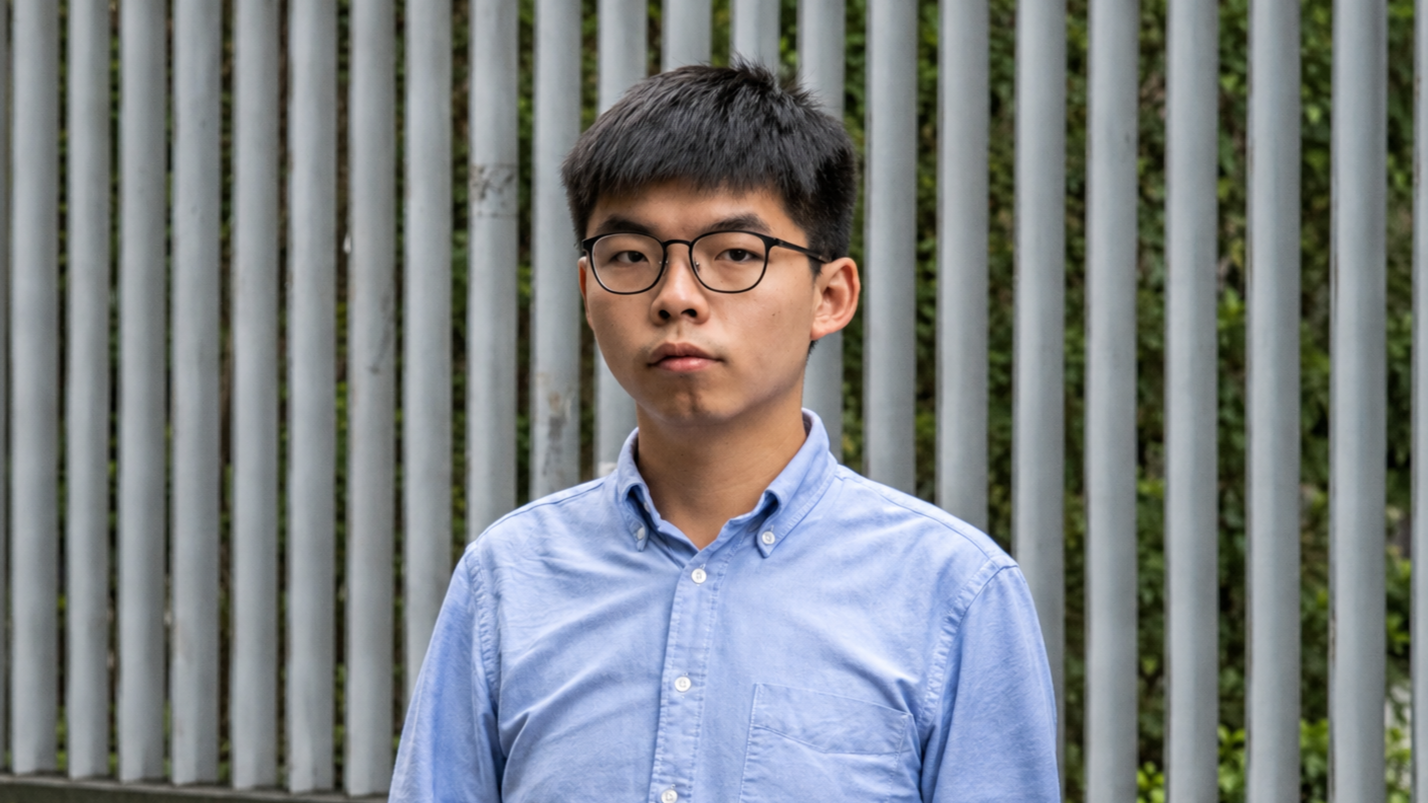
Inside the cells of Stanley Prison, Hong Kong's oldest maximum-security facility, time is measured in read pages, sets of pushups, and memorized passages of Scripture. It was from behind those walls that 30-year-old Christian activist Joshua Wong followed the final proceedings of his trial without being able to walk in freedom. He was just two months and two days away from completing a previous sentence when he heard the High Court's new verdict.
Joshua Wong was sentenced by the Hong Kong High Court to 10 more years in prison for conspiracy to collude with foreign forces. The ruling drastically prolongs the detention of one of the territory's most prominent pro-democracy voices. The new ruling will keep the young Christian activist behind bars until late 2036. He has been held behind bars since November 2020, serving consecutive terms under the strict National Security Law imposed by Beijing.
Inside Stanley maximum security prison, the activist spends his days exercising, studying company law, and reciting passages from the Bible. In private letters sent to friends between August and October, reported by The Guardian, Wong described his strict daily routine, trading books with fellow inmates, and teaching English to a Russian prisoner. When his cellmate asked the meaning of the word 'totalitarian', Wong answered simply by giving the name of Vladimir Putin.
Daily life in maximum security and letters from a cell
In the prison's daily routine, where candy serves as an informal currency among inmates, the young activist works to keep his mind sharp. His reading list includes Nelson Mandela's biography, Russian opposition leader Alexei Navalny's memoir, and economics books. Inspired by Mandela's journey, Wong enrolled in an undergraduate distance-learning course in company law.
The sentence handed down in November stems from charges brought over political advocacy in late 2020. Prosecutors alleged that Wong worked in 2020 to persuade foreign governments to impose sanctions on Chinese and Hong Kong officials. According to the prosecution, he acted alongside exiled activist Nathan Law and other figures to lobby for hostiles measures against the local and central governments.
Judges initially set the penalty at 13 years in prison. However, the sentence was reduced to 10 years after Wong entered a guilty plea in September. The court allowed the remaining two months of his previous sentence from the 'Hong Kong 47' case to run concurrently with the new term, keeping his projected release date in late 2036, as reported by local media and dpa.
From the cover of Time magazine to national security charges
Rising to global prominence during the 2014 Umbrella Movement, the teenager featured on the cover of Time magazine as the face of protest. At just 17 years old, wearing his signature black-rimmed spectacles, he led crowds of students occupying the city's financial district to demand direct elections and political autonomy from Beijing.
In 2019, when mass demonstrations erupted against a proposed extradition bill, Wong was serving a prison term for his involvement in the 2014 rallies. Upon his release, he immediately joined the protests. The political landscape changed dramatically in June 2020 when Beijing enacted the National Security Law, criminalizing acts deemed as subversion, secession, terrorism, and collusion with foreign forces.
Wong was taken into custody in November 2020 and later received a sentence of four years and eight months in the unofficial opposition primary case. This trajectory made him the only pro-democracy figure to be prosecuted and convicted twice under national security legislation.
Called to be salt and light: Scripture in the prison warden’s shadows
Raised in a Christian family, Wong has explained that his faith fundamentally shaped his commitment to social justice. In past interviews, the activist cited Jesus' teachings in the Sermon on the Mount in Matthew 5:13-16, emphasizing the duty of Christians to serve as salt and light in society and linking personal faith with civic responsibility.
In his cell, Wong recites passages from the books of Joshua and Corinthians, finding spiritual strength in Scripture. The message of 1 Corinthians 1:27 reinforces his conviction that God chooses the weak things of the world to shame the strong. Likewise, the command in Joshua 1:9 to be strong and courageous remains a constant source of encouragement during his confinement.
Religious freedom advocates emphasize that tightened state control affects not only political dissidents but also religious expression and local church autonomy. The international organization ChinaAid noted that lengthy prison sentences against public figures mirror tactics used by authorities to suppress dissenting voices and constrain faith communities.
A systematic effort to dismantle Hong Kong’s political memory
Since the implementation of the National Security Law, Hong Kong authorities have prosecuted dozens of former lawmakers, journalists, and activists. Independent newsrooms have closed, opposition parties have disbanded, and key political figures have been forced into exile. Authorities have made more than 400 arrests under the National Security Law since Beijing enacted it in June 2020.
In a joint statement released after the sentencing, Freedom House and 39 other non-governmental organizations condemned the court's decision and demanded Wong's immediate release. The coalition warned that his ongoing imprisonment reflects the systematic dismantling of the civil liberties guaranteed to the city during its 1997 handover.
ChinaAid founder Bob Fu stated that legal tactics applied in Hong Kong mirror long-standing practices used in mainland China against political dissidents and unregistered church leaders. The Hong Kong government denies these accusations, maintaining that security legislation is essential to restore stability and public order.
Nobel Peace Prize nominations and a fear of being forgotten
In February 2026, U.S. lawmakers nominated Joshua Wong for the Nobel Peace Prize alongside Christian pastors Wang Yi and Ezra Jin. The joint nomination sought to honor their nonviolent defense of fundamental human rights and freedom of conscience in the face of state pressure.
Childhood friends expressed deep concern over the long-term impact of his ongoing isolation. Frances Hui, a democracy advocate living in exile, noted that authorities waited nearly five years to finalize the second prosecution, ensuring that Wong would remain behind bars just as he approached his scheduled release date.
In the letters he sends to friends, Wong avoids discussing complex legal terms, focusing instead on memory and resilience. Wong’s primary fear in his prison letters is that people around the world will eventually forget Hong Kong. At 30, he remains inside his cell at Stanley Prison, carrying out his daily routine as he faces another decade behind bars.
The Herald covers what almost no one else does: the persecuted church, the discovery that confirms the Bible, the faith that never makes the evening news. No subscription, no paywall, no outside advertisers. If this story mattered to you, help the next one get written.