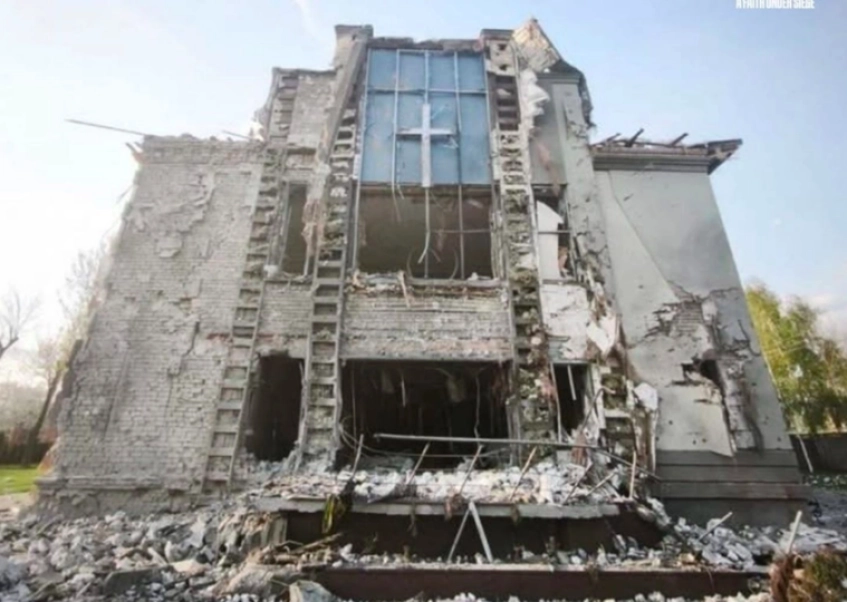
Despite the daily toll of bombardments and forced displacement, evangelical faith has recorded expansion across Ukraine. Data from the Razumkov Centre shows that the percentage of self-identified Protestants and Evangelicals in Ukraine grew from 1.4 percent in 2023 to 2.6 percent in 2025, according to details reported by Christian Today.
This growth is occurring most noticeably in areas near the active combat zones, where local church outreach and ministry have earned public trust. Figures released by Protestant denominations confirm the trend observed by researchers.
The Ukrainian Baptist Union reported that more than 10,000 people were baptized in the first three years since the 2022 invasion by Russian forces. The group's report also highlights the establishment of 86 new churches during the same period, despite severe wartime conditions.
Other denominations report a steady stream of new members. The Ukrainian Christian Evangelical Church reported 4,618 baptisms in 2023 alone, noting that interest in church activities grew particularly in combat-affected regions.
The pattern recalls Acts 8:4, which describes how early Christians dispersed by hardship carried the gospel wherever they went. In Ukraine, local church response to basic human needs under bombardment became a primary connection point with the surrounding population.
Public perception of churches in frontline regions was directly shaped by how believers conducted themselves during times of occupation and liberation. Aid distribution, shelter, and active support brought neighbors closer to the Christian faith.
Researchers examining the phenomenon identified wartime pastoral leadership as a critical factor in sustaining congregations. In these environments, a pastor's primary requirement is not sermon eloquence or financial management, but a willingness to walk alongside the congregation and share in their dangers.
When resources are scarce and threat levels high, decisions made by local pastors carry immediate weight regarding member safety. One participant in the research stressed that pastoral work remained focused on caring directly for individuals.
"Christ did not die for the church's programs... He died for people," one respondent noted. He added that when people realize they are the priority rather than a means to an end, they stay in the congregation and invite friends.
Discipleship and shared ministry
Beyond pastoral presence, the ability of local churches to function in a decentralized manner proved vital. The study indicated that churches with strong discipleship continued operating even after losing their figureheads through mobilization, displacement, or casualties.
Delegation and team-based ministry enabled services, Bible studies, and humanitarian assistance to persist. This resilient model prevented the closure of local communities across cities deeply impacted by the conflict.
The expansion of Protestantism in Ukraine reflects an ongoing movement as hostilities continue, with local congregations serving as enduring centers of care and spiritual ministry in the country's most vulnerable areas.
The Herald covers what almost no one else does: the persecuted church, the discovery that confirms the Bible, the faith that never makes the evening news. No subscription, no paywall, no outside advertisers. If this story mattered to you, help the next one get written.