Egyptian Coptic deacon Milad Malak, 20, traveled to Libya on September 2 searching for work to support his family. One month later, he was captured in the coastal city of Zliten by armed men linked to an Islamic State cell. While the two Muslim friends accompanying him were freed after ransom payments, Malak was held in captivity, tortured for days, and executed for refusing to abandon his Christian faith.
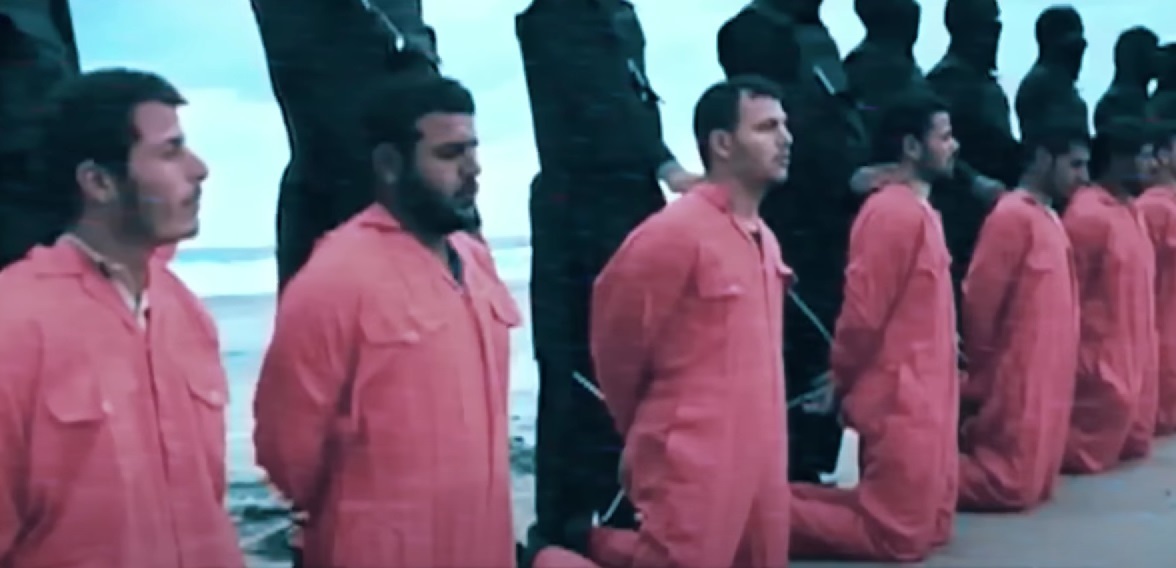
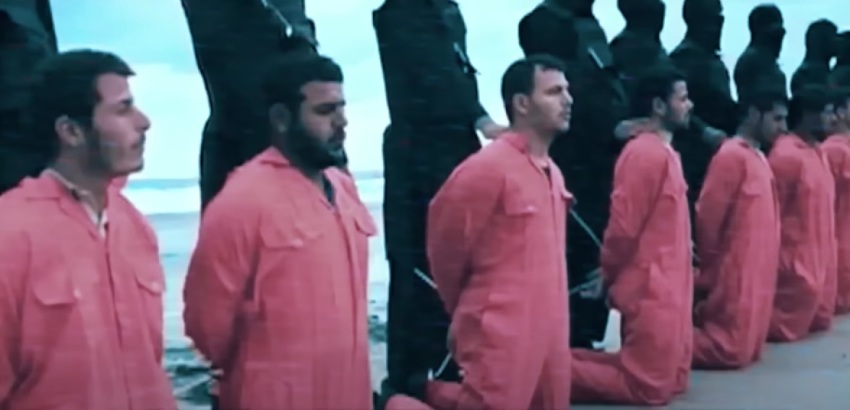
A screengrab from a video of the Feb. 15, 2015 execution of 21 Coptic Orthodox Christians in Libya by Islamic State terrorists. | Screengrab: YouTube/RightWingCondor Photo: christianpost.com
The young man's family, living in the village of Sebarbay in Egypt's Gharbia governorate, paid a ransom of $4,700 demanded by the kidnappers. However, the payment did not secure his release. According to accounts shared by survivors and published by advocacy groups such as Open Doors and International Christian Concern, the militants isolated Malak because he was the only Christian in the group.
His sister, Madonna Malek, told Worthy News that the kidnappers used severe physical abuse to force him to convert to Islam. “Even if you cut me into pieces, I would never renounce my faith,” the young man told the armed captors during torture sessions, according to co-workers who witnessed the abuse.
The abduction in Zliten and ransom demands
Milad Malak served as a deacon at a Coptic Orthodox church in the Nile Delta. Facing economic downturn in Egypt, he decided to seek work in construction in Libya, a common destination for Egyptian laborers for decades. He traveled with two Muslim friends from his hometown and stayed in Zliten, on Libya's Mediterranean coast.
On the morning of October 4, militants raided the residence where the group stayed. The kidnappers demanded ransom money from the families of all three workers. On October 6, Malak's family received a message confirming he was being tortured. The families of the two Muslim friends paid the requested ransom of $4,700 each, and both were released. Upon returning to Egypt, they entered a hospital for medical treatment and recounted the deacon's final days.
Captivity ended in the young man's execution after militants realized he would not yield to pressure. Malak's mother, Maryam Fawzi, publicly appealed to Egyptian authorities to help retrieve her son's remains. The young man's body was returned to his family weeks later for burial.
What is the danger for Christians in Libya?
Malak's murder highlights the extreme vulnerability of the Christian minority in Libya. Since the fall of Muammar Gaddafi's regime in 2011, the country has remained split between rival governments, allowing extremist militias and criminal gangs to operate freely.
While Egypt has approximately 10.2 million Christians (8.8 percent of its population), Libya has only about 36,300 believers, representing 0.5 percent of inhabitants. Libya ranks 9th on the World Watch List produced by Open Doors. Christians there face kidnappings, forced labor, and targeted executions by radical Islamic cells.
The crime echoes the execution in February 2015, when Islamic State militants beheaded 21 Christians—20 Egyptian Copts and one Ghanaian, Matthew Ayariga—on a Libyan beach. On that occasion, the workers also refused to deny their faith before being killed on camera. The Coptic Orthodox Church declared the 21 men martyrs, and in 2023 Pope Francis added them to the Roman Catholic Church's official list of martyrs.
Funeral in the Nile Delta
On October 28, hundreds of mourners gathered at the Church of the Archangel Michael in Sebarbay for Milad Malak's funeral. Community leaders and Coptic clergy paid tribute to the young deacon during the religious service.
A family friend and evangelical church worker noted that the young man remained faithful to Christ until his last breath. The deacon's steadfastness recalls the words of Revelation 2:10: "Be faithful unto death, and I will give you the crown of life."
Egyptian authorities have not issued official statements regarding security operations following the return of the body, but the case has heightened concern among Coptic laborers who rely on employment in neighboring Libya.
The Herald covers what almost no one else does: the persecuted church, the discovery that confirms the Bible, the faith that never makes the evening news. No subscription, no paywall, no outside advertisers. If this story mattered to you, help the next one get written.