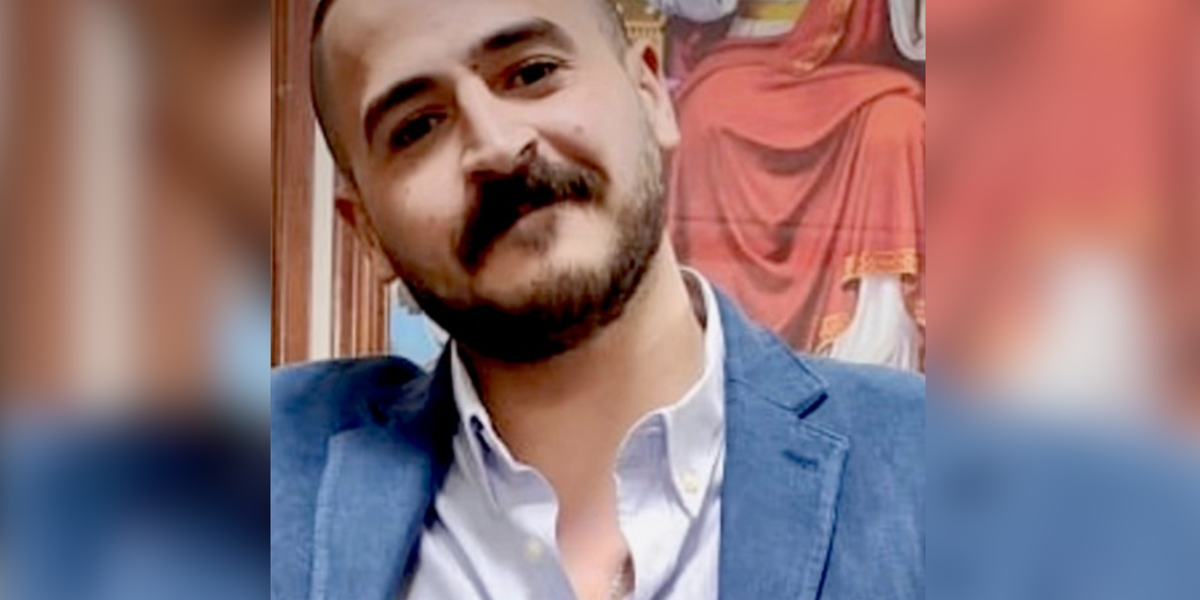
Ex-Muslim faces potential execution in Egypt after refusing to renounce faith in Jesus Christ
Egyptian prosecutors demand maximum penalty against Said Abdelrazek, detained under anti-terrorism laws for attempting to change his legal religious status.
Egyptian citizen Said Mansour Rezk Abdelrazek is being held in a high-security prison in Egypt and faces the possibility of execution. According to his defense attorney, Said Fayez, Egyptian prosecutors are demanding the maximum penalty, which could mean execution or 25 years in prison on charges of insulting Islam, spreading false information, and belonging to an unidentified prohibited terrorist organization.
Abdelrazek's fiancee, Sophia, who holds dual Egyptian and Australian citizenship, revealed in an interview with The Jerusalem Post that he suffered severe physical abuse while in state custody. She reported that Said was held bound to a wall with his arms spread while officers attempted to remove his cross tattoo and brought Islamic clerics to force him to renounce his Christian faith.
Human rights organization Coptic Solidarity states that the terrorism charges manufactured by authorities are false. The group stresses that the criminal prosecution stems directly from Abdelrazek's refusal to deny Jesus Christ.
Raised in a practicing Muslim family, Abdelrazek's first contact with Christianity occurred in 2017 when he read the Sermon on the Mount from an open Bible inside a neighbor's shop. The passage recorded in Matthew 5 initially stirred anger in him, but led him to seek conversations with a store employee who served as a local pastor.
After attending Bible study classes at a Baptist church, Abdelrazek was baptized. Sophia explained that his Muslim upbringing forbade questioning religious doctrine, whereas Christian teachings gave him freedom to seek answers to his questions.
His family reacted swiftly when his conversion became public knowledge. His own mother reported him to the police and removed his first wife and son from their home, fearing other family members might also leave Islam. Police officers interrogated Abdelrazek for hours in an effort to force him back to Islam.
Extradition from Russia and repeated arrests
Abdelrazek was first arrested in 2023 on charges of desecrating the Quran through social media videos, serving one year in prison. Following his release, he traveled to Russia hoping to reach Australia and resettle in a non-Muslim nation.
Despite receiving refugee status recognition from the United Nations High Commissioner for Refugees and a favorable ruling from the Russian Supreme Court, Abdelrazek was deported back to Egypt in 2024, despite having his asylum claim recognized by the UNHCR.
Upon his return under police custody, officers subjected him to renewed abuse before releasing him to his family on the condition that he practice Islam. He refused to perform the required daily prayers. In April 2025, after posting online about his intent to legally change his religious identity documents to register as a Christian, authorities arrested him once again.
Why does Egyptian law block religious conversion?
Egyptian law permits official changes to civil records only when a citizen converts to Islam. The Egyptian state does not legally recognize conversions from Islam to Christianity or any other religion.
Because of this restriction, citizens who leave Islam cannot obtain updated identity cards or amend their legal status. Attempting to publicly register faith in Christ frequently leads to prosecution under blasphemy or national security statutes.
Abdelrazek's legal team noted that defense attorneys have been permitted to visit him only once since his recent arrest. Authorities have prohibited his family and fiancee from sending him food, clothing, or basic necessities.
Hundreds of Christians held under vague charges
Coptic Solidarity warns that Abdelrazek's prosecution represents part of a broader pattern across the nation. The organization recorded that at least 180 other Christians are currently imprisoned in Egypt under charges framed by anti-terrorism laws, including individuals accused of blasphemy and youths detained over internet posts.
Among those detained are Augustinos Samaan, Romany Gharib Adly Azer, and Sherif Wagih Fahmi. Courts process their cases under emergency provisions reserved for national security offenses.
Abdelrazek's trial, scheduled for December, will determine whether he faces a quarter-century in prison or capital punishment. Human rights advocates state that a harsh sentence will set a dangerous precedent for all former Muslims who embrace Christianity in Egypt.
The Herald covers what almost no one else does: the persecuted church, the discovery that confirms the Bible, the faith that never makes the evening news. No subscription, no paywall, no outside advertisers. If this story mattered to you, help the next one get written.