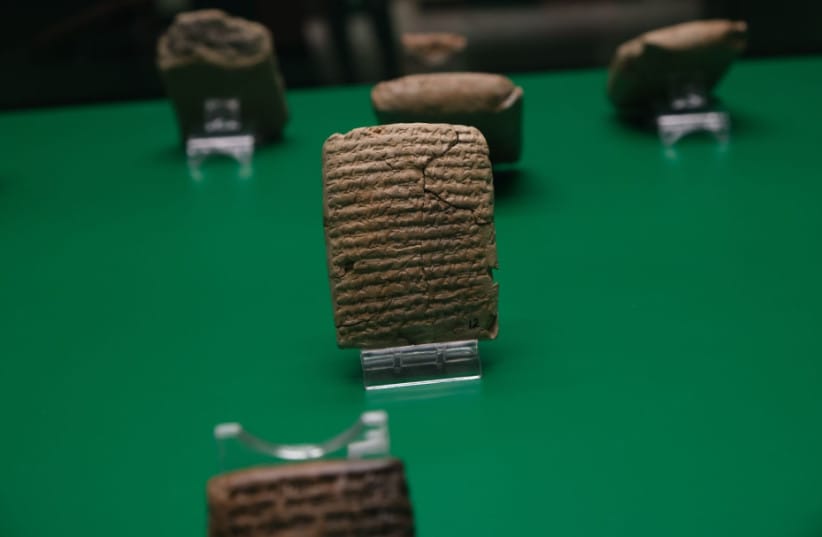
A Florida man agreed to forfeit two ancient Hebrew Torah scrolls and cuneiform tablets up to 5,000 years old seized from his home by federal authorities. Matthew Weinberg, a resident of Miramar Beach, also surrendered $75,000 in proceeds from illegal artifact transactions and was barred from buying or selling foreign antiquities for two years.
The federal investigation began in July 2025 when U.S. Customs and Border Protection officers intercepted a package at Pensacola International Airport arriving from the United Arab Emirates. Shipping documents listed two terracotta objects valued under $200. An official appraisal revealed two cuneiform tablets from Iraq created between 3000 B.C. and 2000 B.C., with a combined value exceeding $15,000.
Following the initial interception, federal investigators identified approximately 117 international shipments linked to Weinberg between September 2024 and March 2026. Out of those packages sent to the United States, about 109 arrived at his address without undergoing detailed customs inspection.
To bypass border controls, shipments carried false declarations and generic descriptions of ancient items sourced from Iraq, Egypt, Iran, and Cyprus. One package contained a medieval Persian ceramic model purchased on eBay for about $2,000 but declared at just $250. The shipment was addressed to Weinberg's grandmother, who died in February 2021.
Court records show WhatsApp exchanges between Weinberg and an artifact vendor discussing ways to conceal item identities and actual values. On the suspect's phone, agents found searches on ChatGPT regarding federal laws governing the importation of Egyptian and Iraqi cultural goods.
In March 2026, Homeland Security Investigations agents executed a search warrant at Weinberg's residence in Miramar Beach. On site, authorities seized two ancient Hebrew Torah scrolls, Chinese scroll artwork, and Egyptian artifacts dating between 712 B.C. and 525 B.C.
The seized collection included a bronze figure of the Egyptian goddess Isis nursing Horus, a statuette of Isis, an Iranian stone plaque depicting a scorpion from the third millennium B.C., and a Cypriot terracotta female idol created between 1450 B.C. and 1200 B.C.
Bilateral agreements between the United States and governments in Iraq, Egypt, and Cyprus prohibit private possession of such artifacts without lawful documentation. The seized items will remain in federal custody until repatriation procedures to their countries of origin are completed.
"These improperly obtained foreign antiquities have been recovered and will be repatriated back to their countries of origin," said John P. Heekin, U.S. Attorney for the Northern District of Florida, as reported by The Jerusalem Post.
The Herald covers what almost no one else does: the persecuted church, the discovery that confirms the Bible, the faith that never makes the evening news. No subscription, no paywall, no outside advertisers. If this story mattered to you, help the next one get written.