The history of modern science was built by researchers who viewed the study of the natural world as an activity fully compatible with faith in God. From the early organizers of the experimental method to leaders of the human genome mapping, inventors and physicists integrated empirical inquiry with stated Christian convictions.
English philosopher and statesman Francis Bacon is recognized as one of the fathers of empiricism for establishing the inductive method in experimental science. His theoretical formulations established the foundational structure of the scientific method used to investigate nature.
Scottish mathematician and astronomer John Napier invented logarithms and Napier's bones for numerical calculations. A fervent Protestant, Napier considered his work on the biblical book of Revelation more important than all his mathematical discoveries.
A central figure of the Scientific Revolution, Johannes Kepler discovered the laws of planetary motion describing planetary orbits around the Sun. His astronomical work established celestial mechanics based on precise mathematical observation of the universe.
French thinker Blaise Pascal contributed to physics with Pascal's law on fluid pressure and to mathematics with probability theory. He built an early mechanical calculator and formalized the theological argument known as Pascal's Wager.
Physicist and chemist Robert Boyle distinguished himself through research on the properties of gases and the formulation of Boyle's law. His work helped establish modern chemistry as an independent scientific discipline grounded in experimental rigor.
Isaac Newton consolidated classical physics by formulating the laws of motion and universal gravitation, building on concepts developed by earlier scholars like Jean Buridan. Newton dedicated much of his work to the study of the Scriptures and biblical chronology.
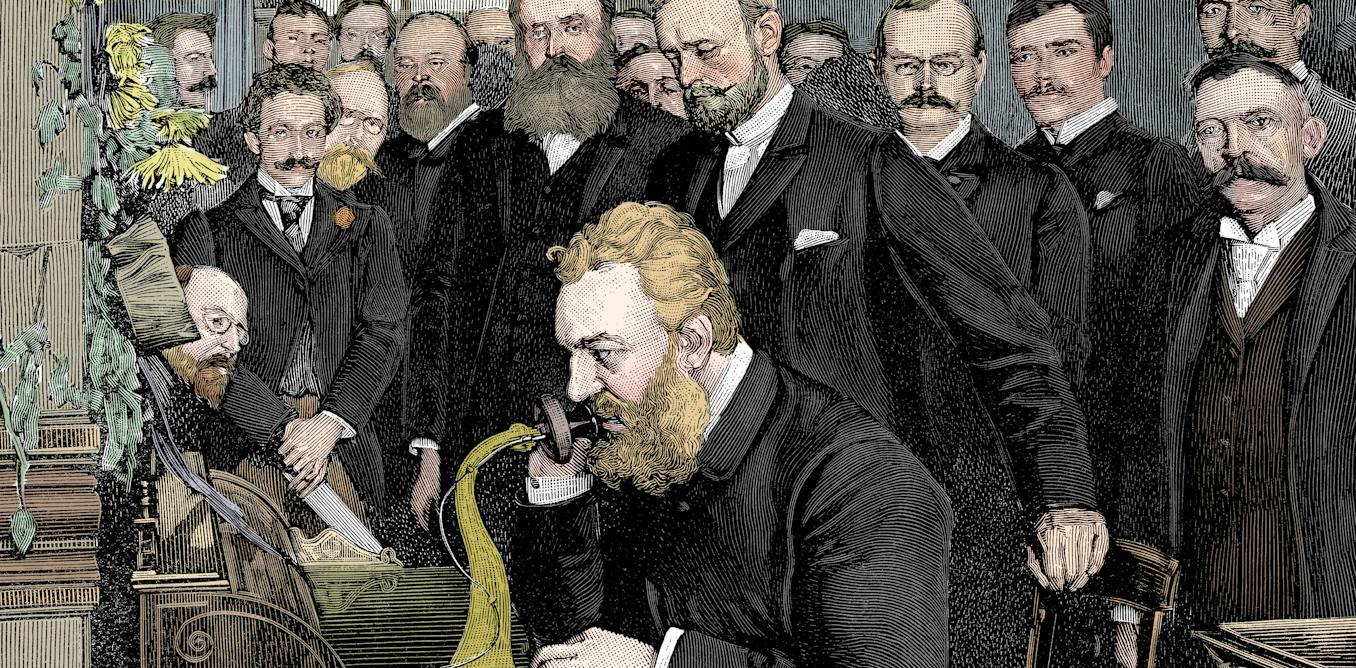
William Thomson, known as Lord Kelvin, conducted pioneering work in thermodynamics and electrical physics, becoming the first scientist elevated to the House of Lords. In 1876, Kelvin served as a judge at the Philadelphia Centennial Exhibition and declared Alexander Graham Bell's telephone the greatest wonder of the electric telegraph.
French microbiologist and chemist Louis Pasteur developed pasteurization and vaccination methods that transformed medicine and infection control. His studies demonstrated the link between microorganisms and infectious diseases.
Augustinian friar Gregor Mendel conducted systematic hybridization experiments with pea plants in his monastery. His conclusions established the principles of heredity and laid the foundation for modern genetics.
American geneticist Francis Collins led the Human Genome Project, which completed the mapping of the human genetic code. Collins maintains frequent public statements regarding his Christian faith and the harmony between science and belief in God.
The Herald covers what almost no one else does: the persecuted church, the discovery that confirms the Bible, the faith that never makes the evening news. No subscription, no paywall, no outside advertisers. If this story mattered to you, help the next one get written.