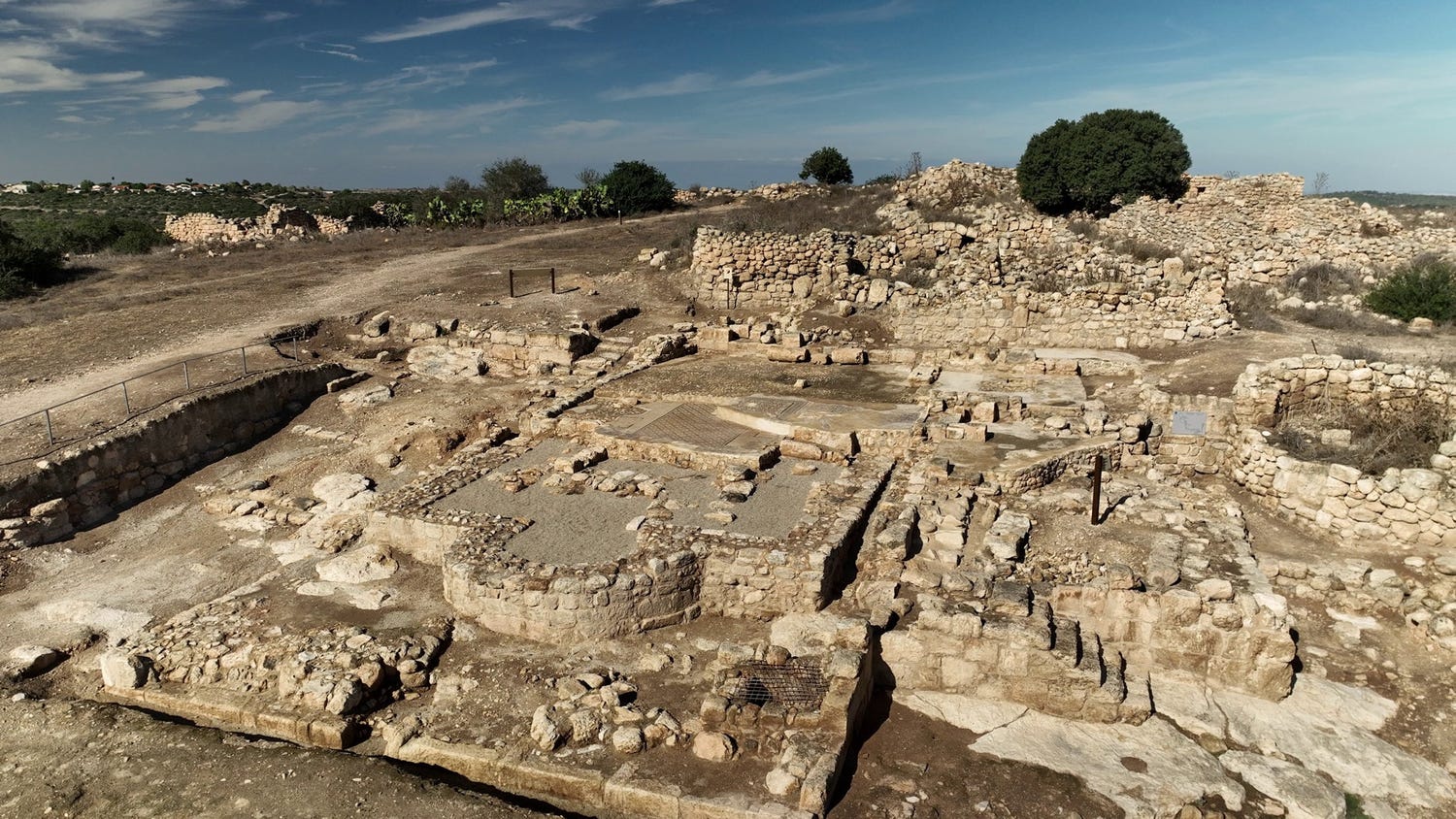
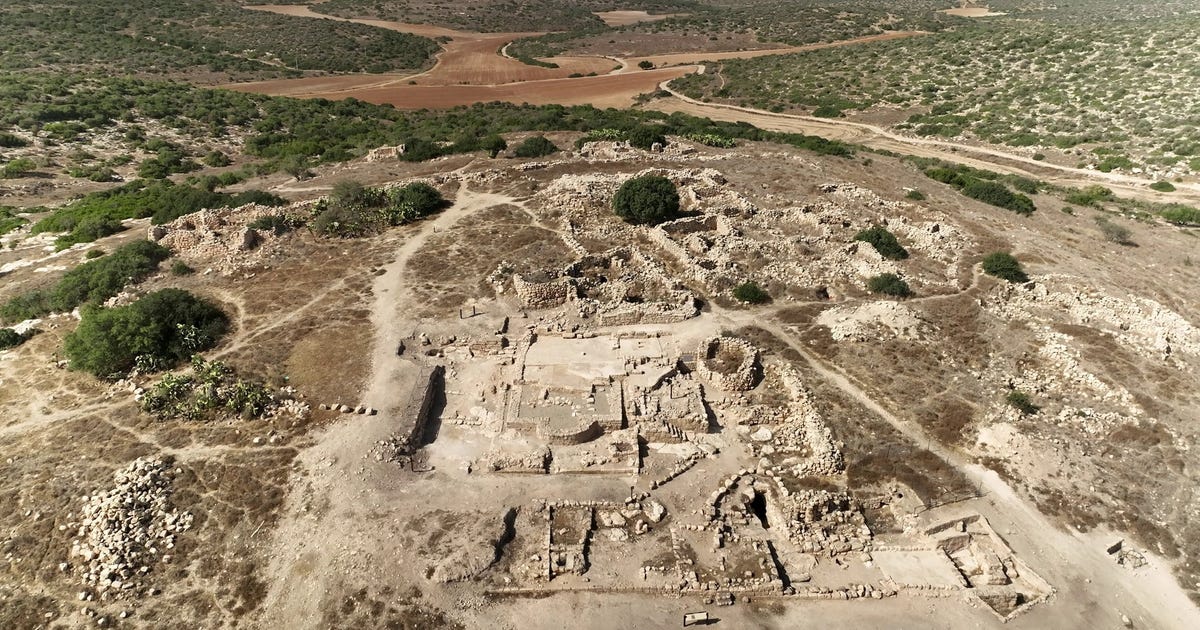
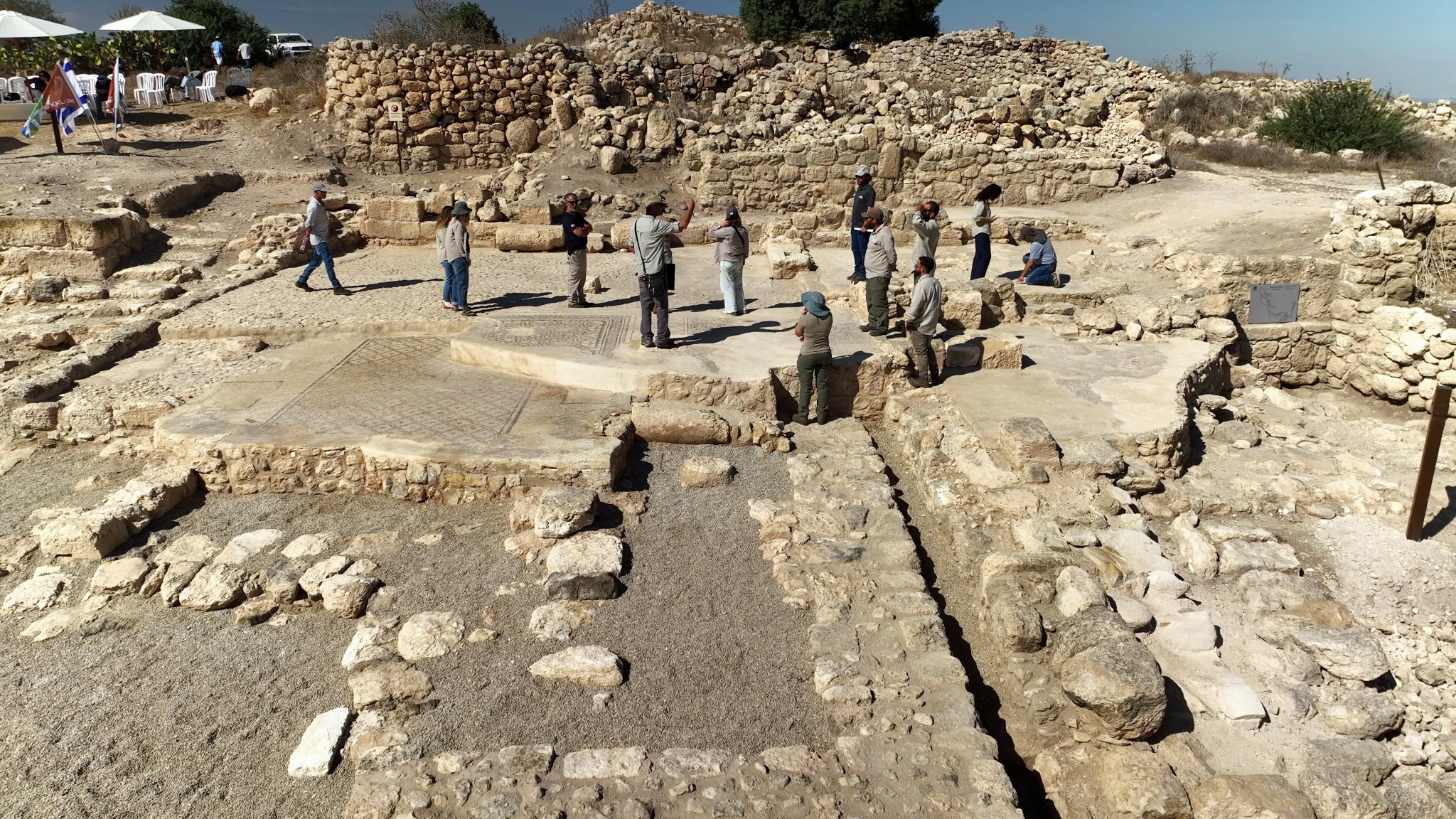
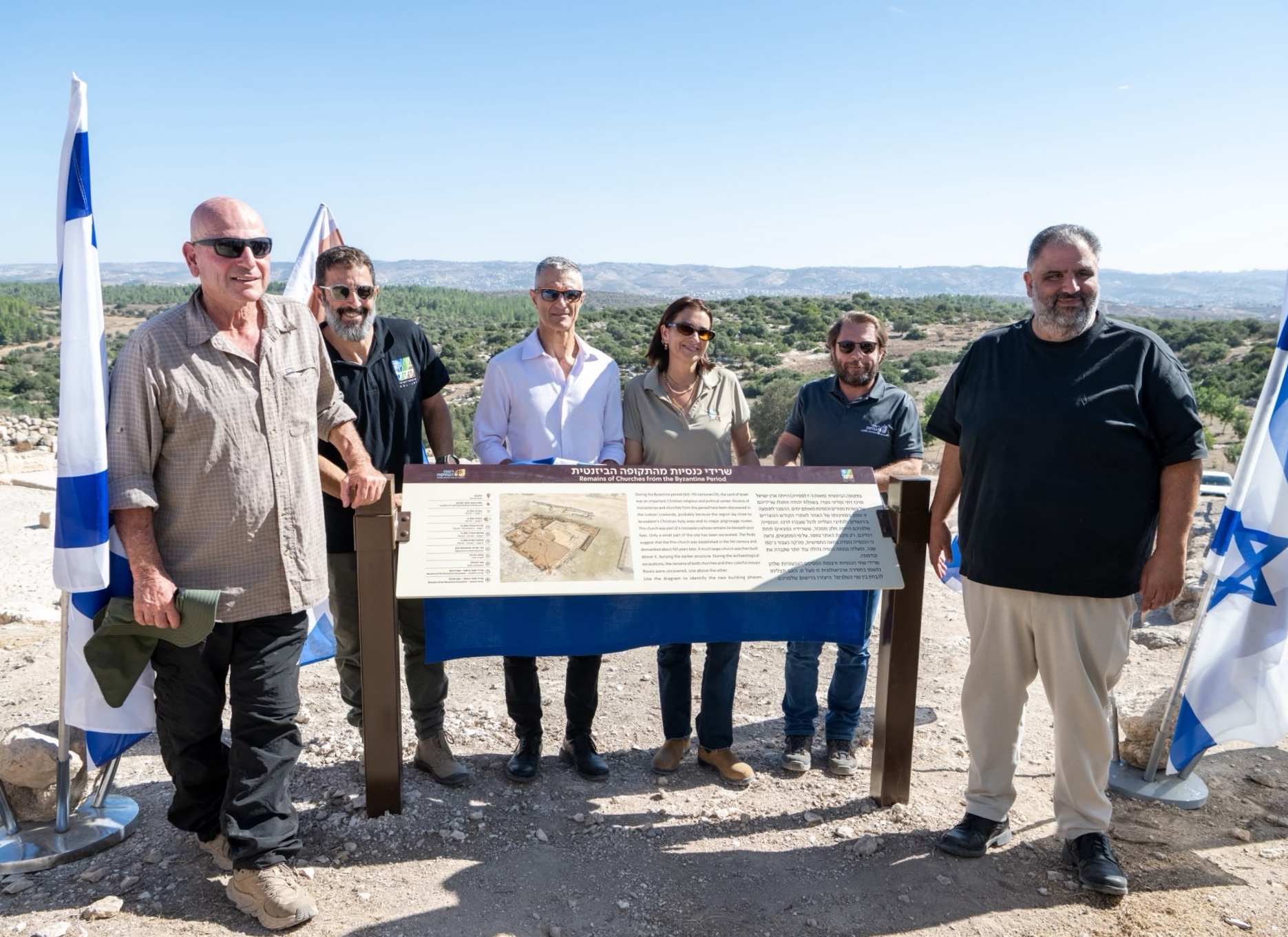
An archaeological site containing rock-cut tunnels carved by Jews during revolts against the Roman Empire and a Byzantine church decorated with colorful mosaics has opened to the public at Horbat Burgin in Adullam-France Park, located in the Judean foothills southwest of Jerusalem. The inauguration follows preservation and infrastructure projects conducted by the Israel Antiquities Authority, the Jewish National Fund (KKL-JNF), and the Mateh Yehuda Regional Council.
Excavations led by archaeologists Amir Ganor, Alon Klein, and Peter Gendelman show that the location sustained human settlement from the Second Temple era through the Ottoman period. In the first century AD, the settlement formed a village of 3,000 to 4,000 inhabitants during the Second Temple period, making it one of the largest communities in the surrounding district.
The Jews carved tunnels to hide in both during the first and second rebellions against the Romans. Credit: Emil Aladjem/Israel Antiquities Authority Photo: Haaretz (aguardando autorização)
Underground hideouts from the Roman wars
Facing the threat of Roman legions, the Jewish population dug networks of subterranean passages and tight chambers into the bedrock beneath their houses. These underground structures served as hideouts and escape channels during the First Jewish-Roman War starting in AD 66 and during the rebellion led by Simon Bar Kokhba in the second century.
Archaeologists have documented over 350 similar underground complexes across at least 135 Second Temple sites in the region. At Horbat Burgin, staff restored the narrow passages so visitors can crawl through the same subterranean spaces where families sought shelter during Roman sieges.
The Jewish settlement was destroyed during the Bar Kokhba Revolt between AD 132 and 136. Following the destruction, veteran Roman soldiers established a settlement over the ruins and cut burial catacombs into the rock beneath to bury their dead.
Researchers with the Israel Antiquities Authority suggest the site is identified with the ancient village of Caphar Bish, mentioned by historian Flavius Josephus in *The Jewish War*. The historical record details a campaign by Roman commander Sextus Vettulenus Cerialis, dispatched by Emperor Vespasian to crush rebel strongholds in Judea.
Josephus recorded that the town maintained strong defenses before the inhabitants surrendered to Roman forces. The geographical terrain and archaeological remains at Horbat Burgin align with the first-century historical account.
The surrounding countryside also links to biblical history. The hills of Adullam are noted in 1 Samuel 22:1-2 as the sanctuary where David took refuge inside a cave while fleeing from King Saul, gathering men who sought protection.
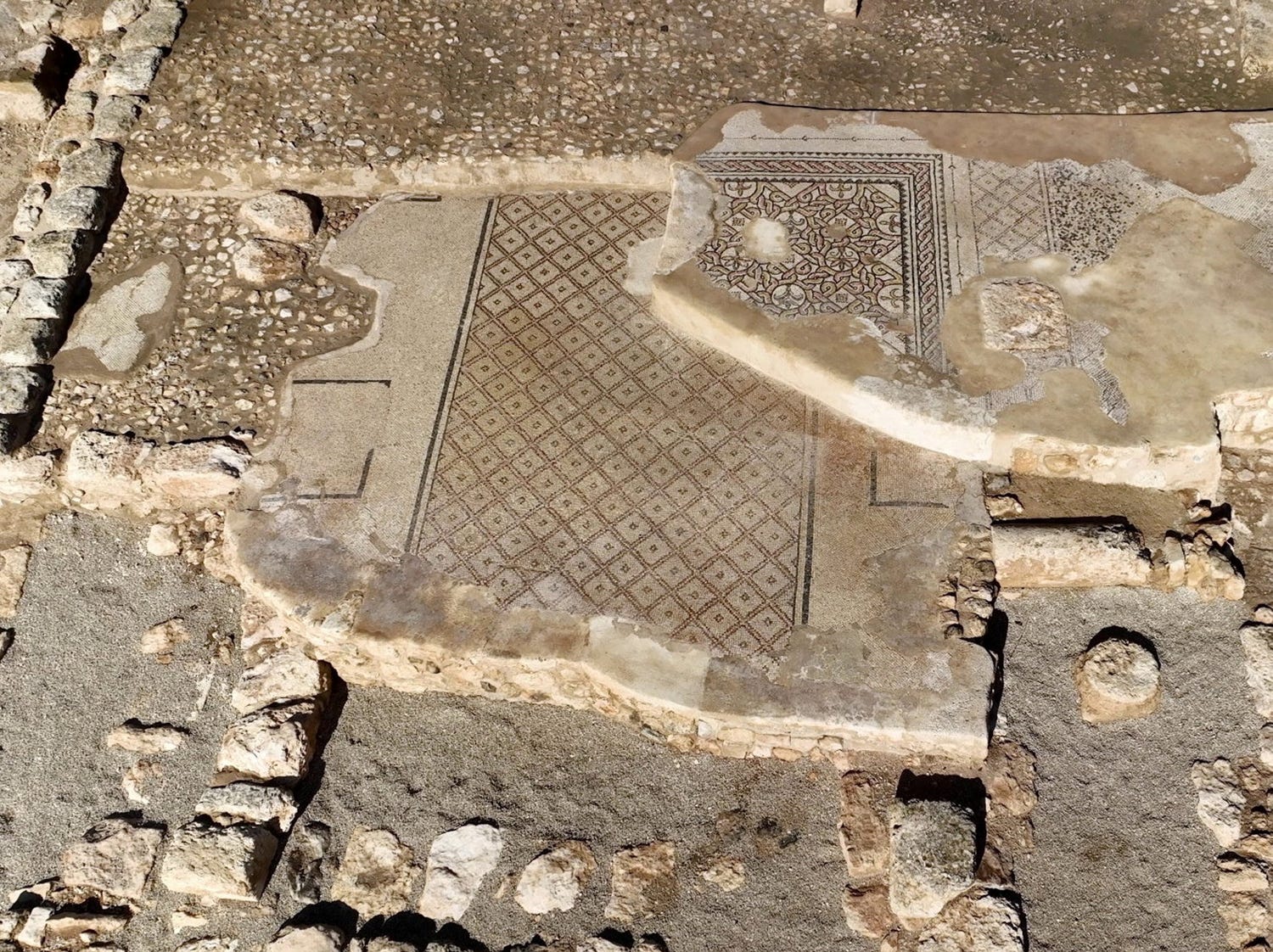
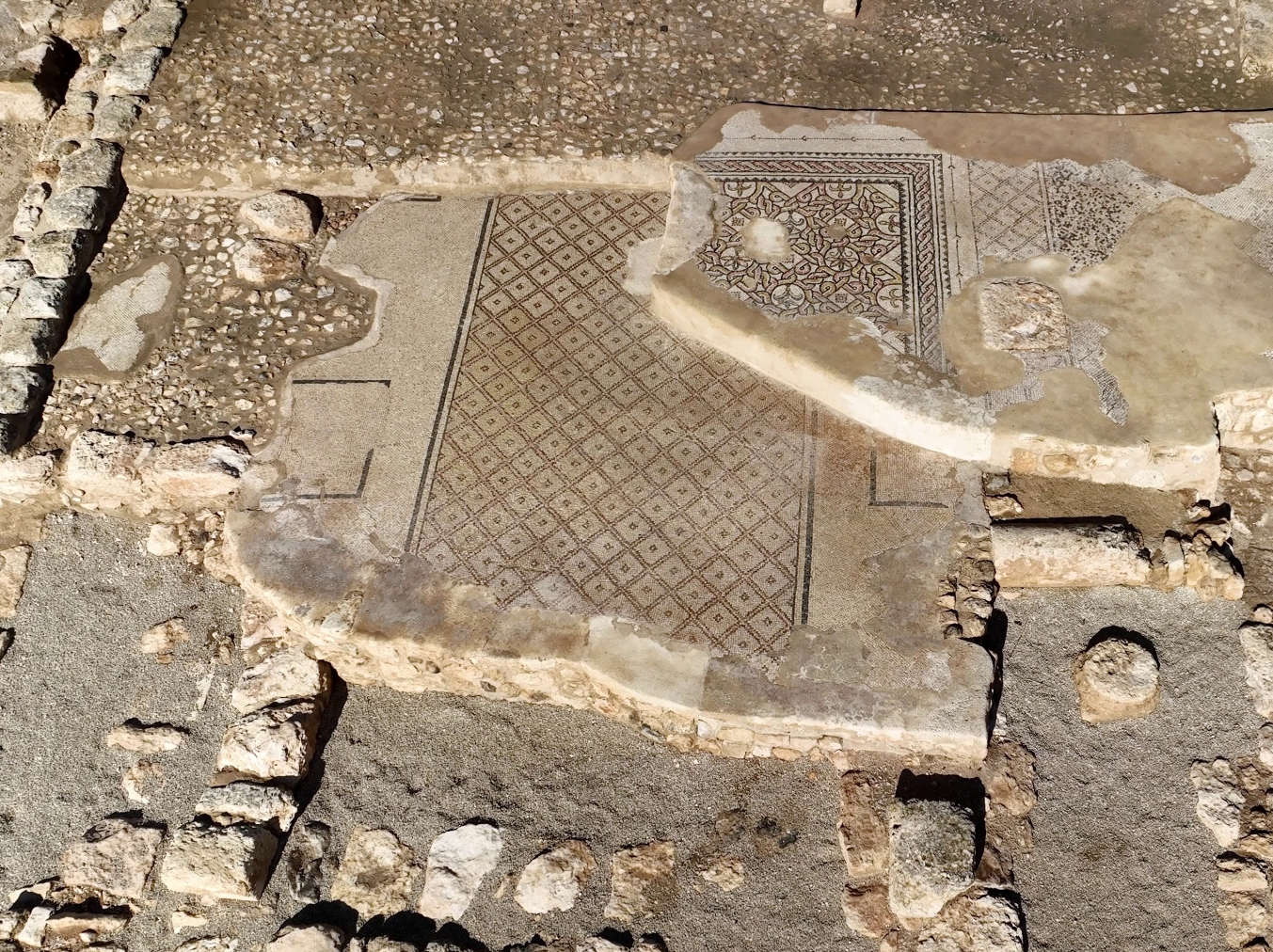
Centuries after the Roman period, local settlement expanded during the Byzantine era as the Christian faith established deep roots across the region. During this period, residents built a monastic complex with colorful mosaics, installations for raising pigeons, and winepresses.
Archaeologists uncovered intact mosaic floors displaying geometric designs and floral motifs, alongside carved stone pillars. The presence of columbaria shows that residents raised pigeons to supply fertilizer for local vineyards, producing wine that sustained the economy of the monastery and nearby villages.
The location remained inhabited until the Ottoman period, when it was gradually abandoned and covered by natural vegetation.
Before conservation efforts began, the ruins at Horbat Burgin sustained continuous damage from illegal excavation. According to Amir Ganor, who directs the Theft Prevention Unit at the Israel Antiquities Authority, antiquities looters broke into burial caves and underground hiding systems over several years.
Stopping the destruction required enforcement operations and the arrest of looting rings in the area. Emergency excavations and site development transformed the damaged location into an accessible park for visitors.
Visitor infrastructure now features marked trails, safe entry points into the underground tunnels, and protective coverings over the Byzantine mosaic floors.
The Herald covers what almost no one else does: the persecuted church, the discovery that confirms the Bible, the faith that never makes the evening news. No subscription, no paywall, no outside advertisers. If this story mattered to you, help the next one get written.