It was around three o'clock on a Tuesday afternoon with no active fighting in the area when the roar of jet engines shattered the quiet over Hpapun District in Myanmar's eastern Karen State. Residents of the small village of Day Bu Noh looked up to see the sky erupt as military regime fighter jets began dropping explosive payloads onto the community. Moments after the jets passed, a swarm of armed drones took over, launching a relentless hour-long bombardment. When the attack finally ended, three young female Bible school students lost their lives in an air and drone attack launched by the military junta of Myanmar, an incident that has sparked intense outrage among human rights groups and religious leaders worldwide.
According to reports released by the human rights organization Christian Solidarity Worldwide, the coordinated strike began with military aircraft dropping bombs in rapid succession over the rural village. Reports confirm that . The most devastating blow fell upon the local Bible school, an institution dedicated to training young people from the Christian Karen community. During the drone assault, and leaving seven other people injured at the scene.
regime jet fighters dropped more than ten bombs over the area, followed by an hour-long bombardment using armed drones
an armed drone detonated directly over the village Bible school, killing two female students instantly
Given the severity of the injuries sustained by several victims and the complete lack of adequate medical infrastructure in the war-torn region, local emergency responders and community leaders acted swiftly the following morning. Two of the critically injured students were loaded onto rescue boats to cross the Salween River, which forms the natural border between Myanmar and Thailand, in a desperate attempt to reach emergency medical care in the neighboring country. Tragically, the effort was not enough to save one of the young women.
While en route to Sop Moei Hospital on the Thai side of the border, the critically injured young woman succumbed to her injuries while being transported across the Salween River to a hospital in Thailand. Her death brought the total fatality count from the attack to three, while the remaining six injured students continued to receive emergency medical treatment. The village of Day Bu Noh is located in an isolated mountainous region inhabited predominantly by the Karen people, a predominantly Christian ethnic minority that has faced decades of systematic pressure and military raids by central government forces.
International Human Rights Groups Condemn the Assault
The targeted violence against the Bible study center drew immediate condemnation from religious freedom organizations. Scot Bower, Chief Executive Officer of Christian Solidarity Worldwide, expressed deep outrage over the actions of the Myanmar military. In an official statement released following confirmation of the deaths, the organization leader emphasized that the systematic targeting of religious institutions and civilian youth in predominantly Christian ethnic areas is a severe violation of international humanitarian law. Bower added that the Myanmar armed forces continue to operate with complete impunity, weaponizing air power against faith communities, and called on the international community to swiftly enforce an aviation fuel embargo against the regime.
Myanmar has been engulfed in widespread civil war and turmoil since February 2021, when the military junta seized power in a coup d'état, overthrowing the democratically elected government and detaining civilian leader Aung San Suu Kyi. The coup triggered massive pro-democracy protests that were met with lethal force, driving tens of thousands of citizens to take up arms alongside long-standing ethnic armed resistance groups. The ethnic forces fighting for autonomy include Christian-majority groups such as the Karen, Kachin, and Chin, who have long resisted discrimination by the Buddhist-majority military establishment. United Nations estimates indicate that at least 1.6 million people have fled the country as refugees or asylum seekers since the armed conflict escalated.
A Broader Pattern of Attacks on Places of Worship
The airstrike on the Bible school in Hpapun is not an isolated event, but part of an ongoing campaign of aerial bombardments, artillery strikes, and village burnings carried out by junta forces since mid-2026. In a previous attack on October 25, a military jet dropped four bombs on Mae Nu Hta village along the Salween River, killing a child and injuring at least two others. The junta's strategy of deploying air power against civilian settlements aims to terrorize local populations into submission.
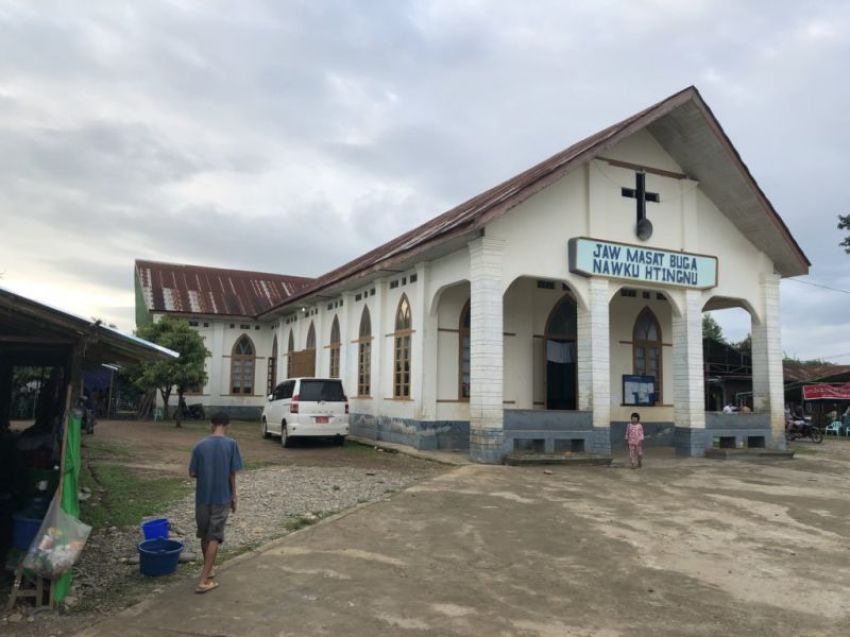
The religious heritage of Christian minorities has been repeatedly targeted by military operations. On October 9, two military jets conducted bombing runs over Mindat, a town in southern Chin State, dropping four bombs that struck a Presbyterian church compound and destroyed its main sanctuary. Days later, on October 12, troops from the 33rd and 88th Light Infantry Divisions burned down the Htingnan Kachin Baptist Church and surrounding homes in Bhamo Township, Kachin State. CSW Founder President Mervyn Thomas described the destruction of such places of worship as grave crimes that violate freedom of religion and destroy essential community lifelines for vulnerable populations.
The military junta's destruction has extended to other faith traditions as well. Data documented by the monitoring group Myanmar Witness revealed that between January 2024 and December 2025, more than 300 airstrikes targeted religious sites in Myanmar, including churches, mosques, and Buddhist monasteries. In August, a military airstrike struck a Buddhist temple in Myaung Township, Sagaing Region, killing 14 civilians who had gathered there for a meditation retreat, underscoring the indiscriminate nature of the regime's campaign.
Faith Tested Under Severe Persecution
For the Christian communities of Myanmar, maintaining physical survival and preserving their faith have become daily trials defined by sorrow and resilience. The Karen region has embraced the Gospel message since the 19th century, when early missionaries first served among the hill tribes. Today, amidst ruined sanctuaries and bombed Bible schools, believers continue to seek comfort and strength in the Holy Scriptures. The Apostle Paul, describing the severe trials borne by early followers of Christ, offered words that resonate powerfully with the Christians of Myanmar today: we are troubled on every side, yet not distressed; we are perplexed, but not in despair, as written in 2 Corinthians 4:8-9.
As the survivors of Day Bu Noh mourn the loss of three young students and care for the wounded in border medical facilities, community leaders are working to provide emergency relief to displaced families. While the future of the damaged Bible school remains uncertain due to ongoing military overflights, the local church continues to gather for worship in makeshift forest shelters, keeping faith alive amidst the flames of civil war.
The Herald covers what almost no one else does: the persecuted church, the discovery that confirms the Bible, the faith that never makes the evening news. No subscription, no paywall, no outside advertisers. If this story mattered to you, help the next one get written.