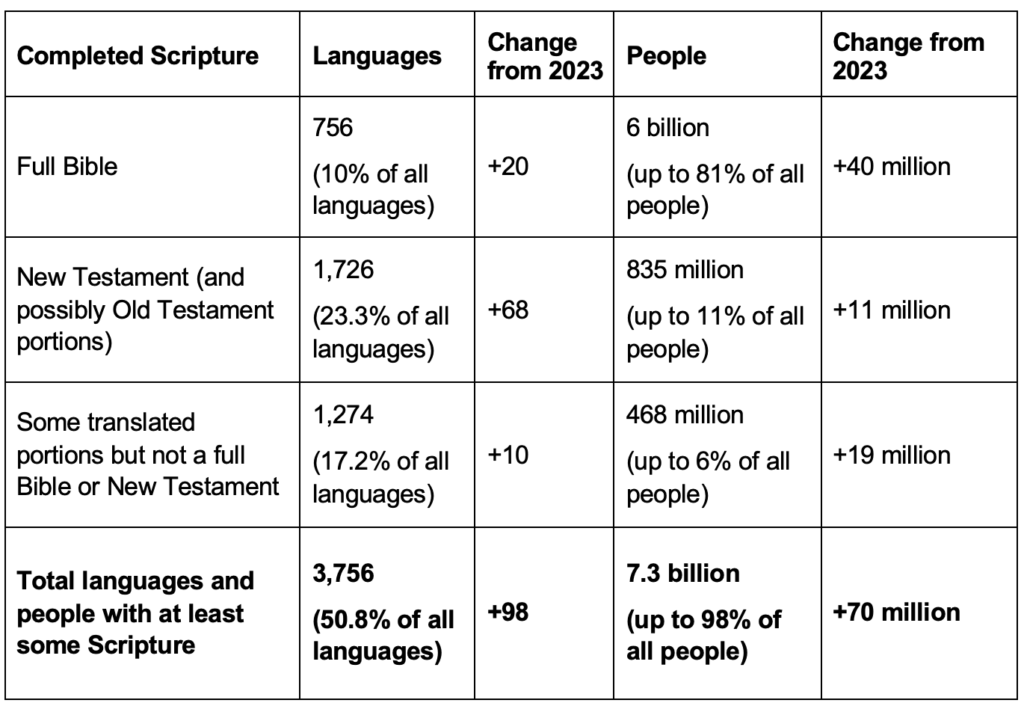
The global Bible translation effort has reached the lowest number of unreached languages in recorded history. According to data gathered in August 2025 by ProgressBible and released by the Wycliffe Global Alliance, just 544 of the world’s 7,396 living languages remain on the waiting list for Bible translation to begin. The progress reflects the decentralization of translation work, which is increasingly led by local churches and native translators across continents.
This milestone tracks the objectives set by Vision 2025, adopted in 1999 by missionary organizations. The promise of Jesus in Matthew 24:14, that the gospel of the kingdom will be preached in all the world as a testimony to all nations before the end comes, drives translators and linguists working in remote regions. Here are ten central numbers that summarize the current state of global Scripture access.
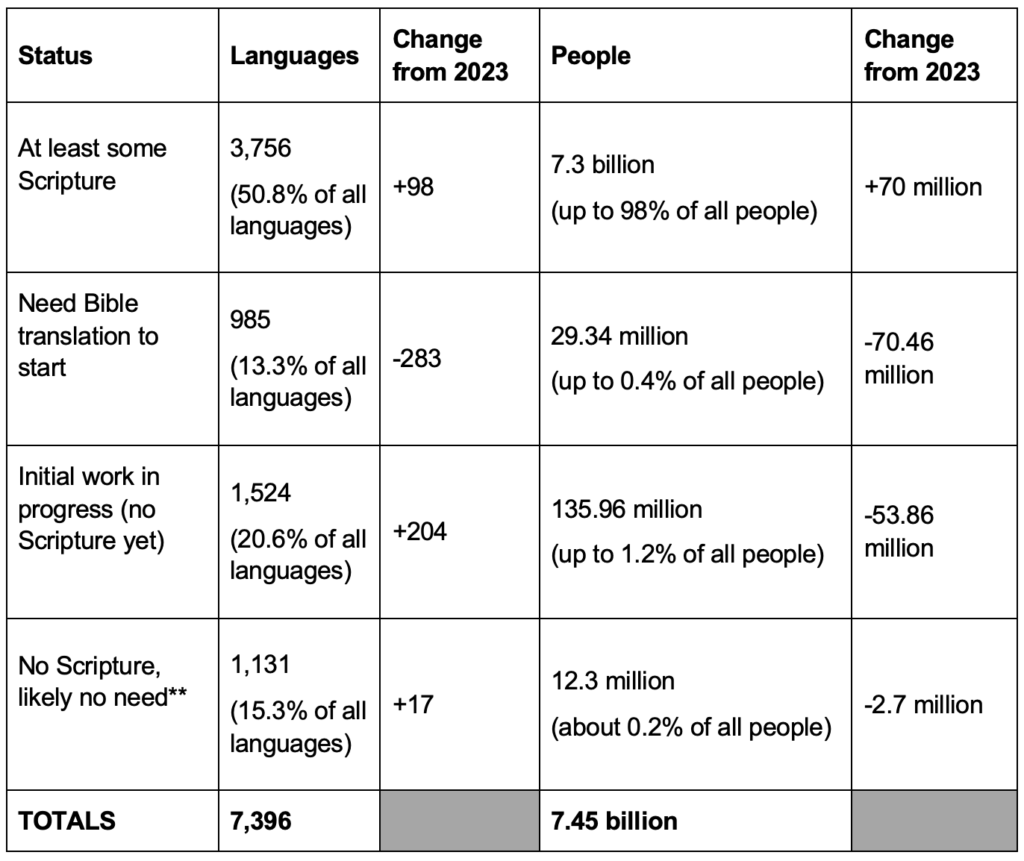
In 1999, more than 5,000 languages had no translation work underway. That number dropped to around 2,000 in 2020, reached 985 in 2024, and fell to 544 in the August 2025 assessment. This group represents the final frontier of languages with no translated Scripture.
2. 36.8 million people on the waiting list
About 36.8 million people are speakers of these 544 remaining languages. The population count rose slightly from the previous year due to the official recognition of four new Asian languages with a combined population of over 21 million speakers. However, the total number of unserved languages continued to drop.
The SIL Ethnologue database lists 7,396 known living languages worldwide, spoken by approximately 7.7 billion people. The actual global population is estimated at 8.2 billion, but language statistics maintain a natural tracking lag due to data collection challenges in conflict zones and migration shifts.
4. 4,457 languages with work in progress
Exactly 4,457 languages have Bible translation work in progress. This figure includes projects led by local teams, church networks, and specialized agencies across 173 countries, covering full Bibles, New Testaments, or individual Scripture portions.
Within the work-in-progress category, 1,712 languages with work in progress do not have any translated verses yet. Starting a project often requires years of literacy work, alphabet creation, grammatical analysis, and community engagement before the first chapters are finalized.
6. 4,600 languages reached in 26 years
Since the adoption of Vision 2025 in 1999, more than 4,600 languages with no Scripture access received translation projects. The acceleration stems from training local translators and deploying linguistic software that speeds up exegesis and checking.
7. 114 fewer languages waiting in Papua New Guinea
Papua New Guinea led the global reduction in waiting languages over the past year, with 114 languages coming off the list. The Pacific nation is home to over 800 languages and hosted intensive translation initiatives led by indigenous workers.
8. 113 fewer languages waiting in Indonesia
Indonesia recorded the second-largest annual decrease, removing 113 languages from the waiting list. Papua New Guinea and Indonesia led the reductions, with 114 and 113 fewer languages on the list, followed by Cameroon (28) and Vanuatu (25).
9. 93 sign languages re-evaluated or served
Out of 392 cataloged sign languages worldwide, 93 came off the waiting list. The shift occurred due to new video translation projects or the determination that deaf communities in those regions use another sign language with existing Scripture.
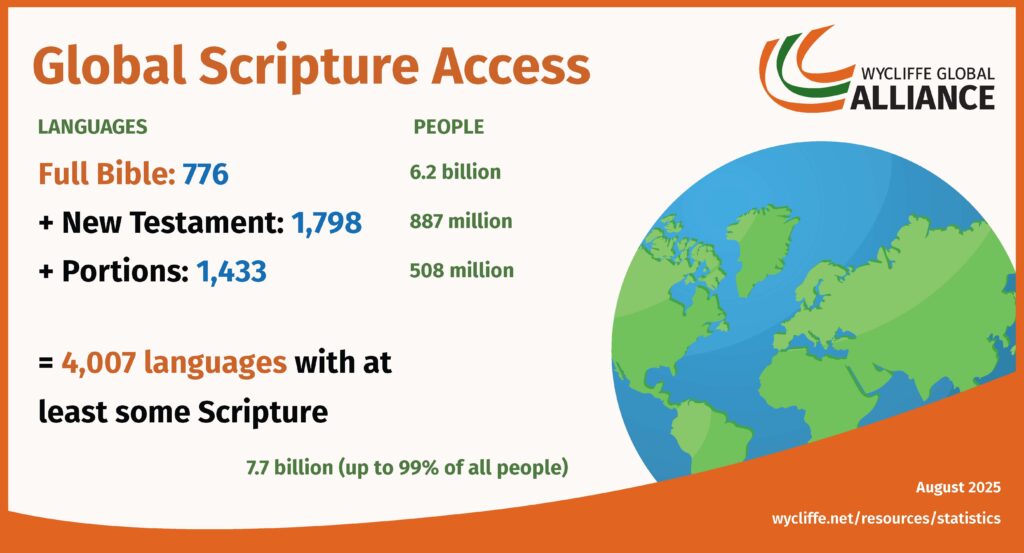
10. 7.7 billion people with access to Scripture
With ongoing translation efforts, more than 99 percent of the world population has access to at least some Scripture in their primary or secondary language. Wycliffe Global Alliance Executive Director Stephen Coertze stated that the focus remains on equipping local churches and delivering whole Scripture translations to transform lives across communities.
The Herald covers what almost no one else does: the persecuted church, the discovery that confirms the Bible, the faith that never makes the evening news. No subscription, no paywall, no outside advertisers. If this story mattered to you, help the next one get written.