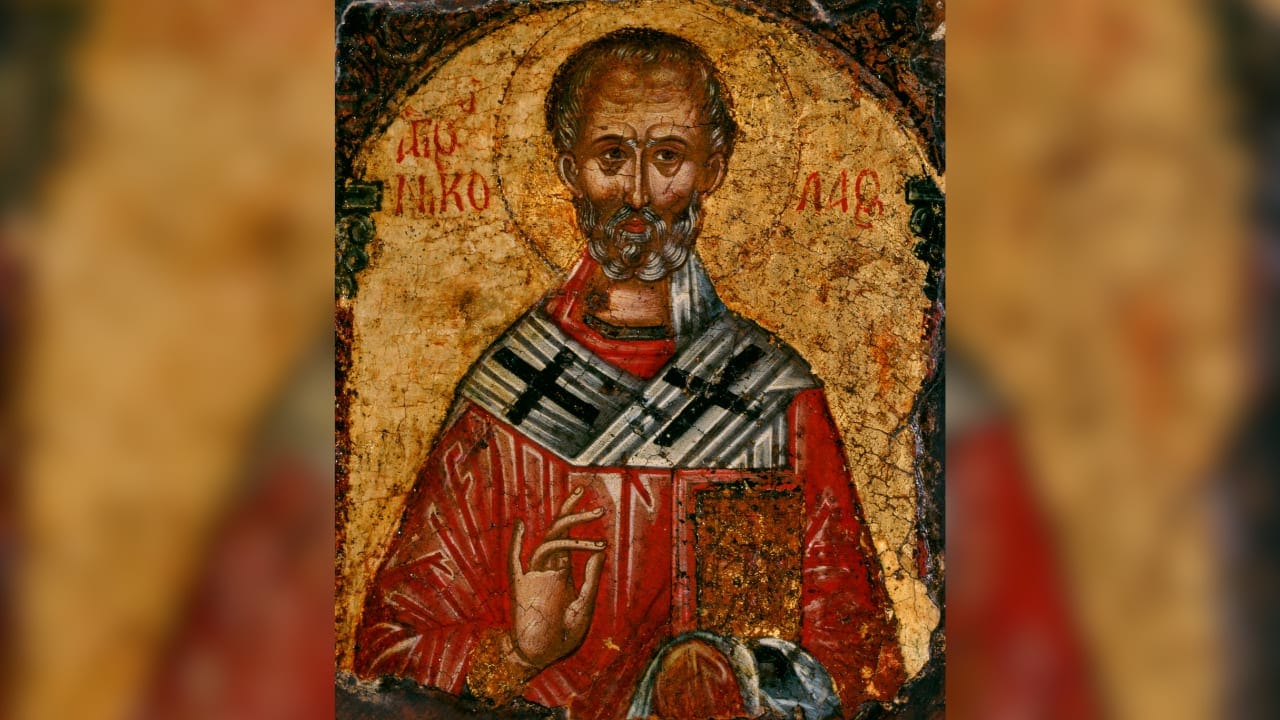
A reliquary containing bone fragments attributed to Saint Nicholas was stolen and destroyed in late October at a basilica in the Lorraine region of France. The Saint Nicholas Parish confirmed the incident in a statement shared on social media after the matter was first reported by the French outlet L’Est Républicain. While the theft took place on October 28, the discovery of the crime and the subsequent police report occurred on November 2.
Police identified and arrested the perpetrator, who confessed in custody to breaking the display case, burning the fragment, and crushing its remains. According to L’Est Républicain, the suspect told authorities he acted impulsively out of what he claimed to be a form of fetishism. A psychiatric evaluation submitted to a French court concluded that he was legally responsible for the crime.
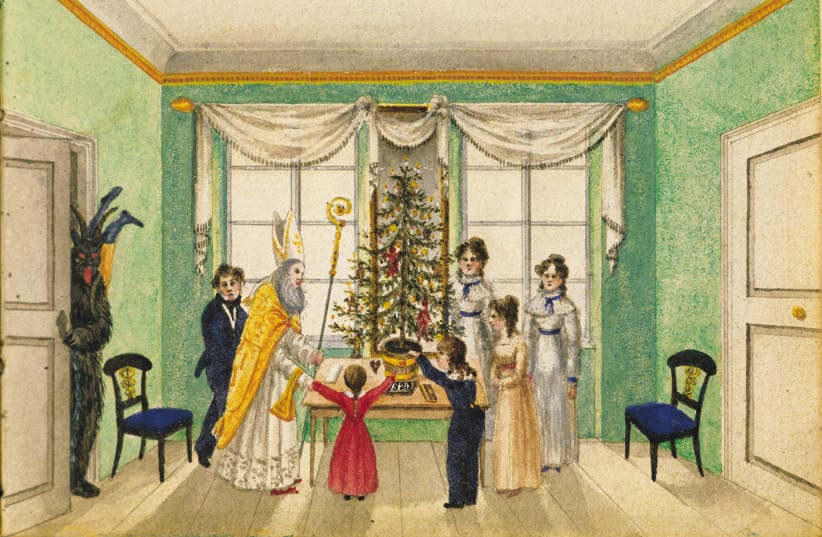
Christmas party 1820 with Santa Claus. (credit: Imagno/Getty Images)
The destroyed fragment consisted of a finger bone from the saint's right hand, historically known as the dextre bénissante, or blessing right hand. The item had been installed in the early 2000s beneath a statue in the patronal chapel of the Basilica of Saint-Nicolas-de-Port. The church's principal relic, housed in an arm-shaped reliquary in the treasury, was neither taken nor damaged during the raid.
A nearly thousand-year pilgrimage tradition
The Basilica of Saint-Nicolas-de-Port anchors a pilgrimage route with nearly a millennium of history and has survived conflicts such as the Thirty Years' War and both world wars. The destroyed bone was brought from Bari, Italy, to France in 1098 by a knight named Aubert de Varangéville. The arrival of the relic helped establish the town as a medieval center of devotion, reportedly visited by Joan of Arc in 1429 before her journey to meet the Dauphin.
The destruction occurred just weeks before the saint's feast day on December 6, a date that draws pilgrims for traditional torchlight processions in the area. Saint Nicholas of Myra lived roughly from 270 to 343 AD and served as a bishop in Anatolia, in modern-day Turkey. Known for his secret generosity and care for the needy, his historical acts of charity inspired the modern Santa Claus tradition.
Pain within the local church community
The local parish expressed profound sorrow over the loss of the sacred relic, emphasizing the impact of the act on the history and faith of believers. This act represents a deep affront to our history, our faith, and the devotion of generations of pilgrims, the parish leadership declared in an official statement released to the media.
The church noted that the reliquary served as a precious spiritual link to the patron saint, whose influence extends far beyond the borders of Lorraine. Church authorities called for unity in prayer among the faithful following the destruction of the heritage item.
The Herald covers what almost no one else does: the persecuted church, the discovery that confirms the Bible, the faith that never makes the evening news. No subscription, no paywall, no outside advertisers. If this story mattered to you, help the next one get written.