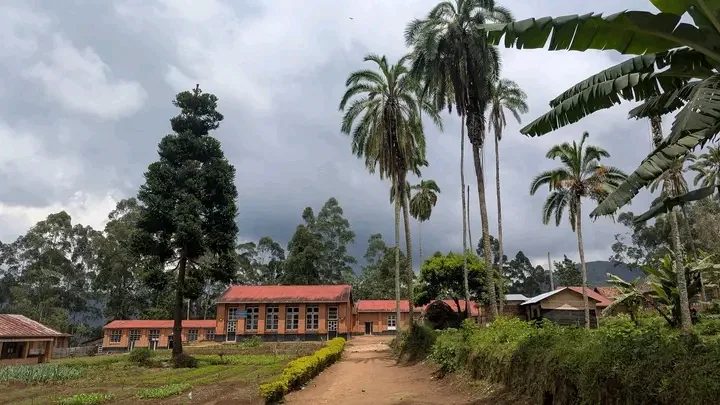
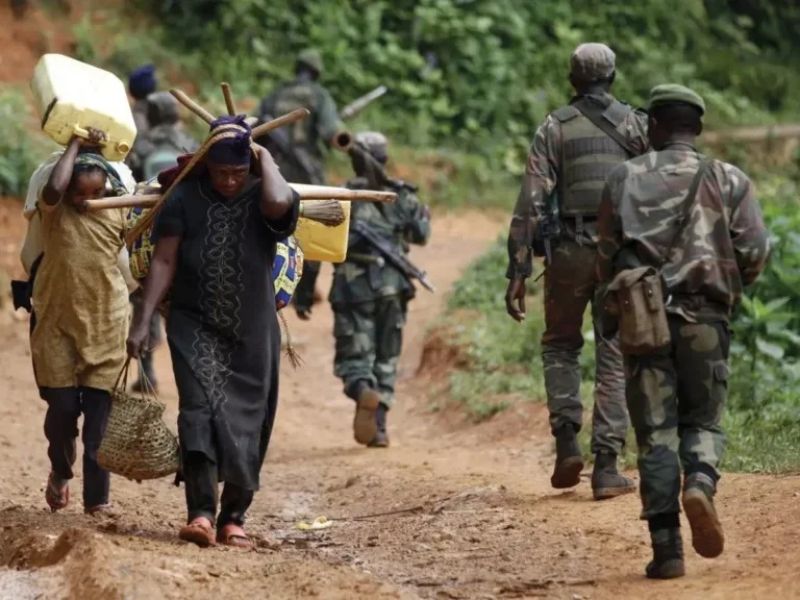
Jannette and her neighbors were attempting to follow the guidance of local doctors and pastors to avoid crowded places and protect their families from the Ebola outbreak devastating the eastern Democratic Republic of the Congo. However, the sound of gunfire and the smell of smoke rising from nearby homes abruptly interrupted all health precautions. On Tuesday morning, November 3, Islamic extremists from the Allied Democratic Forces raided Maikengu village in Lubero territory, North Kivu province, forcing entire families to abandon everything they had built to save their lives.
The raid on the village was marked by systematic looting and destruction. According to local authorities quoted in a report by International Christian Concern, the attackers broke into homes, businesses, and pharmacies before setting fire to the structures. During the assault, a Christian resident was murdered with a machete by militants of the extremist group. Dozens of other residents remain untraceable following the chaos, with uncertainty over whether they were killed in the dense vegetation or kidnapped for forced labor in rebel-controlled mining zones.
Burned homes and mass displacement in eastern Congo
As news of the attack spread to neighboring communities, hundreds of residents began an emergency walk toward the villages of Kambau and Nziapanda. The hasty flight left Maikengu in smoking ruins, with vital medicines burned inside community pharmacies and food supplies destroyed. The terror inflicted caused the immediate evacuation of homes and small commercial shops that served as the primary livelihood for local families.
The destruction of medical supplies and pharmacies directly escalates the community crisis at a time when the region is confronting a renewed public health emergency with the spread of the Ebola virus. For families already mourning relatives lost to the viral disease, being forced to flee their homes under the threat of guns and machetes imposed a double burden of grief and displacement.
“We have already lost so much to Ebola disease, and now we are afraid of losing even more,” shared Jannette, a local resident who was forced to flee her home during the insurgent raid. “Doctors, church leaders, and local leaders are advising us to avoid crowded places, or avoid unnecessary visits, but today, with the new ADF attack, we were obliged to run for our lives. Every day, we worry about our families; we just want to live in peace and feel safe in our villages.”
History of massacres and renewed trauma in Bapere sector
The community of Maikengu and the residents of the Bapere sector carry deep scars from recent tragedies committed by the same armed group. In June 2024, during the ADF’s first major invasion into that area, the extremists killed 42 people across multiple rural villages. The return of the rebels after nearly half a year of relative absence reopened painful memories for a population that was attempting to rebuild their livelihoods and worship God peacefully in their local churches.
The Allied Democratic Forces armed group originated in Uganda during the 1990s but shifted its operational hub into the dense forests of eastern Congo, eventually pledging allegiance to ISIS. Operating under radical militant ideology, the group concentrates its assaults on rural villages populated predominantly by Christian farmers. The tactic of instilling panic through brutal killings and arson serves to undermine government control and displace communities from strategic territories.
In response to the renewed violence in Lubero, the army of the Democratic Republic of the Congo began deploying troops to halt the advance of rebel columns. Despite the military presence along main roads, community leaders note that civilians remain highly vulnerable to ambushes along secondary tracks and isolated agricultural fields, where state control remains fragile and inconsistent.
Gold mining as economic fuel for terror operations
Beyond ideological and religious motivations, the ADF’s incursions into Lubero territory align with strategic economic interests tied to the extraction of valuable minerals. A detailed investigation published by research organization The Sentry reveals that the extremist group generates approximately $1 million to $1.6 million annually from gold mines under its control in the Manguredjipa area alone, while occupying several other mineral-rich zones across eastern Congo.
The investigative report highlights that systematic abduction of local villagers serves as the backbone of the group’s operational manpower. Civilians captured during raids are subjected to forced labor in clandestine gold mines, transporting heavy machinery and extracting ore, or are forcibly integrated into the group’s ranks as fighters and logistics personnel within rainforest bases.
The illicit extraction and trafficking of gold through cross-border smuggling networks provide steady financial resources to acquire weaponry, ammunition, communications gear, and supply lines. This self-sustaining economic model hampers efforts to neutralize the group through conventional military operations and maintains the ADF’s capacity to launch violent attacks even after battlefield setbacks.
Resilient faith and hope amidst enduring hardship
Christian communities across North Kivu have endured decades of systematic violence that tests the limits of physical and spiritual endurance. The convergence of radical terrorism and deadly viral outbreaks leaves pastors and believers in a state of heightened vulnerability, where assembling for worship or maintaining daily fellowship carries constant risks of violence or captivity.
In Holy Scripture, Psalm 34:18 offers comfort to those facing severe distress, affirming that “The Lord is close to the brokenhearted and saves those who are crushed in spirit.” This assurance of divine presence sustains prayer gatherings in temporary shelters and displaced camps where hundreds of Maikengu families have fled, carrying only basic belongings and a shared determination to protect their lives.
As government troops attempt to secure the routes connecting Kambau and Nziapanda, displaced families remain in temporary shelter, waiting for minimal safety guarantees to return, inspect what remains of their property, and provide a dignified burial for neighbors killed in the attack.
The Herald covers what almost no one else does: the persecuted church, the discovery that confirms the Bible, the faith that never makes the evening news. No subscription, no paywall, no outside advertisers. If this story mattered to you, help the next one get written.