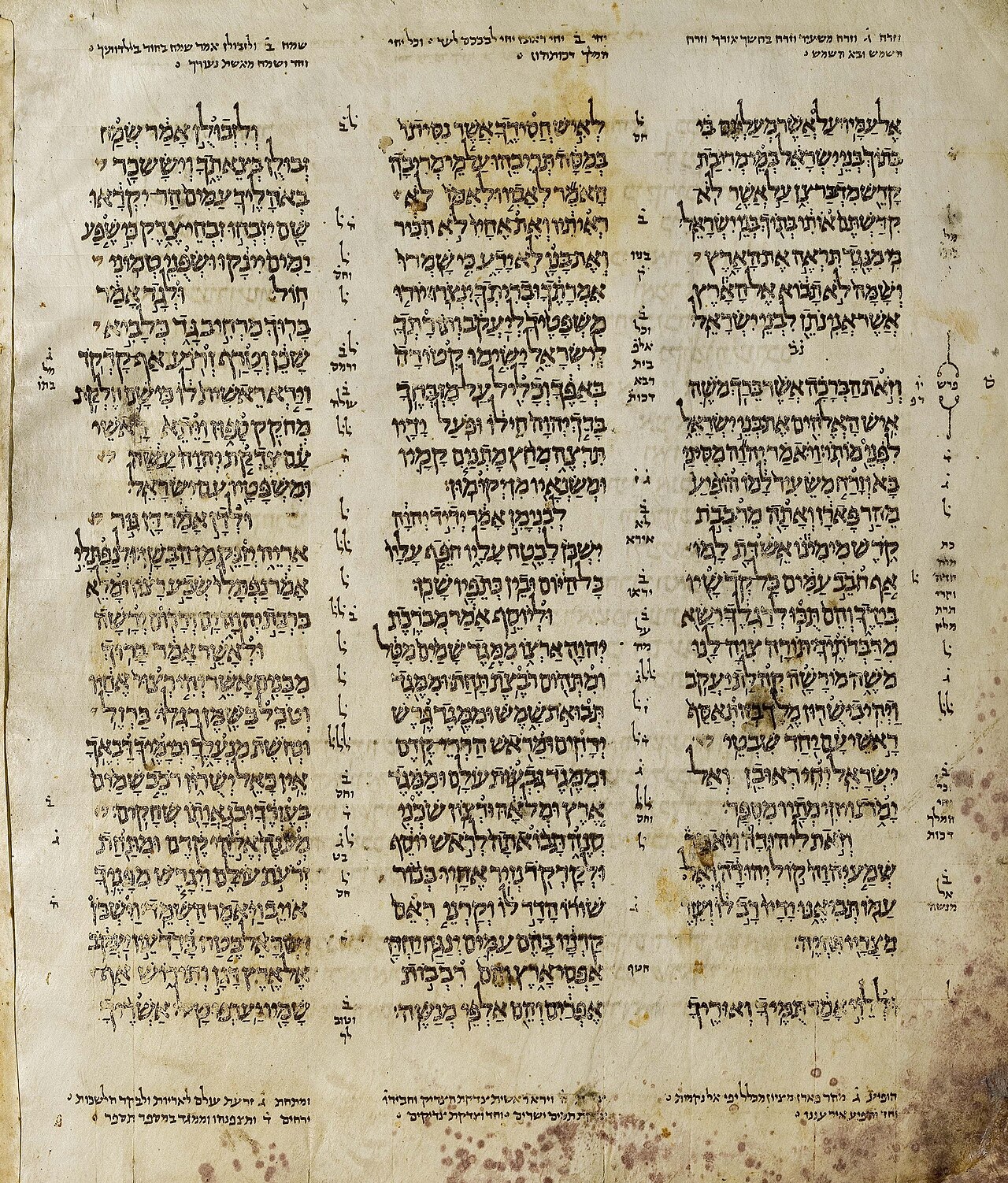
The oldest written records of the Bible bring together fragments and codices that survived centuries, allowing scholars to reconstruct the original sacred texts with precision. The preservation of these documents ranges from small papyrus scrolls to massive medieval books kept in museums and monasteries.
Discovered between 1946 and 1956 in the Qumran caves near the Dead Sea, these documents date from 250 BC to AD 70. , notably the Great Isaiah Scroll (1QIsaᵃ), which is nearly complete. The texts are housed in the Shrine of the Book at the Israel Museum in Jerusalem.
The collection includes about 800 manuscripts, with 220 from the Tanakh
Found in 1979 in tombs southwest of Jerusalem's Old City, these tiny silver scrolls served as amulets. They contain the Priestly Blessing recorded in the Book of Numbers (Numbers 6:24-26) and date from 650 to 587 BC, making them the oldest biblical portions ever found in excavations.
Known as the oldest extant New Testament fragment, P52 preserves verses from the Gospel of John (John 18:31-33, 37-38). Dated around AD 125 by paleographic analysis, the tiny papyrus is kept at the John Rylands Library in Manchester, England.
Dates primarily from the 3rd and 4th centuries AD, these papyrus collections include substantial portions of the Gospels, Acts, Pauline Epistles, and Revelation. They form important collections divided between the Chester Beatty Library in Dublin and the Bodmer Library in Switzerland.
Produced in the 4th century AD, the Sinaiticus is one of the great Greek codices and contains almost the entire New Testament and a large portion of the Old Testament (Septuagint). The manuscript was discovered at Saint Catherine's Monastery on Mount Sinai, and most of it now resides in the British Library.
Also dating to the 4th century AD, this codex has been kept in the Vatican Library since at least the 15th century. It contains an almost complete version of the Septuagint and the New Testament, serving as a cornerstone for textual criticism of the sacred text.
Written in the 5th century AD on high-quality parchment, the Alexandrinus contains most of the Old and New Testaments. The volume was brought from Cairo to England in the 17th century and is now part of the British Library collection.
Copied around AD 920 in Galilee and vocalized by the Masorete master Aharon ben Asher, the Aleppo Codex was considered the most authoritative exemplar of the Hebrew Bible. Much of the volume was lost during riots in Aleppo, Syria, in 1947, but the remaining portions continue to be vital for biblical scholars.
Datable to AD 1008, this is the oldest complete manuscript of the Hebrew Bible (Tanakh) based on the Masoretic tradition to survive intact. The book serves as the primary basis for most modern printed editions of the Hebrew text, such as the *Biblia Hebraica Stuttgartensia*.
Completed in the early 8th century AD at a monastery in Northumbria, England, the Amiatinus is the oldest complete manuscript of Jerome's Latin translation of the Bible, known as the Vulgate. The book was taken as a gift to the Pope and is now housed in the Laurentian Library in Florence.
The Herald covers what almost no one else does: the persecuted church, the discovery that confirms the Bible, the faith that never makes the evening news. No subscription, no paywall, no outside advertisers. If this story mattered to you, help the next one get written.