Not yet confirmedUnder investigation. Here is what is known and what still needs proof.
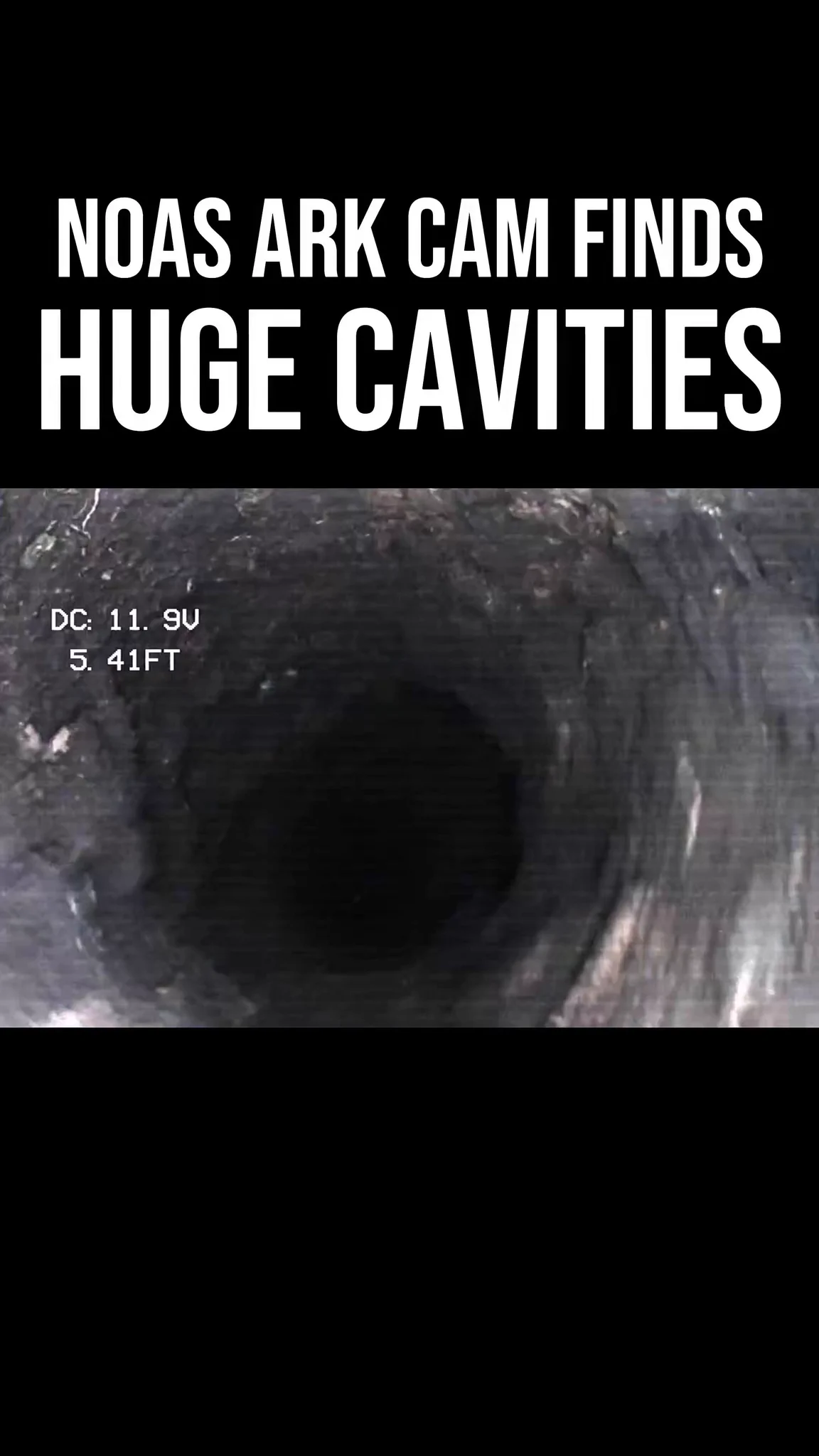
On the slopes of the Ararat region in eastern Turkey, a research team led by the organization Noah's Ark Scans has deployed a new phase of underground investigation at the Durupınar formation, a 515-foot boat-shaped geological feature. In a recent update shared on social media, the team presented video footage captured by a camera lowered into one of their core drill holes, revealing a large subterranean cavity.
The finding comes as part of an authorized expedition launched in September 2026 with official permits from Turkish authorities and academic support from archaeologists at Sivas Cumhuriyet University. Unlike previous drilling attempts in the 20th century, the current project uses a dry core drilling system capable of extracting continuous soil samples up to 60 feet (18 meters) deep without using cooling fluids that could contaminate the material.
During fieldwork directed by Professor Cenker Atila of Sivas Cumhuriyet University and Andrew Jones, founder of Noah's Ark Scans, researchers drilled core holes inside the boat-shaped outline as well as control locations on the surrounding mountainside. According to statements released to media outlets including , .
Andrew Jones noted that the material encountered beneath the upper sediment layer was harder than standard limestone bedrock. The team hypothesized that the obstacle could be petrified or highly mineralized wood, though they acknowledged that third-party laboratory testing is required to verify the exact mineral composition. Previous core drilling at the site in 1988 reached shallow depths and produced inconclusive results because water used to cool the drill bit corrupted the samples.
Camera Footage Reveals Subterranean Cavities
In addition to recovering sediment cores, the expedition incorporated an underground robotic probe named GOPHER. The drone equipped with a high-resolution camera was designed to enter narrow boreholes without opening large excavation trenches, allowing direct visual inspection of internal voids previously mapped by ground-penetrating radar.
Video shared by the team documents the probe descending through the narrow drill hole before breaking through into an open underground chamber. During initial core operations, researchers reported encountering several hidden cavities, including one that retained mud and water as drilling progressed without allowing immediate drainage into surrounding rock.
Biblical Context and Subsurface Radar Scans
The ongoing investigation at Durupınar stems from interest in Genesis 8:4, which states that "the ark came to rest on the mountains of Ararat." Genesis 6:14 describes the vessel's construction and internal layout: "Make yourself an ark of gopher wood. Make rooms in the ark, and cover it inside and out with pitch."
Geophysical surveys conducted at the site by defense scientist Dr. Khosrow Bakhtar using specialized radar systems identified linear anomalies, right-angle intersections, and layered subsurface boundaries. Initial soil tests indicated that samples from inside the formation contained up to 40% more organic carbon than control samples from outside, a detail the team suggests could point to ancient organic material.
Scientific Skepticism and Ongoing Laboratory Analysis
Despite the findings published by the expedition team, mainstream geologists maintain that the Durupınar formation is a natural landform. A landmark 1996 study by geologist Lorence Collins and explorer David Fasold concluded that the boat shape is the result of natural geological forces, including erosion, landslides, and folded rock strata.
Prominent creationist scholars have also urged restraint until findings undergo formal peer review in recognized scientific journals. Ken Ham, founder of Answers in Genesis, cautioned against declaring the site to be the biblical vessel before raw geophysical data and core samples are independently analyzed. The Noah's Ark Scans team confirmed that core samples have been refrigerated and dispatched for radiocarbon dating, mineralogy, and microscopic testing.
The Herald covers what almost no one else does: the persecuted church, the discovery that confirms the Bible, the faith that never makes the evening news. No subscription, no paywall, no outside advertisers. If this story mattered to you, help the next one get written.