Not yet confirmedUnder investigation. Here is what is known and what still needs proof.
A study of a First Temple-period seal impression that may be connected to an official in the biblical account of King Josiah is expected to appear in the Israel Exploration Journal by the end of 2026, according to Temple Mount Sifting Project co-founder and director Zachi Dvira.
The real size of the story is modest. There is an object found in July 2025, a reading of its inscription released by the team on July 30 of that year, and a preliminary presentation at a conference. The paper is not out yet: Dvira told JNS the team had just received its peer review corrections. The identification with the biblical figure remains a possibility, not an established match.
Two lines of ancient Hebrew in clay about 2,600 years old
The object is a bulla, the lump of clay that took the impression of a seal. A bulla is an inscribed clay, soft metal or wax token used in commercial and legal documentation. In this case, marks on the back show it sealed a bag or storage container, and it still carries a clear fingerprint, likely from the official who used it.
Epigrapher Anat Mendel-Geberovich and Dvira read the inscription, according to the , as “Belonging to Yed[a‛]yah (son of) Asayahu.” In the transcription, “son of” appears in parentheses and part of the first name in brackets, which in epigraphic convention marks elements supplied by the reader. Dvira told that nearly every letter is legible and that this is .
only the second time in more than 20 years of the project that a sealing with an inscription this complete has turned up
The find was close to an accident. Archaeologist Mordechai Ehrlich was going through a container of bones sifted about two years earlier. The piece looked and felt like bone, but he realized it was clay with writing on it. To read the letters, the team used Reflectance Transformation Imaging, which combines photos taken with the light moved around the object. Dvira also said the team rarely goes public so quickly. It did so here because the piece was so recognizable, because an expert in ancient Hebrew script works in the lab, and because the discovery came just before Tisha B’Av.
The date comes from paleography, the study of letter shapes. Based on the writing style, the sealing dates to the late First Temple period, roughly the late seventh to early sixth century BCE. That is the generation before the fall of Jerusalem, around 586 BCE.
What the Bible says about Asaiah, the king's servant
The name that drew attention appears in the story of King Josiah's reform. In 2 Kings 22:3-13, in the 18th year of his reign, the high priest Hilkiah finds the “book of the law” in the Temple, the scribe Shaphan reads it to the king, and Josiah tears his clothes. He then sends a delegation to inquire of the Lord. In 2 Kings 22:12 and the parallel in 2 Chronicles 34:20, one of the men is Asaiah, called “the king's servant.” The group goes to the prophetess Huldah (2 Kings 22:14), who announces disaster for Jerusalem but spares Josiah from seeing it (2 Kings 22:15-20).
The text does not name the book, and scholarly consensus holds it was either a copy of Deuteronomy or a text that became part of Deuteronomy. Josiah died at Megiddo (2 Kings 23:29), and within decades the Babylonians destroyed the city and the Temple.
The bulla's spelling is “Asayahu,” with a longer ending than the biblical “Asaiah.” The shorter and longer forms were used interchangeably in antiquity. The project's argument runs like this: if Yeda‛yah's father was Josiah's servant, the seal's owner would be that official's son, possibly someone also tied to Temple or royal administration. The Armstrong Institute of Biblical Archaeology, which has covered the find, reports that the researchers call the identification “highly plausible,” not certain.
Why a matching name does not settle it
Dvira acknowledges the limit himself. He told The Times of Israel the team is not sure the Asayahu on the sealing is the biblical one, though he noted that such seals were not objects of ordinary people. Because Asayahu is an uncommon name, he believes there is a good chance the seal belonged to the adviser's son. He also told JNS the seal belonged to the son, not to Asaiah himself.
The Armstrong Institute's write-up points to a standard in the field: identifications like this usually need extra proof, such as a two-generation match or a matching title. Here there is only the father's name, no title, and the verses in Kings and Chronicles do not name that Asaiah's father or any children. The Bible also records other men with the name, as in 1 Chronicles 4:36 and 9:5.
There is also the matter of a second seal. Dvira noted that the name Asayahu appears on a bulla with the words “servant of the king,” identified about 20 years ago. Because it surfaced on the antiquities market, its authenticity remains uncertain. The project's June 2026 presentation at the Archaeological Congress covered the meaning of “son” (ben) and a statistical analysis of how often identified biblical figures turn up in Jerusalem and Judah. Those arguments can be judged only once the paper is out.
There is precedent for caution. Epigrapher Christopher Rollston of George Washington University has repeatedly urged care with biblical identifications based on names. In the case of the so-called Isaiah bulla, he noted the name and its variants were common in ancient Israel and Judah. I found no comment from him on the Asayahu sealing, so the reference is about method, not a critique of this find.
Soil without layers: the problem of where the bulla came from
The oldest objection to the project applies to this piece. The sifted soil was removed from the Temple Mount without archaeological supervision during construction of the Marwani Mosque, the so-called Solomon's Stables. According to The Times of Israel, roughly 400 truckloads were dumped outside the Old City. The project began in 2004. Without layers, no one knows at what depth, or beside what structure, each object lay. JNS puts it plainly: recovering an object does not restore the layer it came from. Dating therefore relies on comparison with securely dated finds elsewhere.
The critics have names and arguments. Professor Israel Finkelstein of Tel Aviv University said in 2014 that it is reasonable to assume the fills come from the Temple Mount, but that the debris could also have been brought from other locations. Professor Ronny Reich, who has excavated extensively in the Old City, said in 2018 that because the soil is out of context it has “limited value.” Yonathan Mizrachi of the group Emek Shaveh holds that pottery without structures has very little value. A paper in the Journal of Field Archaeology likewise noted that the project has come under scrutiny from an archaeological practice point of view, particularly because the material is out of context.
Gabriel Barkay, the co-founder who died in January 2026, answered that where excavation is impossible, some information beats none. Eilat Mazar, quoted in the same 2014 report, argued that everything from the fill belongs to the Temple Mount in one way or another. Finkelstein, for his part, granted then that an extraordinary find such as an inscription would be significant. Here the text is legible. What is missing is the exact place the piece lay.
Dvira says the bulla came from a storage setting. He told The Times of Israel the owner administered storehouses on the Temple Mount, though he could not say whether for the Temple treasury or the royal one. The team had earlier found another bulla, that of [He]zelyahu son of Immer, linked to the Temple treasury administration. Immer is the name of a priestly family mentioned in Jeremiah 20:1.
What the headline blurred
The JNS headline calls the find “groundbreaking,” but the news is a forthcoming publication, not a new result. The same JNS piece covers other objects that should not be confused with the Asayahu bulla. The seal impression of King Hezekiah was recovered in 2009 while the team wet-sifted for Eilat Mazar's Ophel excavation, and it did not come from Temple Mount soil, a point Dvira stressed. The other case is a stone seal the group suspects may be associated with Alexander Jannaeus, a Hasmonean ruler. Initially thought to belong to the First Temple period, it was reassessed in the lab as a Second Temple-period object; the identification is preliminary and unpublished. That re-dating applies to the stone seal, not to the bulla.
There is also a difference in timing. A summary from the organization IFCJ says December; JNS says by the end of 2026. The wider date is the safer one.
For readers of the Bible, the interest is real but limited. The accounts in Kings and Chronicles describe an administration of scribes, royal servants and treasurers, and Jerusalem has yielded hundreds of bullae of this kind. A bulla with a name like this one, in this setting, shows the administrative world described in the text existed. It does not show that this Asayahu's father was the man sent to Huldah, and it adds nothing to the content of what Josiah heard.
The project also faces a practical problem. Its annual budget is about 1.8 million shekels. At the current pace, Dvira estimates 25 years to finish the final publication, or five with an adequate budget. He expects three to four more years of sifting the remaining soil. Meanwhile, the bulla paper will be the first public test of the team's arguments.
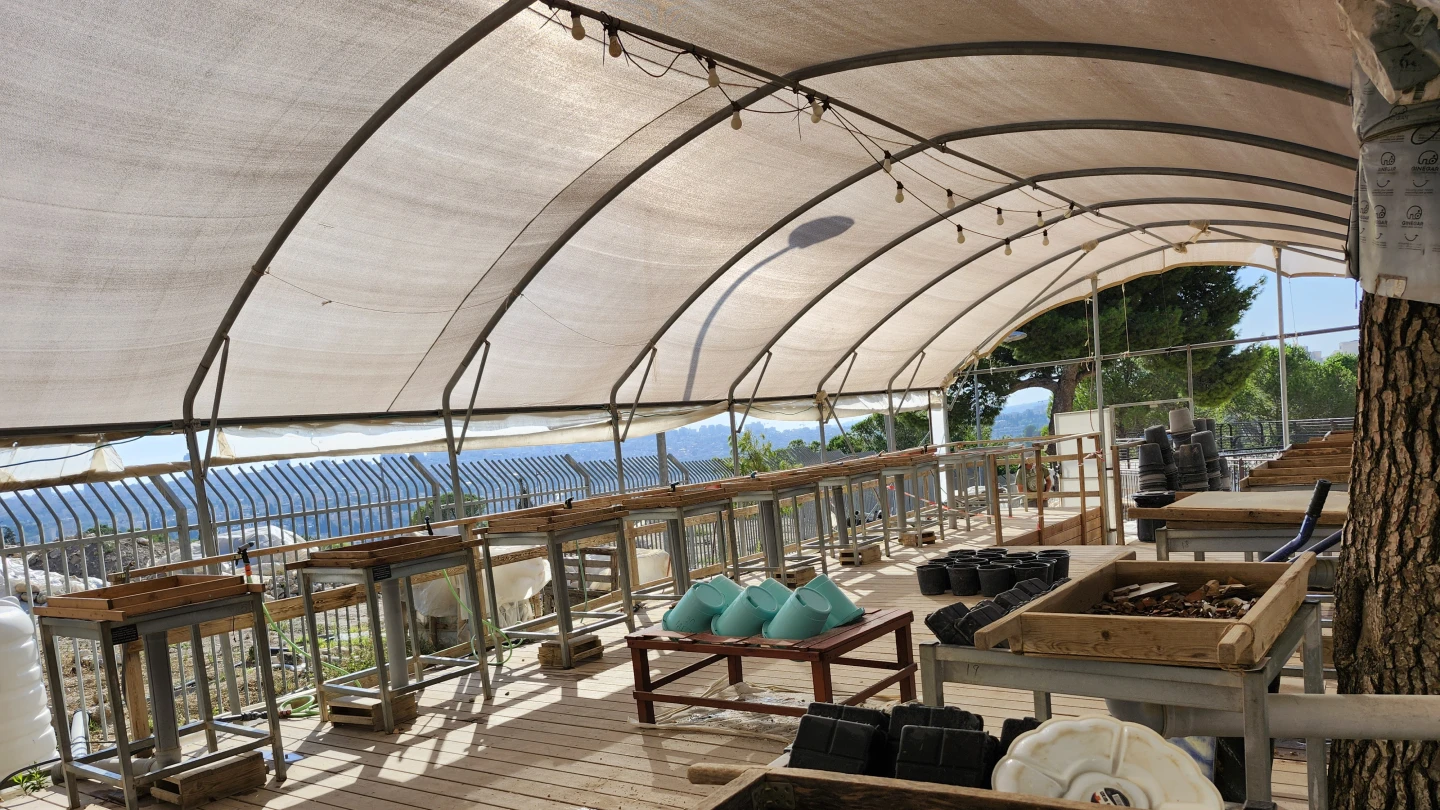
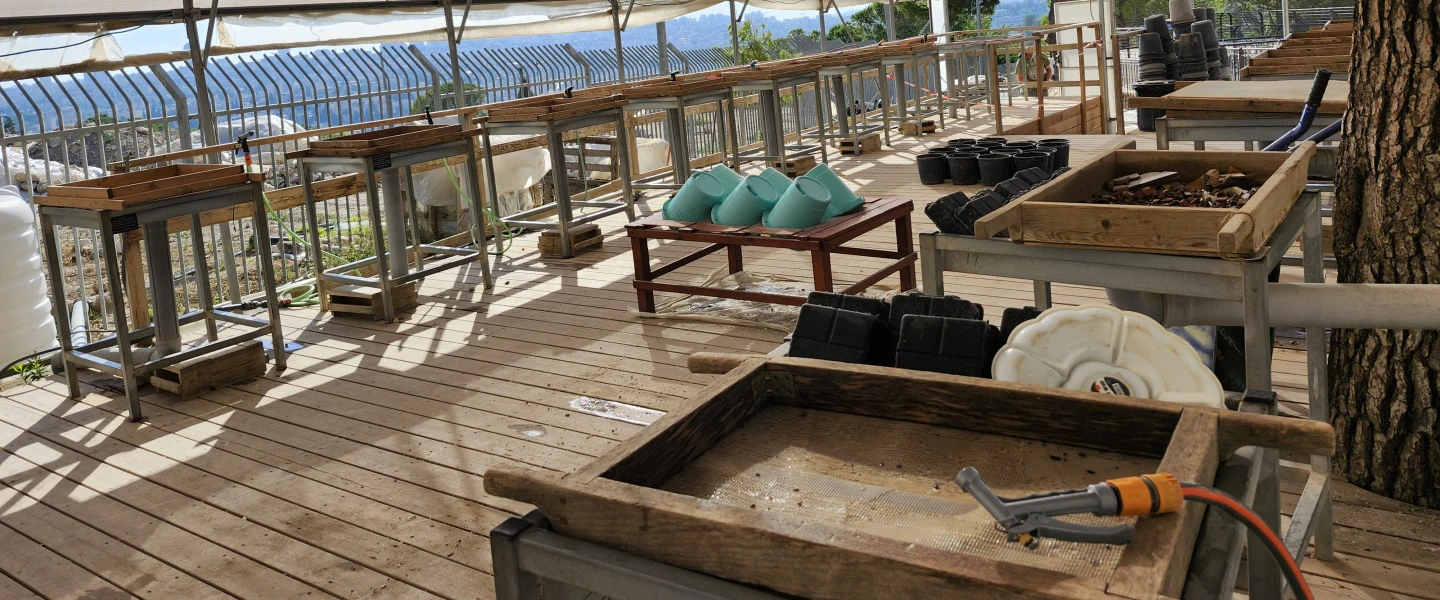
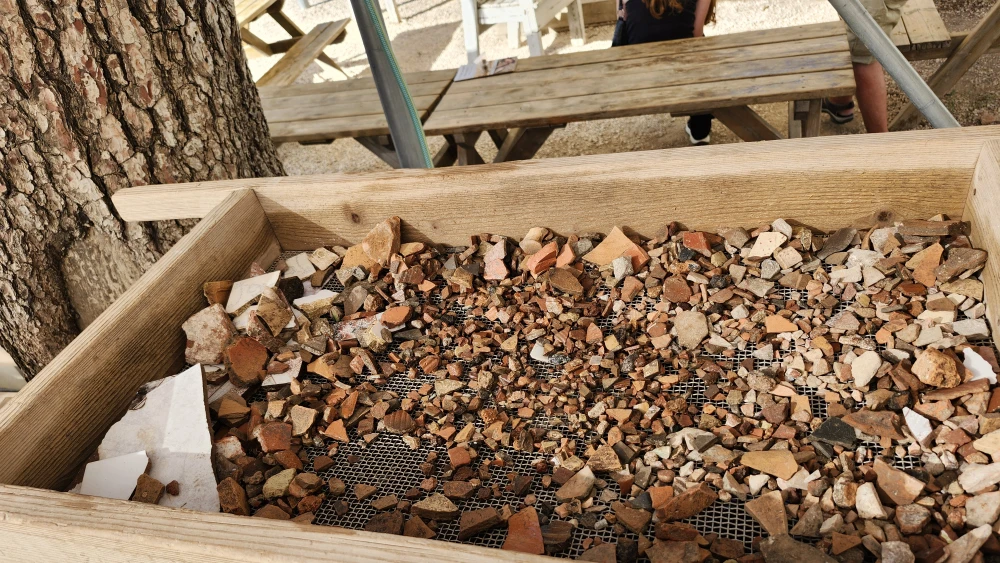
Pottery fragments and other material await examination at the Temple Mount Sifting Project in Jerusalem. Photo by Dave Gordon. Photo: Israel & Jewish News - JNS