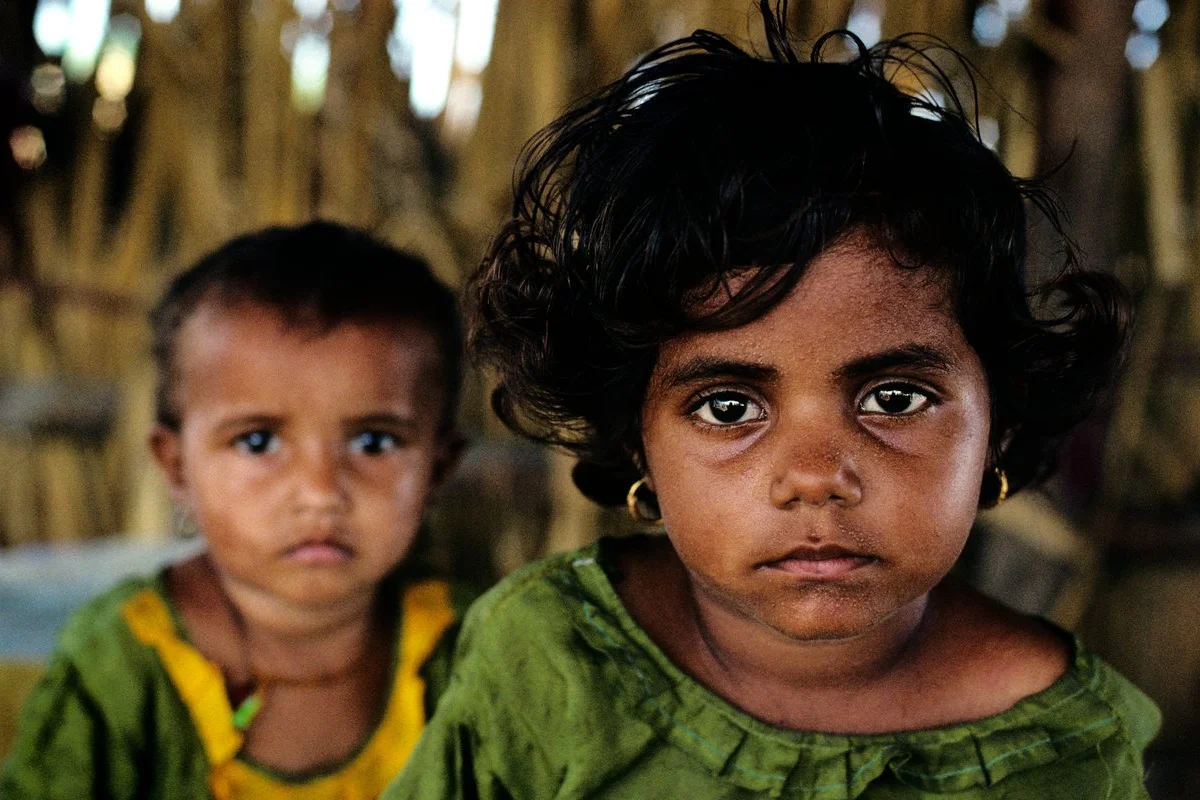
Pastor brasileiro liberta mais de 50 escravos no Paquistão Photo: Metrópoles
In February 2025, in Lahore, Pakistan, Brazilian missionary Claudinei Vicente signed a paper he later said he never imagined signing: the release agreement for a Christian family held by debt at a brick kiln. The payment was made in front of the “former owner.” Vicente says he was given permission to pray for the workers, and for the kiln owner, who is Muslim.
Since 2020, when he began working in the country, Vicente, now 52 and living in São Paulo, has rescued more than 50 people from 9 different families, according to a report by Metrópoles, a Brazilian news outlet. The rescues took place at brick kilns in Lahore, Pakistan's second-largest city.
Freedom costs around $3,000, about 16,000 reais, and the price varies with the number of people and how long they have been in servitude. The money comes from Brazil.
Who negotiates, who pays, and what comes next
Vicente runs online fundraisers in Brazil, and a team in Pakistan negotiates directly with the kiln owners. The work is done in partnership with local Christian leaders. One of them is Pastor Simon Peter Kaleem, who helped baptize the freed families in a makeshift pool in March 2025. “This is where everything ends and starts again,” the missionary told his followers, according to , a Brazilian Christian site.
After the payment, the support continues. According to Metrópoles, the families get housing and food for about six months, financial-literacy classes and, in some cases, a tuk-tuk, the motorized three-wheeler common across Asia, so they can work for themselves. The “Recomeço” (Fresh Start) fundraiser has a goal of 300,000 reais and more than 2,700 donations. In May 2026, the crowdfunding site Vakinha showed 99.7% of the goal reached.
The numbers have grown with each report. In 2024 he paid $1,800 to free one family of five. Early in 2025 he spoke of four families, then five. Guiame reported that in 2025 alone he paid for more than seven. By August, Metrópoles counted nine.
Inside one kiln, his mission, called Aonde Deus Mandar (“Wherever God Sends”), built a school that will also house a church. The Muslim owner agreed to let the children leave work for six hours to study. To Vicente, building it inside a Muslim-owned factory is a true miracle.
A debt of a few dollars, handed from father to son
Vicente describes the mechanism this way: what a family earns in a day does not cover the day's food, and the gap becomes a daily debt for food and housing. That is why he told the baptized families, “He paid the debt.” Many families fall into the trap by taking loans from kiln owners for medical bills, weddings, food or rent. Greg Kelley of World Mission told Mission Network News he met second- and third-generation kiln families whose bondage began with a debt of perhaps $100, a medical bill.
The system has a local name, peshgi: a cash advance the kiln owner gives the worker. A field study by the CenHTRO center cites more than 20,000 kilns nationwide with more than 4.5 million workers, and estimates that over 90% have taken a peshgi. Another estimate, reported by UCA News from the Pulitzer Center, runs from 3.5 million to 5 million workers. A study published by the International Labour Organization documents how advances, household labor and few job options reinforce that dependence.
The 2023 Global Slavery Index from Walk Free estimated 10.6 of every 1,000 people in Pakistan were in modern slavery in 2021, or 2,349,000 people, counting forced labor, forced marriage and other forms.
Scripture knows this machinery. In Nehemiah 5:1-5, Israelites mortgage their fields and hand over sons and daughters as slaves to pay debts, and Nehemiah demands it be undone. Proverbs 22:7 says the borrower is the slave of the lender. And Leviticus 25:47-55 provides for a relative to redeem a man who sold himself because of debt.
What the law says, and what happens at the kilns
On paper, debt bondage ended in 1992. The Bonded Labour System (Abolition) Act voids any peshgi arrangement and ends past bonded debts. In 2013, the Supreme Court barred kiln owners from lending workers more than 15 days of wages. Owners tried to block the law in the Shariat Court, asking that parts of it be declared un-Islamic, and failed.
In practice, HuffPost reported, the law is rarely enforced, because towns and villages depend on the kilns to survive. Meher Sader Ali of the Bonded Labour Liberation Front told UCA News that kiln owners are feudal lords and that many judges and police officials serve their interests. In a November 2025 debate in the British Parliament, members said more than three decades after the law, enforcement appears “sporadic and ineffective.”
In March 2025, Pakistan ratified the 2014 Protocol to the Forced Labour Convention, and the ILO's country director called the move “historic.” It was Pakistan's first ratification of an ILO standard since 2006. The law firm Paul Hastings notes that no matching domestic legislation has followed yet.
Christians among the bricks
Christians are 1.8% of Pakistan's population, according to Open Doors. But they show up in force at the kilns. UCA News reported that about 60% of kiln workers in Punjab province are Christians. In the British Parliament, members named Christians, lower-caste Hindus and Muslim Shaikhs among the groups tied to the kilns.
Open Doors ranked Pakistan 8th on its 2026 World Watch List, with a score of 87 out of 100. The group says Christians there face systemic discrimination, violence, forced conversions and bonded labor, with little protection from the state. A report by a British parliamentary group on Pakistani minorities calls bonded labor a product of poverty and social marginalization.
Vicente says that although the kiln owners are Muslim, the enslaved Christian families are allowed to worship and, with no church building, gather outdoors to praise God.
The buffalo keeper and the return trip
There is a second kind of servitude, he says he discovered: farm bondage. In 2025 he met a man who for 31 years had tended buffalo in a rural area for food alone. According to Vicente's account to Guiame, the man worked 22 hours a day in 50-degree heat (122 degrees Fahrenheit) and “slept in the pen.” He got half a day every two weeks to see his family, and his wife and one of his sons were ill.
The mission paid for his freedom. Months later, at a wedding, Vicente did not recognize him: the man looked 15 years younger. He and his family hugged the missionary and cried.
In the countryside, the missionary says, rescue is far harder. Owners do not want to lose their workers, and some, he says, have mafia ties. He says the risk is high, but he is not stopping: “It is very risky, but we keep trying. I will be back there soon to continue this work.”