Salvage excavations along Highway 66 in northern Israel have uncovered structures and ritual artifacts spanning two distinct periods in the ancient history of Tel Megiddo. The work, conducted by the Israel Antiquities Authority (IAA) ahead of a road expansion funded by the public company Netivei Israel, revealed a 3,300-year-old ritual offering pit and a 5,000-year-old winepress near the ancient city mound.
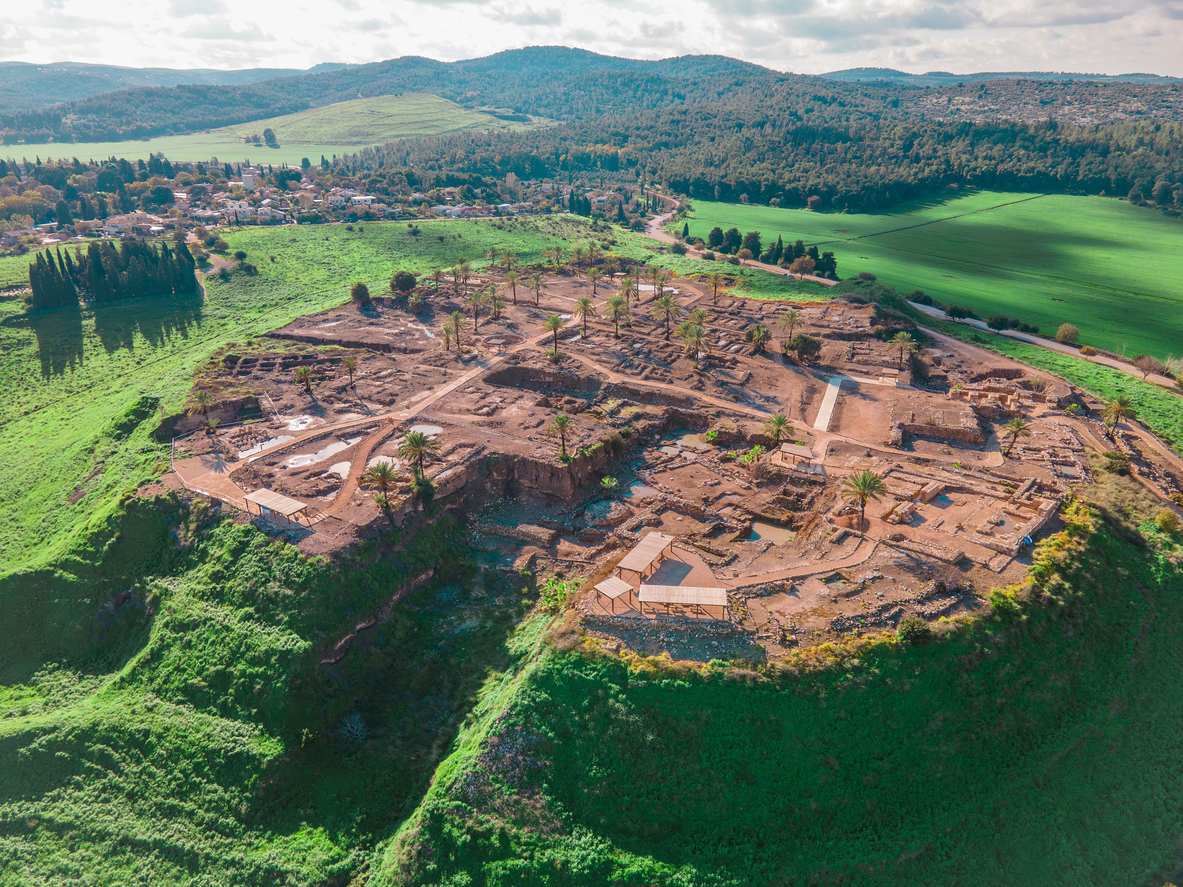
The discovery was made along a one-mile stretch adjacent to the site of Megiddo, located in the Jezreel Valley and identified in the Book of Revelation (Revelation 16:16) as Armageddon. Excavation directors Amir Golani and Barak Tzin reported that the findings include residential buildings and processing facilities outside the main city walls.
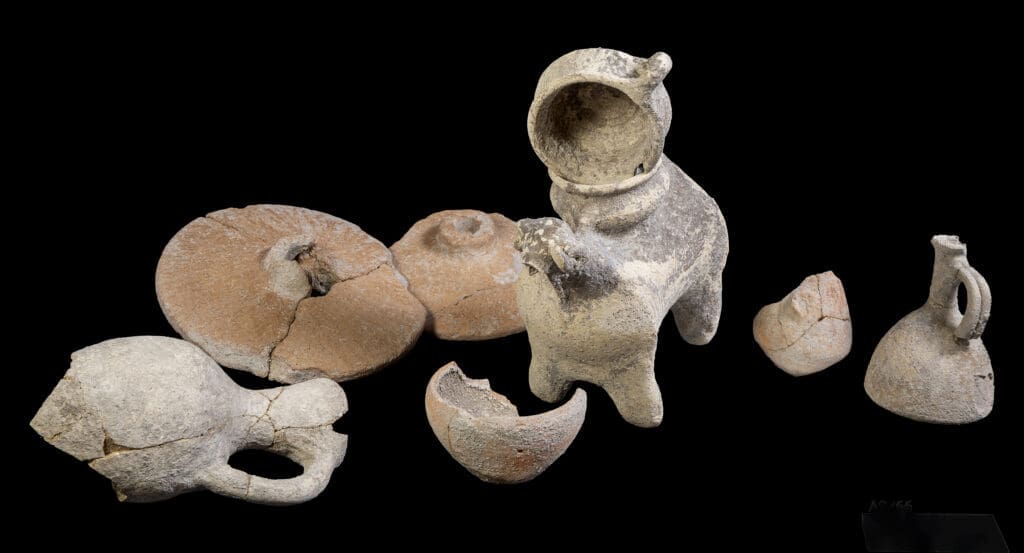
In the layer dating to the end of the Late Bronze Age II (around 1300 BC), archaeologists uncovered a favissa, a pit built for the ceremonial burial of sacred objects. The pit contained storage jars, small juglets imported from Cyprus, a miniature ceramic shrine model, and a set of ritual libation vessels.
Among the libation items is a ram-shaped vessel designed for libations of precious liquids such as milk, oil, or wine. The vessel features a small bowl attached to the animal's back that acted as a funnel, allowing liquid poured into it to spill through the ram's mouth when tilted forward over a smaller collection bowl.
According to IAA researchers, the objects were intentionally damaged prior to burial, a practice known in archaeological contexts as ritual decommissioning. The items were intentionally buried in a ritual pit outside the urban walls, pointing to a folk worship practice carried out by the rural population or travelers arriving at the city.
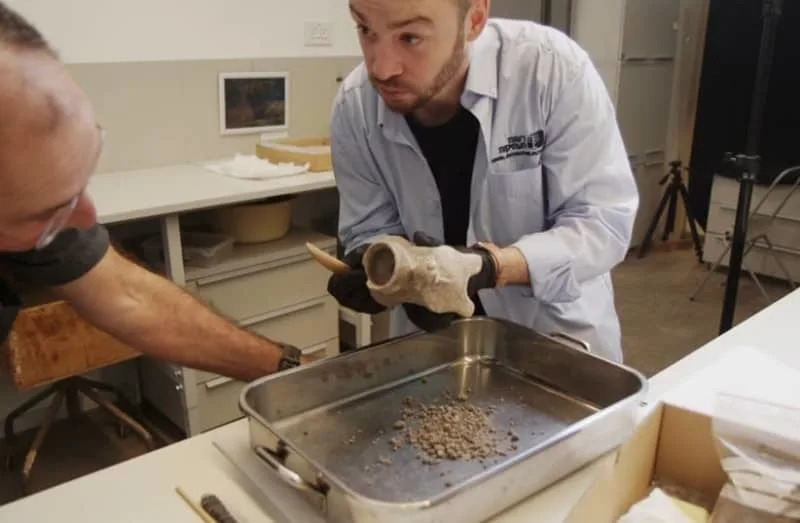
The ritual vessel was brought to the Israel Antiquities Authority laboratories for treatment. (credit: Emil Aladjem, Israel Antiquities Authority) Photo: Yahoo News (aguardando autorização)
A 5,000-Year-Old Press and Early Winemaking
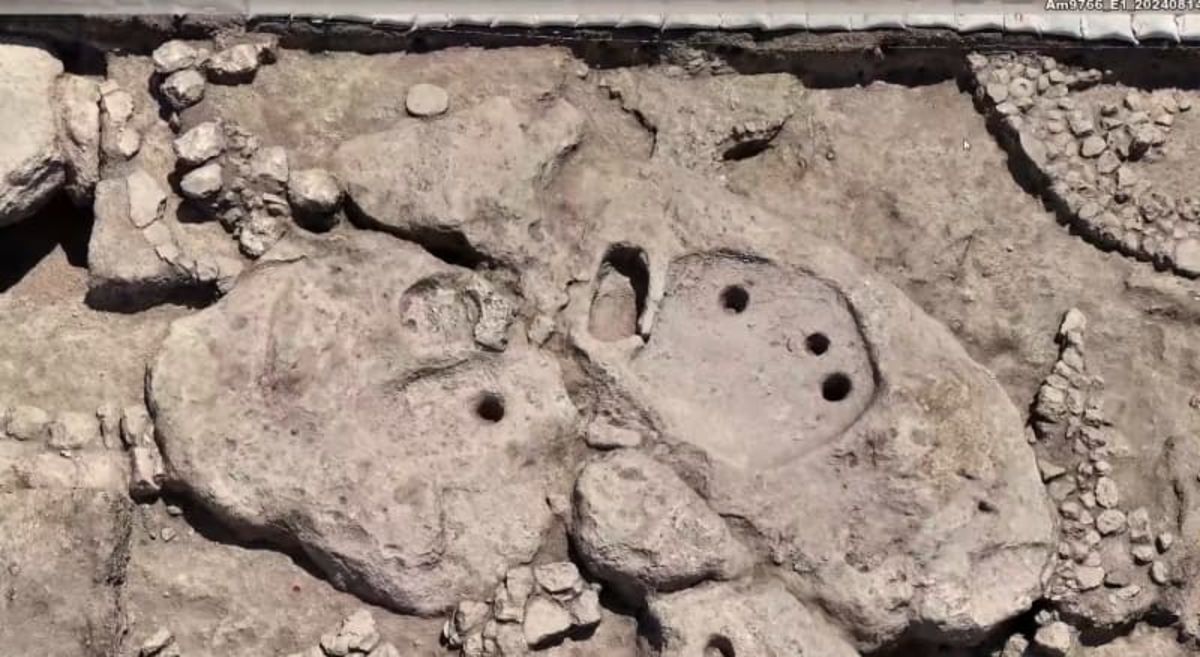
In a deeper stratum dating to the Early Bronze Age IB (around 3000 BC), the team excavated a rock-cut winepress. The installation consists of a sloped treading surface and a collection vat carved directly into bedrock, surrounded by the foundations of mudbrick residential houses.
Excavation directors noted in a statement that the press provides direct proof of local wine production at the onset of the Early Bronze Age in the Southern Levant. Previously, local wine production during this period was inferred from grape seeds and chemical residues in storage jars, without direct physical evidence of a pressing installation within a residential zone.
The proximity of the surrounding houses indicates that winemaking took place within an expanding community prior to the construction of Megiddo's fortified urban center. IAA Director-General Eli Escusido stated that the artifacts were transferred to the authority's laboratories and will be exhibited at the Jay and Jeanie Schottenstein National Campus for the Archaeology of Israel in Jerusalem.
Why Did Worship Take Place Outside Megiddo's Walls?
Archaeologists highlighted that the pit was placed in direct line of sight of the monumental temple located atop the tell of Megiddo. A nearby rock outcrop suggests the presence of an open-air altar used by local residents.
The IAA team suggests that common farmers and local residents were likely barred from entering the sacred precinct of the main city temple. The ritual pit along the roadside served as a consecration site for worshippers seeking to offer libations before entering the city gates.
The miniature clay shrine model found in the pit displays crude craftsmanship. Amir Golani noted that the object may have been crafted by local artisans as a simplified representation of contemporary temples, commissioned by worshippers of modest means.
Megiddo in the Biblical Text and the Levantine Landscape
In the biblical account, the first biblical mention of Megiddo appears in the Book of Joshua (Joshua 12:21), where its ruler is listed among the Canaanite kings defeated during the conquest of Canaan. In Joshua 17:11 and Judges 1:27, the text notes that the tribe of Manasseh did not initially drive out the Canaanite inhabitants of Megiddo.
The city was later fortified by King Solomon in the 10th century BC (1 Kings 9:15) to serve as a royal administrative and military hub. The Late Bronze Age ritual evidence documents the Canaanite religious landscape that preceded the establishment of Israelite monotheistic worship in the area.
Excavations along the Highway 66 route have concluded, while laboratory analyses of organic residues and radiocarbon testing remain underway.
The Herald covers what almost no one else does: the persecuted church, the discovery that confirms the Bible, the faith that never makes the evening news. No subscription, no paywall, no outside advertisers. If this story mattered to you, help the next one get written.