Not yet confirmedUnder investigation. Here is what is known and what still needs proof.
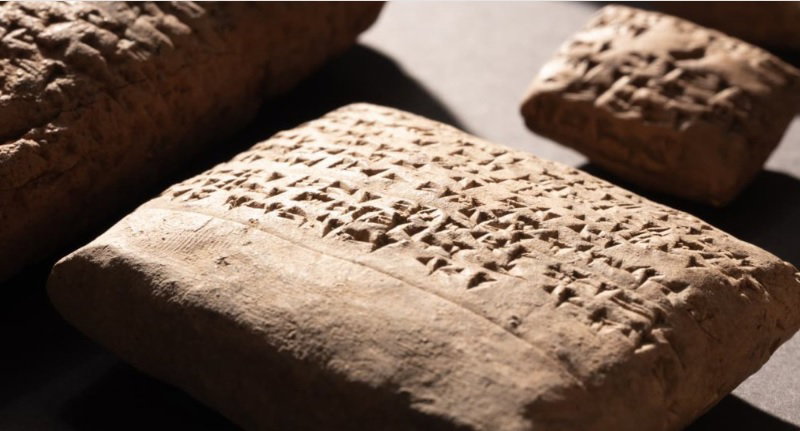
Excavators at Kayalıpınar, in Turkey's central Sivas Province, now count 184 cuneiform tablets and clay fragments that the team treats as a Hittite royal archive about 3,400 years old. This season's dig, run by Koç University under the Ministry of Culture and Tourism, recovered 131 pieces, and with earlier finds the total reaches 184. The 53 pieces found at the same site in 2025 are also believed to belong to the archive.
The real size of the story: this is an excavation find, announced on October 8, 2026 by Culture and Tourism Minister Mehmet Nuri Ersoy and described in a ministry press release. It is not a peer-reviewed study or an edition of the texts. Researchers are still translating the tablets. Everything below about their contents comes from the official statement and press summaries, not from published transliterations.
An epidemic among children, an infant princess and generals pleading for chariots
The texts are written in Hittite and Hurrian, and cover divination, augury, letters, rituals and prayers. The most discussed documents describe a high fever that moved from city to city and hit infants and young children hardest. According to the ministry, diviners tracked the health of princes and princesses, and of the children of high officials, through oracle inquiries.
One group of tablets centers on a princess who was still nursing. Her illness and death appear in the records. A tablet sent by a diviner to the king says she fell ill at Ziulila, a city whose location is unknown. Another records her death and the funeral ritual. She is unnamed in the descriptions released so far, and those descriptions are summaries, not full translations.
Another text is an urgent letter from Hittite generals in western Anatolia to the king, who was at Šamuḫa. The generals say Hittite territory is surrounded by enemies and ask for soldiers, horses and chariots, or the king's armies will die. They add that they will not take responsibility for the outcome if help does not come. Anatolian Archaeology notes that the enemy has not yet been identified.
A third tablet reads like a diary. It records bird types and flight routes along with the cities where diviners stayed, and the ministry likens the entries to a diary. It also supplies divinatory signs and omens that were previously unknown. In 2025 the team had already found a small, intact bird-omen tablet with a hole through the center and string marks. Excavation director Çiğdem Maner said at the time that it may have been hung or worn around the neck, according to Arkeonews.
A Hittite cuneiform tablet with a cultic festival script from Hattusa, on display at the Oriental Institute in Chicago. It is not part of the Kayalıpınar archive. Photo: Mx. Granger, CC0, Wikimedia Commons
Šamuḫa: a goddess's sanctuary that became the king's military base
Kayalıpınar sits on the ancient Šamuḫa, a city widely identified with the site. The identification was not always firm. For decades scholars argued over whether Šamuḫa lay on the Euphrates or on the Kızılırmak, the ancient Halys. The cuneiform archives from Kayalıpınar strongly connect the site with Šamuḫa, according to Wikipedia, which summarizes the literature.
The city was a religious center. The scholar René Lebrun called it the “religious foyer” of the Hittite Empire in 1976. The goddess Šauška, associated with love and war, was worshipped there, and the local deity was known as the Ishtar of Šamuḫa. Wikipedia reports that King Mursili II made his youngest son, the future Hattusili III, her priest. Before the Hittites, the site was already home to a trading post of Assyrian merchants.
In the 14th century B.C., the picture changed. National Geographic describes Šamuḫa as a religious and commercial center that became a military capital under Tudhaliya, when the mountain peoples known as the Kaska were attacking Hittite cities. That backdrop helps explain the generals' letter and the crisis tone of the archive.
The site has been producing tablets for more than two decades. The first fragment turned up in 1999. Systematic excavation began in 2004 under Andreas Müller-Karpe. More than a hundred tablets, mostly rituals, festivals, cult inventories and oracles, surfaced in 2015. Since 2021, Maner's team from Koç University has dug there. According to The Debrief, more than 50 seal impressions of royalty, priests and administrators have come out. The team suspects a building used to seal documents lies beneath layers containing early Christian burials, which are being carefully removed.
How a Hittite tablet is dated, and what the announcement leaves out
The ministry and the press say the pieces date to the reign of Tudhaliya II, about 3,400 years ago. None of the accounts I read explains the method, and none mentions radiocarbon dating. In general, Hittitologists combine three things: names of kings and officials in the text, the shape of the cuneiform signs (paleography), and the excavation layer in which the pieces were found. That describes the field's usual practice, not what this team did.
One detail helps. Maner said kings' names appear on the omen tablets. There is also a numbering caveat: the king sometimes called Tudhaliya III is designated Tudhaliya II by some authors. The label “Tudhaliya II” therefore depends on who is counting, and the likely window is around 1400 B.C. Confirmation will come when specialists publish transliterations and other Hittitologists can check names and signs.
“Largest archive of the century” is the team's assessment, not a measured record
The team considers the assemblage the most extensive Hittite-language archive found in the 21st century and one of the most significant concentrations of Hittite documents outside Hattusa. That is the excavators' judgment, and three points call for caution.
First, scale. More than 30,000 Hittite tablets and fragments are known from two centuries of excavation. The Boğazköy archive, ancient Hattusa, alone holds about 25,000. Building A at Şapinuwa yielded about 5,000 tablets and fragments from the time of Tudhaliya. Wikipedia notes that most are fragmentary and that the archive was unpublished as of 2014. Whether 184 pieces count as the “most extensive” depends on how one defines an archive and when it counts as discovered. I found no independent Hittitologist who has weighed in on the claim.
Second, the count. The 184 figure merges two seasons, and one of them has differing numbers. In 2025, press reports spoke of 56 tablets and 22 seal impressions, while the ministry now counts 53 as part of the archive. It may be a reclassification, but the difference has not been explained.
Third, the Bible. Some social media posts framed the find as a rebuke to those who doubted the Hittites existed. That story has a history: scholars in the 19th and early 20th centuries debated whether the Hittites existed at all, since the Bible was the main known source. But that doubt was settled over a century ago. The Boğazköy archives were discovered in 1906. As far as is known, the Kayalıpınar tablets do not mention Israel, the Bible or any biblical figure.
The Hittites of Ephron and Uriah: the link to the Bible is indirect
The Bible mentions the Hittites at key points, as the Biblical Archaeology Society lists them. In Genesis 23, Ephron the Hittite sells Abraham the field and cave of Machpelah near Hebron as a family burial ground. In Genesis 26:34, Esau marries Hittite women. David has Uriah the Hittite killed in 2 Samuel 11 to take his wife. Solomon has Hittite wives in 1 Kings 10:29 through 11:2, and Ezekiel 16:3 uses the image of a Hittite mother against Jerusalem. In Genesis 10:15, Heth appears among the sons of Canaan.
The difficulty is that the Anatolian Hittite empire and the “sons of Heth” in Canaan do not always line up. That is the central debate. The BAS sums up a common position: the archaeological record shows the original Hittites of Hattusa, while the Bible mostly refers to the Neo-Hittites, peoples of northern Syrian states who kept the culture alive after the kingdom collapsed around the 12th century B.C. The magazine notes that most scholars believe the patriarchal narratives were written centuries after the events and contain anachronisms, which would explain why Hittites appear in earlier periods. Readers who take the text more traditionally may prefer another reading and see real second-millennium populations. The debate does not depend on Kayalıpınar.
There is one curious parallel that proves nothing yet. The Armstrong Institute of Biblical Archaeology, which is church-affiliated and welcomes the find, notes that Tudhaliya was the name of several Hittite kings and suggests a connection to “Tidal, king of Goiim” in Genesis 14:1, a kind of “proto-Tudhaliya.” That is one group's interpretation, not a consensus among Hittitologists. A simpler parallel: the generals ask for horses and chariots, and 1 Kings 10:29 shows Hittite kings buying chariots from Solomon, while 2 Kings 7:6 mentions a sound of chariots and horses attributed to the “kings of the Hittites.” This reflects the region's military reputation, not a link between the texts.
The gap in time also matters. Tudhaliya II reigned around 1400 B.C. David and Uriah live about four centuries later on the most common chronology. The archive helps explain the Hittite world, not Uriah's.
Bird omens: what the Hittite court practiced and what the Bible forbids
The clearest point of contact with the biblical text may be divination. The Hittite court carefully recorded bird omens, and the tablets show that politics and the royal family's health ran through such oracles. Maner said the tablets indicate that the continuation of the Hittite kingdom was determined through bird divination. She also said the place where they were found is where bird divination was done or archived.
The Bible belongs to a different religious world and prohibits such practices. Leviticus 19:26 and Deuteronomy 18:10-12 condemn divination and omen-reading among the people of Israel. Those passages do not name the Hittites, but they show the contrast between what Israelite law required and what neighboring courts did as a matter of course. The archive should help show how oracles worked in practice and, with that, the cultural setting from which Israel set itself apart.
For readers of faith, the gain is historical, not doctrinal. The tablets neither prove nor refute the Bible. They show, in plain language, real people who feared for their children's health and begged their king for help. When the transliterations are published, specialists will be able to check more calmly what the announcement summarized.