Second Temple ritual bath complex found at foot of Temple Mount: 3,000 sq ft, with one vaulted mikveh still 14 feet tall
Hebrew University excavators announced the Ophel find after five seasons; coins date it to about 10 CE, and the full scientific report is still to come.
Not yet confirmedUnder investigation. Here is what is known and what still needs proof.
The Hebrew University of Jerusalem announced on the morning of September 24, 2026 that its archaeologists had uncovered a complex of Second Temple ritual baths in the Ophel, the area immediately south of the Temple Mount in Jerusalem's Old City. The dig is directed by Professors Uzi Leibner and Orit Peleg-Barkat of the university's Institute of Archaeology.
Here is how big the news really is. This is an excavation find announced through a press release and press tours, not a peer-reviewed study. The structures themselves are physical and reporters have walked through them. What they were used for is the directors' interpretation: they conclude the complex served pilgrims who purified themselves before going up to the Temple, based on its location, size and design rather than any inscription saying so.
The main numbers: the complex covers about 280 square meters (roughly 3,000 square feet) and was built around 10 CE, a date based on the coins found there. One bath survives to a height of about 4.2 meters, or 14 feet, and keeps its vaulted stone ceiling.
What turned up below the stairs to the Triple Gate
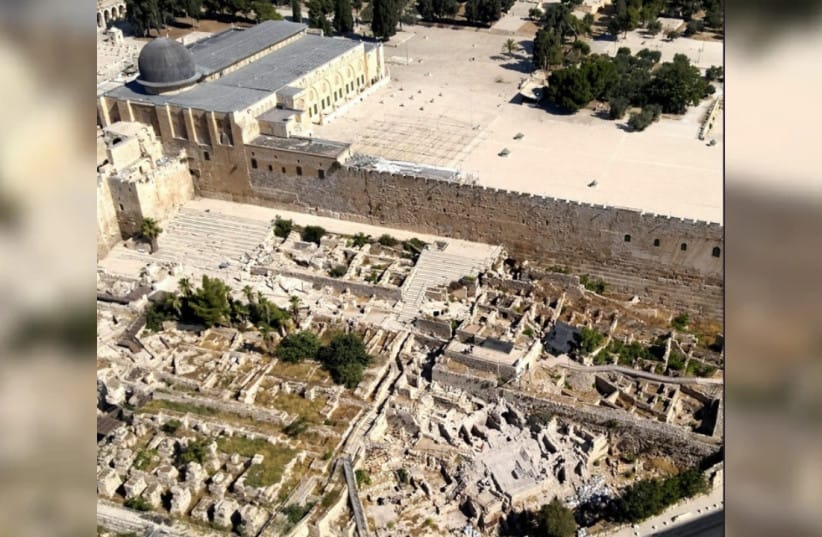
The site sits beside the Triple Gate, the easternmost of the Huldah Gates, now sealed in the Temple Mount's southern wall. The Times of Israel describes it as public infrastructure built for masses of pilgrims, about 50 meters (164 feet) from the Temple entrance. In antiquity, the gate opened onto an underground staircase that climbed straight up to the middle of the Temple Mount plaza.
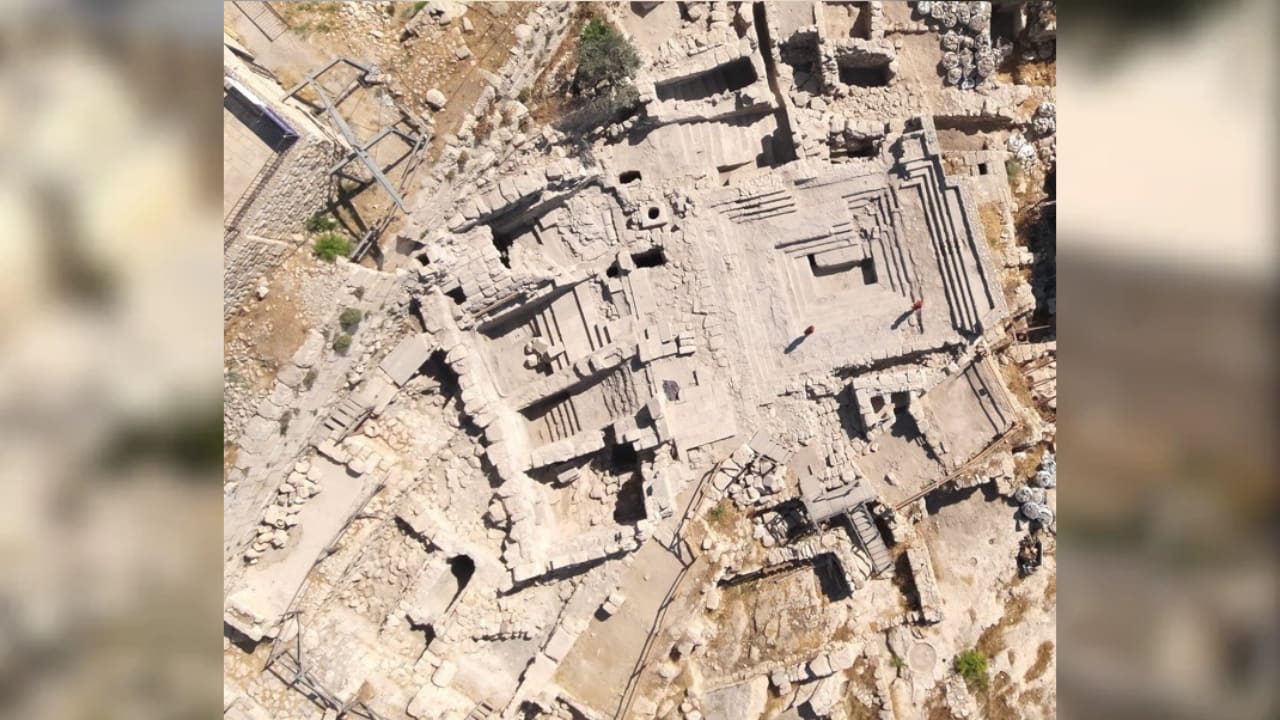
At the center is a large plastered pool, roughly 12 by 9.5 meters, with steps descending from all four sides. It comes with a caveat. Leibner thinks it may have been used to purify vessels, and Peleg-Barkat told Haaretz it probably wasn't a typical mikveh, though it may have been used to purify objects.
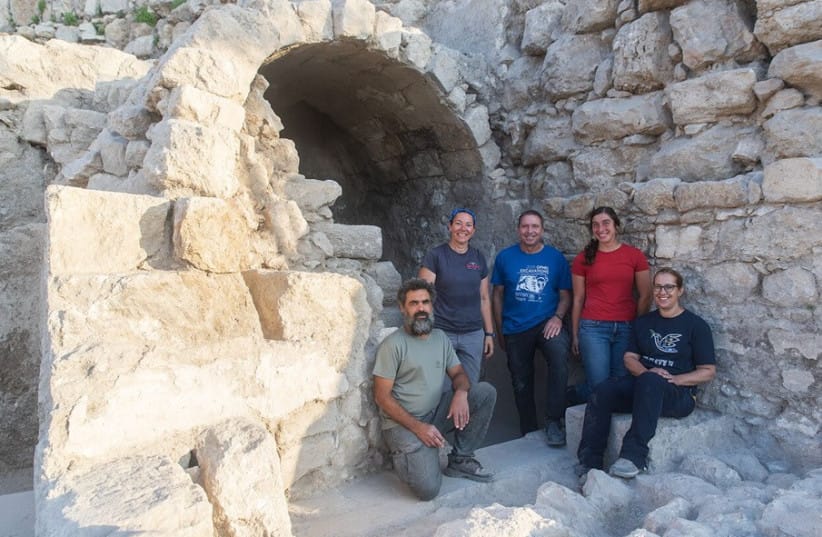
Northwest of that pool is a four-room building of finely cut ashlar stone. Three rooms held mikvehs, and three of the four rooms were originally covered by vaulted stone ceilings, though only one survives. Leibner called that bath the "crown jewel" of the discovery when he spoke to the Times of Israel. A shaft in the ceiling shows where water was poured in. He said a Second Temple structure preserved from floor to ceiling is very rare in Jerusalem.
How it survived is a story in itself. About 300 years after Rome destroyed Jerusalem, Byzantine builders put up a residential quarter on the spot. Rather than tear the vaulted bath out, they built a floor over it and turned it into a cistern. That sealed it for more than 1,500 years. Above this line of mikvehs, Leibner said, nothing survived.
There is also a hint of crowd control. One staircase has a low dividing line down the middle, which the researchers read as a sign that pilgrims may have entered on one side and left on the other. The logic, Leibner explained, is that you would not want to touch someone who had not yet immersed.
How the date and the purpose were worked out
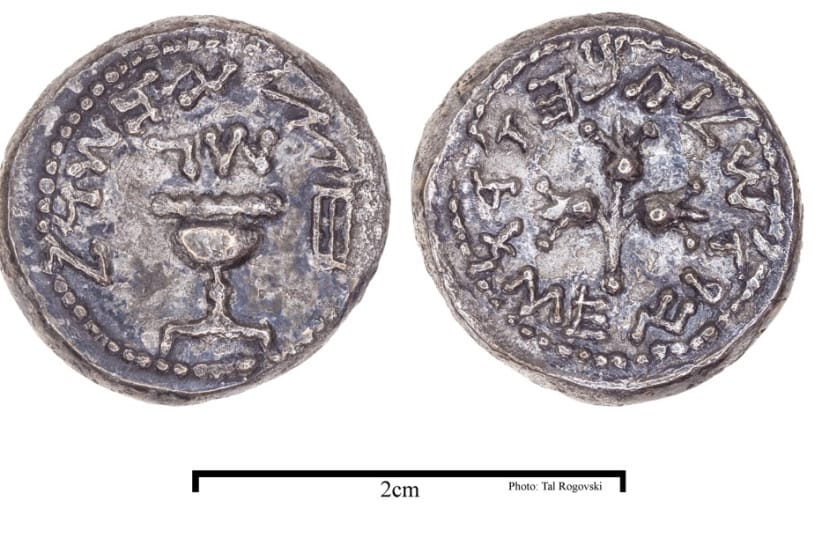
The date comes from coins. Construction is placed around 10 CE on numismatic evidence. The end is in the coins, too: the complex fell out of use in the climax of the siege of Jerusalem in 70 CE, with collapses, piles of ash and dozens of coins from the Great Revolt. Among them, the team says, is a silver half-shekel from the revolt's third year.
The excavators also found an earlier complex below the monumental one. Beneath it were remains of an earlier public complex, also built of ashlar and containing a large ritual bath, apparently dating to the first century BCE. Leibner conceded the exact date is unknown, saying it was probably built in the late Hasmonean period or early in Herod's reign. The team found it after noticing damage in the drainage tunnels, which they attribute to ancient builders cutting through its walls.
The "pilgrim baths" reading rests on three legs: the position at the foot of the stairs to a main Temple entrance, the scale and quality of the construction, and the drainage system. None of these directly shows who used the baths. That is a normal kind of inference in archaeology, and it is best read as the most likely explanation, not a demonstrated fact.
Running water, and a question still open
The most unusual feature is the plumbing. The baths were linked by an underground drainage complex whose walls stood over two meters high. The tunnels carry the water down to the Kidron Valley. Leibner said every bath has a drain hole in its floor, "with a plug, like a modern bath."
That matters because ordinary mikvehs collected rainwater. Here, the sheer dimensions indicate that large quantities of water flowed through, suggesting a permanent source of flowing water, possibly a branch of the aqueduct that supplied the Temple Mount. Leibner's working idea is that the water came from the aqueduct that ran from the Hebron hills past Solomon's Pools. He acknowledged the gap: the team has not yet identified the full route of the channel that brought the water down to the pools.
For Bible readers, flowing water carries weight of its own. Rabbinic tradition, recorded in the Mishnah, ranks grades of water for purification, with spring or running water at the top. The complex fits that concern, but the bridge between the two is built by the researchers, not by the biblical text.
What Scripture says about purification and pilgrimage
The Law of Moses calls for washing before approaching what is holy. Priests were to wash when entering the tent of meeting (Exodus 30:20), and a person made unclean was to bathe his whole body in water (Leviticus 15:16). The Hebrew word mikveh, meaning a gathering of water, appears in Leviticus 11:36.
On pilgrimage, the foundational text is Deuteronomy 16:16, which commands the men to appear before the Lord three times a year: the feasts of Unleavened Bread, Weeks and Tabernacles. The Gospel of John shows how that played out in Jesus' day: before Passover, many went up from the country to Jerusalem "to purify themselves" (John 11:55). Luke says Jesus' parents went to Jerusalem every year for the feast (Luke 2:41), and John has Jesus teaching in the Temple during the Feast of Tabernacles (John 7:14). Later, Paul purified himself before entering the Temple (Acts 21:26).
The Ophel has its own place in the text: 2 Chronicles 27:3 says King Jotham built extensively on the wall of the Ophel. The Second Temple that Herod rebuilt belongs to a later age, and the complex now announced dates to the last six decades of its history.
On the size of the crowds, scholars are careful. The historian Josephus claimed that more than 2.7 million people celebrated Passover in Jerusalem in 66 CE (Jewish War 6.9.3). Leibner called that a vast exaggeration, though a sign of how massive the gathering was. He also noted that archaeologists have yet to find physical evidence of mass pilgrimage in the First Temple period, while the practice is well documented by the end of the Second. He added that rabbinic authorities developed a festival-time workaround under which arrivals in Jerusalem were presumed pure, and that it is unclear whether the Sadducees accepted it.
Where the headlines run ahead of the evidence
Some headlines tie the find to "the time of Jesus." That is true only in a broad sense: the complex was built around 10 CE and used until 70 CE, so it stood during Jesus' adult life. None of the team's statements says that Jesus or his disciples used these baths, and nothing in the find would let anyone say so.
A second stretch comes from the ministry-linked site Patterns of Evidence, which published "Ritual Baths Uncovered at the Temple Mount Support the Bible." It suggests the baths help explain how 3,000 people could have been baptized on the day of Pentecost (Acts 2:41). The site itself frames this as a possible connection to the New Testament's account of the birth of the church. That is the author's hypothesis, not the excavators', and Acts does not say where the baptisms took place. The same article speaks of "hundreds" of ritual baths near the Temple, a figure absent from the team's material. The Armstrong Institute cites 18 pools within a 1,600-square-meter area, and Leibner speaks of dozens of ritual baths in the area.
Readers should also not confuse this with another recent story. In December 2025 the Israel Antiquities Authority announced a rock-hewn mikveh below the Western Wall Plaza. That is a different find, by a different team, in a different part of the Old City.
Finally, what is missing: I could not find an outside specialist assessing the discovery so far. An earlier publication by Yuval Baruch and Ronny Reich described a large miqweh near the western Hulda Gate, in what they called Area A. How that older find relates to the new complex has not been spelled out in the announcements. The Armstrong Institute, which co-sponsors the dig and is tied to Herbert W. Armstrong College, says much more information is coming as research and publication proceed.
Five decades of digging in the same ground
The Ophel is familiar ground for the Hebrew University. Benjamin Mazar began excavating the site in 1968. The Armstrong Institute notes that the big four-sided pool was first exposed in the early 1970s, and that Ambassador College sent hundreds of students there between 1969 and 1976. Part of the four-room complex was uncovered in 2013 and 2018 under Eilat Mazar, Benjamin's granddaughter, who died in 2021.
Leibner took over the area in 2022, and Peleg-Barkat joined in 2023. The fifth and final season ended this summer, with students from Hebrew University, Armstrong College and Yeshiva University working side by side. Funding came from the Israel Science Foundation, the Armstrong Institute and the Hertog Center. The site lies within Jerusalem Walls National Park; the excavation is closed to the public, but the archaeological park can be visited through the Davidson Center.
The next steps are the full scientific publication and tracing the water's route. Meanwhile, a new project under Yosef Garfinkel has opened to the northeast of the same area.
The Ophel archaeological site where a monumental complex housing several Second Temple-era mikvaot were uncovered by the Hebrew University of Jerusalem (south eastern corner), September 23, 2026. (credit: Emil Sadikov) Photo: The Jerusalem Post | JPost.com
Members of the Hebrew University of Jerusalem's archaeology team standing in front of the vaulted mikvah, September 23, 2026. (credit: Aubrey Mercado) Photo: The Jerusalem Post | JPost.com
Silver half-shekel from the third year of the First Jewish Revolt found at the Ophel archaeological site, September 23, 2026. (credit: Tal Rogovski) Photo: The Jerusalem Post | JPost.com
A complex of about 3,000 square feet, with three mikvehs, a large pool and drainage to the Kidron Valley, was excavated in the Ophel at the foot of the stairs to the Triple Gate.
Coins point to construction around 10 CE and abandonment in 70 CE, with dozens of Great Revolt coins on the floors.
One bath keeps its vaulted stone ceiling, 14 feet above the floor.
An earlier complex, probably from the first century BCE, lies beneath it.
What we don't know yet
Whether pilgrims really used the complex, and which ones: the idea rests on location and design, and the team itself raises the possibility of elite users or Temple staff.
Where the water came from and by what route it reached the pools.
What the large central pool was for, since it may have purified vessels.
How outside specialists will judge the find: the full scientific report has not yet appeared.