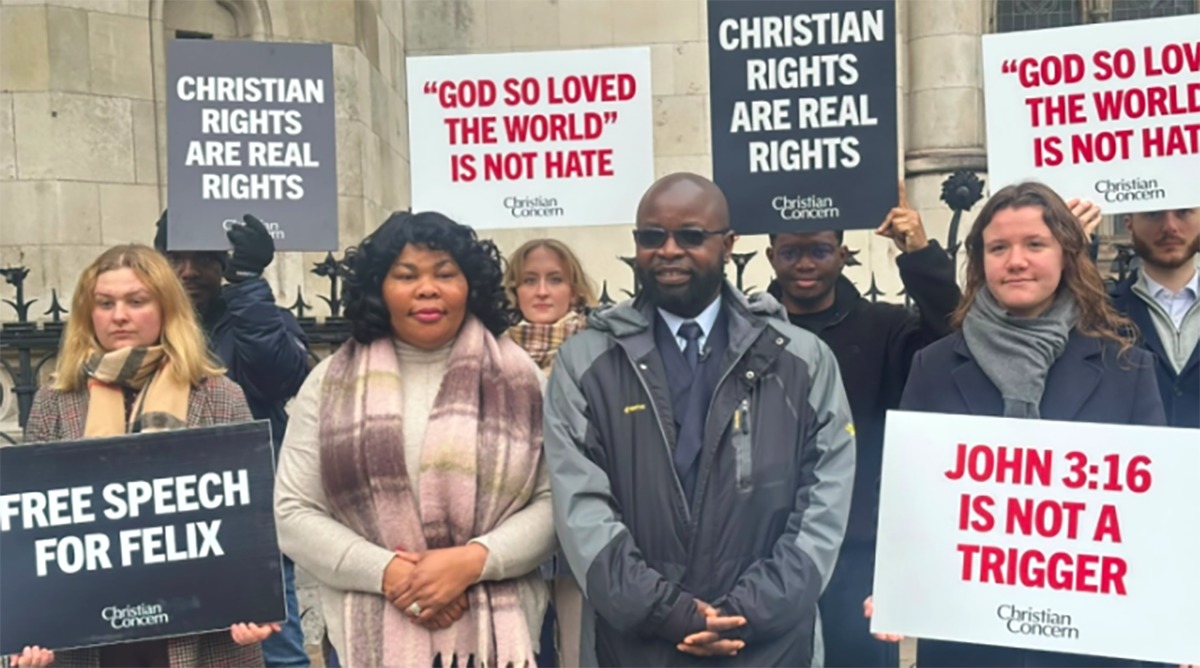
The UK Court of Appeal ruled in a majority decision that mental health charity Touchstone Leeds unlawfully discriminated against Christian social worker Felix Ngole when it withdrew a job offer after discovering his public statements on biblical marriage.
Touchstone offered Ngole a role in 2022 supporting patients leaving hospital in Wakefield, West Yorkshire. However, the charity revoked the offer after an online search uncovered news reports about a previous court case involving comments he had made in 2015. The appellate court ruled in Ngole's favor and refused Touchstone permission to appeal to the UK Supreme Court.
Why the charity refused to employ the social worker
Touchstone argued during legal proceedings that Ngole's public comments could distress service users and staff. The charity invited him to a second interview but ultimately confirmed its refusal to hire him, citing concerns over his alignment with its policies.
Lady Justice Elisabeth Laing rejected the charity's rationale. She noted that Ngole had expressed his beliefs lawfully long before applying for the job, and that the nature of the role did not turn those past lawful statements into something objectionable.
Lord Justice Miles added that media coverage of Ngole's views had heavily driven Touchstone's decision based on speculative reputational concerns, noting that his manner of expression was unobjectionable.
This marks Ngole's second victory at the Court of Appeal. In 2019, the court ruled in his favor against the University of Sheffield, which had expelled him from his master's degree in social work in 2015 over Facebook comments stating traditional Christian views on sexuality.
That earlier ruling established that expressing religious beliefs about sin does not amount to discrimination. Following the 2019 judgment, Ngole completed his degree and qualified as a professional social worker.
Ngole welcomed the latest ruling alongside his legal representatives from the Christian Legal Centre. "Disagreement is not discrimination, and holding biblical beliefs does not make someone a danger to others," Ngole stated outside the court.
The legal framework surrounding the case connects to long-standing biblical principles of faith and conduct, such as 1 Peter 3:15, which instructs believers to give a defense for their hope with gentleness and respect. Ngole's defense team emphasized there was no evidence he had ever treated any client without dignity and care.
Andrea Williams, chief executive of the Christian Legal Centre, noted that the ruling offers clear protection for believers in public roles. No worker can now be barred from their profession for holding that marriage is the lifelong union of one man and one woman.
The Herald covers what almost no one else does: the persecuted church, the discovery that confirms the Bible, the faith that never makes the evening news. No subscription, no paywall, no outside advertisers. If this story mattered to you, help the next one get written.