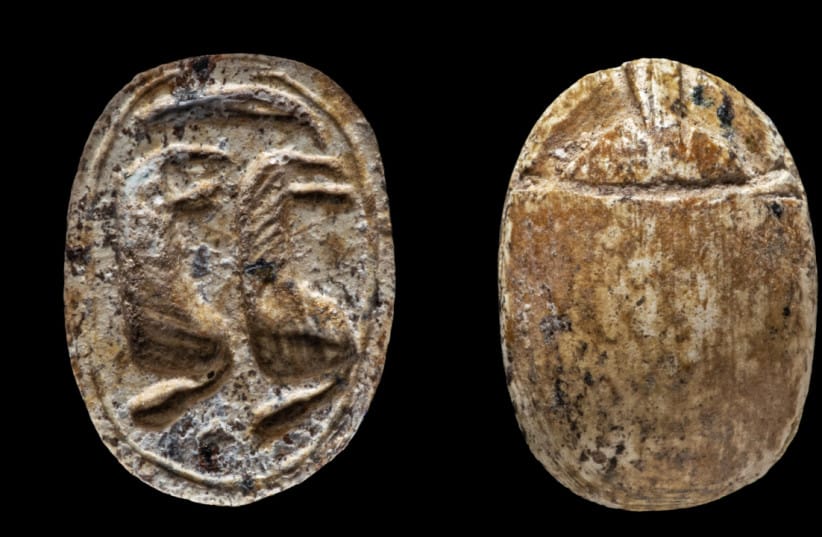
American teen finds 3,300-year-old Egyptian scarab amulet at ancient Tel Gezer: 'In my hand'
Seventeen-year-old Shiloh Attoun discovered a Late Bronze Age seal featuring cobra motifs during a school trip to Israel.
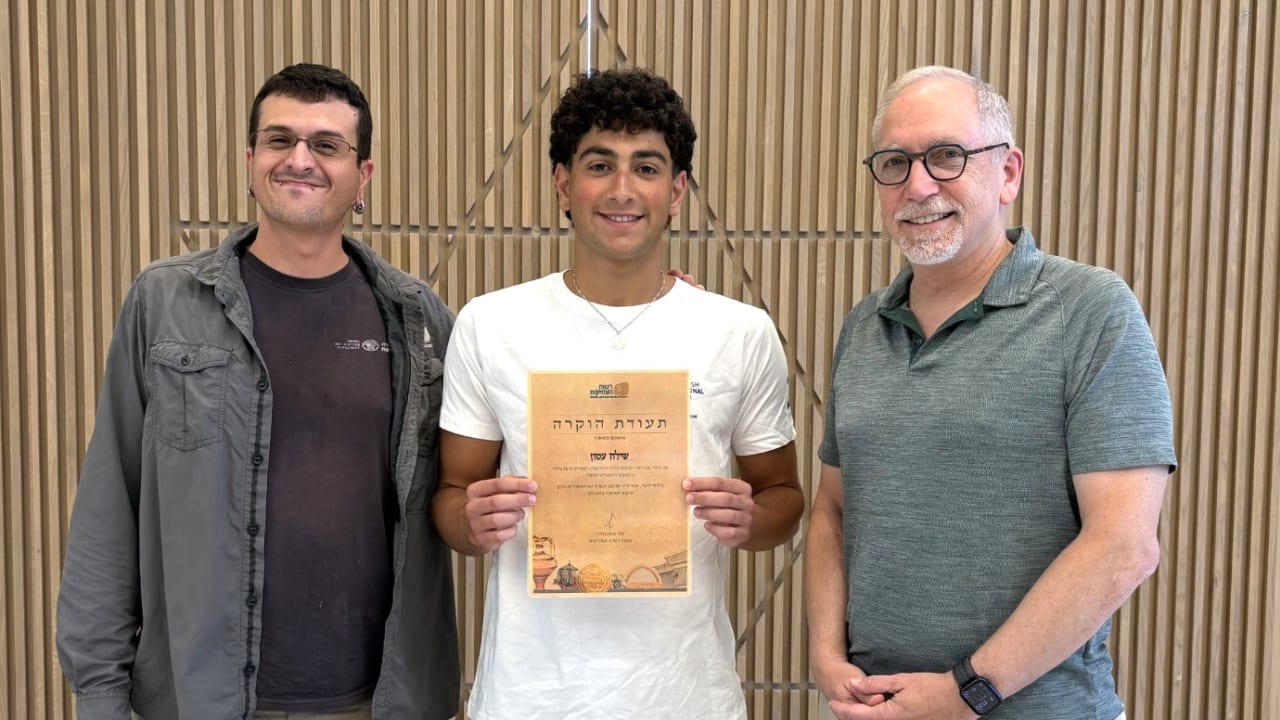
The dusty gravel path of Tel Gezer National Park had just been described to visiting students as an open-air museum where the chances of a casual discovery were minimal. Two days after arriving in Israel to study with Jewish National Fund-USA's Alexander Muss High School in Israel, 17-year-old American student Shiloh Attoun was walking across the ancient Canaanite site when he spotted a small, gleaming object on the ground, according to the Israel Antiquities Authority (IAA). The artifact, a beetle-shaped scarab amulet dating back some 3,300 years, proved to be an intact specimen from the Late Bronze Age.
The piece bears intricate carvings that point directly to ancient Egyptian influence in the region. Professor Ido Koch of Tel Aviv University's Department of Archaeology and Ancient Near Eastern Cultures examined the item, noting that the relief depicts two Uraeus cobras above a semi-ellipse, the hieroglyphic sign for lord. The serpent symbol was widely used as a protective and royal emblem across both Egypt and the southern Levant during the second millennium BCE. Similar scarabs with snake motifs have previously been unearthed during excavations at Tel Megiddo.