In July, armed guards took control of the compound of St. Peter's Evangelical Church in central Tehran, ending decades of community life and worship at the site. The historic property, founded in the 19th century and recognized as the oldest Protestant church compound in the Iranian capital, was transferred to the Execution of Imam Khomeini's Order, a state-controlled organization tasked with confiscating private and religious property under Revolutionary Court rulings. The sudden eviction affected 27 Armenian and Assyrian Christian residents, who saw the premises sealed a month ahead of the deadline previously communicated by authorities.
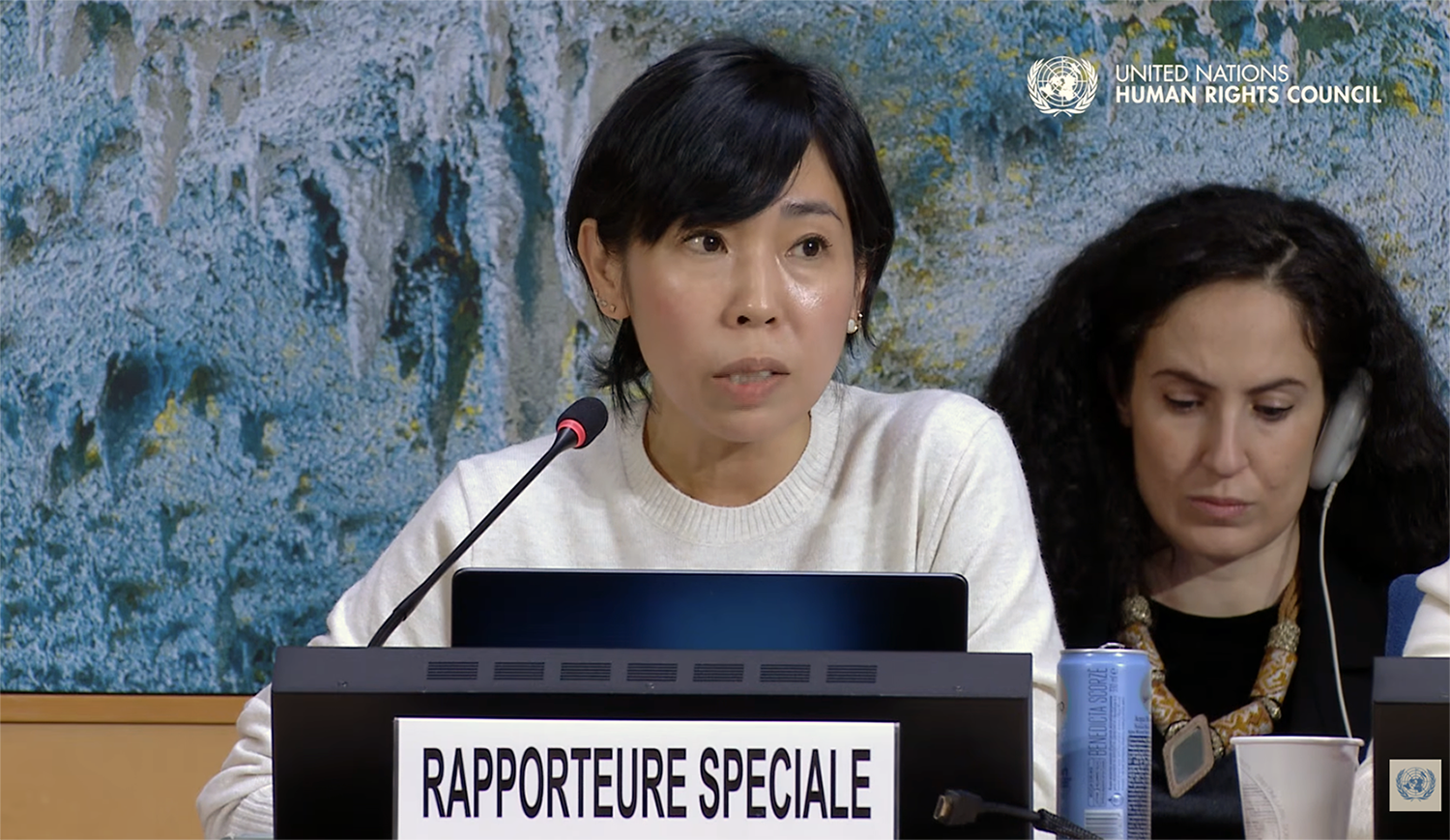
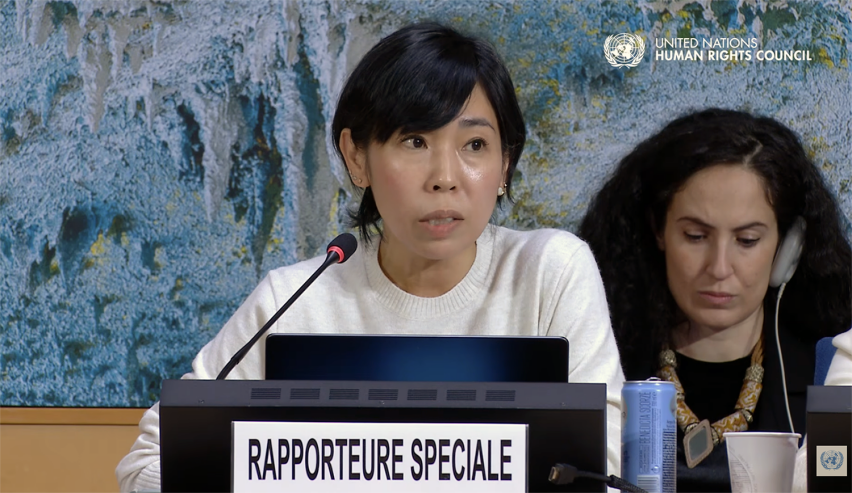
Mai Sato, the U.N. Special Rapporteur on the situation of human rights in Iran, addresses a special session of the U.N. Human Rights Council on the deteriorating human rights situation in Iran, in Geneva, Jan. 23, 2026. Screenshot: YouTube/United Nations Office at Geneva
The enforcement action drew sharp criticism from international observers and exposed the extent of state monitoring over religious practice. The government of Iran has responded to only one of eight formal communications sent by UN human rights experts since 2011 regarding the situation of Christians in the country, according to details disclosed by the UN Special Rapporteur on the situation of human rights in Iran, Dr. Mai Sato. In an interview with monitoring group Article18, the academic from Birkbeck, University of London, emphasized that Tehran's sole formal reply served primarily to label Persian-speaking Christian converts as subversives.
The official Iranian reply, submitted to the United Nations in response to a 2020 communication, maintained that the individuals named had not been prosecuted for their religious faith but for severe national security offenses. In the view of Tehran's Revolutionary Courts, conversion from Islam to Christianity and holding services in the Persian language constitute direct threats to public order. UN reports indicate that the state narrative attempts to draw a distinction between recognized ethnic Christian minorities and new converts, even though the recent seizure demonstrates that recognized historical groups also face property confiscation.
The eviction of Tehran's oldest Protestant church compound
The seizure of St. Peter's Evangelical Church marked a qualitative shift in the pattern of religious oppression reported by international monitors. Previous UN letters concerning Iran had focused largely on the arbitrary arrest, detention, and prosecution of individual Christians, predominantly converts from Islam meeting in private homes. The action against St. Peter's targeted a historical church compound and members of recognized ethnic minorities, such as Armenians and Assyrians, whose freedom of worship is nominally protected under the country's constitution.
State agents seized the compound of St. Peter's Evangelical Church, the oldest Protestant church in the Iranian capital, and evicted 27 residents weeks before the announced deadline. A joint communication issued by Mai Sato and Nazila Ghanea, the UN Special Rapporteur on freedom of religion or belief, called for an immediate reversal of the seizure and warned of a long-standing pattern aimed at erasing Protestant worship from the nation. Iranian authorities have not responded to the joint letter.
The elimination of Persian-language church services has been a gradual and systematic process over recent decades. Religious freedom experts note that, of the approximately 50 Persian-speaking Protestant churches once active in Iran, today effectively none remain open for public services. Authorities have either ordered the closure of facilities or mandated an absolute ban on services conducted in the national language, forcing local believers to gather in private home assemblies.
House churches and Bible distribution treated as espionage
The national security framing deployed by the Iranian regime masks the peaceful practice of Christian faith. In court proceedings brought by the state, charges of propaganda against the Islamic Republic are routinely based on ordinary devotional activities. Reading sacred scripture, gathering for home fellowship, and attending Christian conferences abroad are presented by state prosecutors as foreign intelligence operations or attempts to undermine the regime.
The UN Special Rapporteur explained that an examination of court records reveals that the conduct underlying national security convictions is often entirely benign. Home church gatherings and the simple distribution of Bibles are labeled by the Iranian judiciary as crimes against the state, resulting in long prison sentences in high-security facilities. In one case documented by international monitors, a Christian man was officially labeled a foreign spy simply for traveling abroad to participate in church leadership training.
Iran's sole official reply justified the crackdown by labeling Christian converts from Islam as a serious threat to national security, a stance that disregards international human rights treaties to which Iran is a state party. The denial of fundamental rights subjects Persian-speaking believers to constant surveillance, home raids, confiscation of personal electronic devices, and intense interrogations by security personnel.
Documenting the truth under a mandate denied entry
The work of the Special Rapporteur on the situation of human rights in Iran operates under severe constraints imposed by the host government. Since the Human Rights Council re-established the mandate in 2011, no rapporteur has been permitted to enter Iran. As a result, official reports are compiled through interviews with diaspora communities in third countries, witness testimonies, and verified data provided by civil society organizations tracking human rights in the region.
Sato, who assumed the independent and unpaid role in August 2024 while maintaining her academic post at the University of London, acknowledged the barriers created by Iran's refusal to cooperate. Iranian authorities refuse to recognize the legitimacy of her mandate and ban her from entering the country, even as UN experts on other topics, such as housing or sanctions, have been granted entry. Given this enforced exclusion, the mandate relies on secure communications established by partner organizations to receive first-hand accounts from victims.
While the rapporteur lacks executive power to overturn judicial sentences or halt property confiscations, she emphasizes that the mandate fulfills a vital truth-telling and evidence-preservation function. Rigorous documentation ensures that state narratives do not remain the sole record of events. The primary objective of her work is to monitor, document, and preserve evidence of what victims and their families endure, building an official institutional record that can support future accountability mechanisms.
Scriptural reflection on solidarity and perseverance
The experience of the church in Iran reflects the reality of suffering and resilience described throughout the New Testament. In Hebrews 13:3, scripture instructs believers to maintain active fellowship with those facing persecution: "Continue to remember those in prison as if you were together with them in prison, and those who are mistreated as if you yourselves were suffering." This spiritual bond connects the global body of Christ with Iranian believers enduring the loss of their houses of worship and the restriction of their personal freedom.
Despite regional conflicts, political instability, and widespread crackdowns on domestic protests that dominate international headlines, the daily reality of religious freedom in Iran remains a critical human rights concern. Sato noted in her message to affected families that living entails more than basic physical survival, encompassing the right to practice one's faith, gather with fellow believers, and raise a family without fear of state reprisal.
In light of ongoing pressures, victims of religious rights violations and prisoners of conscience are encouraged to continue sharing their testimonies whenever it is safe to do so. Sato urged persecuted Iranian Christians to keep sharing their experiences safely with her mandate or through trusted partner organizations. Each documented account contributes to the permanent international record, ensuring that acts of injustice against the Christian community in Iran are fully recorded.