Imprisoned in a maximum-security cell inside the 10th of Ramadan Prison, roughly 30 miles outside Cairo, Egyptian citizen Said Mansour Rezk Abdelrazek faces the immediate threat of execution. Suffering from a heart condition and weakened by months of abuse, he was informed by his defense counsel of the prosecution's formal demand: prosecutors are pursuing the death penalty or 25 years in prison on charges of contempt for Islam and terrorism.
Abdelrazek, who converted from Islam to Christianity, was arrested by Egyptian authorities in July 2025. Since then, his detention has been defined by secret proceedings and his unyielding refusal to abandon his Christian faith. According to his legal representative, attorney Said Fayez, the fabricated charges include running a non-existent terrorist organization, a legal tactic frequently deployed by the state to justify maximum sentences against dissidents and converts.
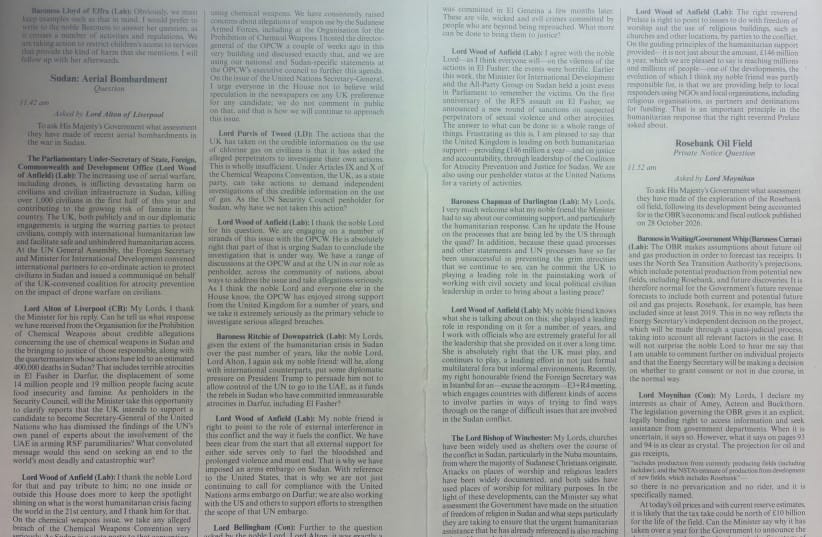
Questions raised in the UK Parliament over the imprisonment of Said Abdelrazek in Egypt. (credit: @DavidAltonHL/X/Twitter/27a) Photo: The Jerusalem Post | JPost.com
What we know
Said Abdelrazek has been held at 10th of Ramadan Prison since July 2025.
Egyptian prosecutors are formally seeking execution or 25 years in prison.
His legal team reports physical torture and denial of medical care for a heart condition.
The court adjourned the hearing until December 8, 2026, for defense arguments.
What we don't know yet
The ultimate verdict to be delivered by the Egyptian court on December 8, 2026.
Whether international diplomatic inquiries will influence the judicial outcome.
From social media posts to a Ramadan dungeon
Abdelrazek's legal ordeal illustrates the severity with which the Egyptian state apparatus treats Muslim citizens who choose to follow Christianity. In 2023, he was arrested for the first time over allegations of posting videos online that depicted the desecration of the Quran. After serving a one-year sentence, he sought refuge in Russia in hopes of securing political asylum. However, his application was rejected, leading to his deportation back to Egypt.
Upon returning home in 2024, Abdelrazek was briefly detained again. State pressure escalated sharply in April 2025 after he began publishing social media content sharing his conversion story and initiated formal administrative steps to legally change his religious status on official identity documents. In Egypt, converting from Christianity to Islam is encouraged and streamlined by law, but the reverse process encounters nearly insurmountable legal barriers, leaving converts without civil protections.
In July 2025, state security officers arrested Abdelrazek once more. This time, formal charges escalated significantly. NGO Coptic Solidarity reported that prosecutors charged him with contempt for Islam, inciting public disorder, spreading false information, and joining a banned terrorist organization, an accusation carrying the legal possibility of capital punishment.
Physical torture and allegations of medical negligence
Beyond the gravity of the legal charges, his legal team has denounced severe physical abuse inflicted on the prisoner. According to statements released by Said Fayez's law firm, Abdelrazek has been held in inhumane conditions inside the 10th of Ramadan Prison complex. Defense lawyers state that he was subjected to physical torture, including being tied in a crucifixion position, during which interrogators demanded he publicly renounce his faith in Christ.
The defense team also reported systematic medical negligence. Despite having a heart stent and suffering severe health complications from isolation and assaults, the convert has been consistently denied medical care. His lawyers maintain that charging him with managing a non-existent group is merely a pretext to punish him for identifying as a Christian and to force his spiritual recantation.
Blasphemy laws and the plight of Egyptian converts
Abdelrazek's case is part of a broader framework of religious freedom restrictions in Egypt. While the Egyptian Constitution guarantees freedom of belief, the Penal Code criminalizes contempt of monotheistic religions. In practice, these statutes are disproportionately weaponized against religious minorities and ex-Muslims who embrace Christianity, who also face intense social and familial hostility.
For the Christian church, the suffering of believers in custody echoes biblical warnings regarding the price of bearing witness. New Testament epistles frequently remind believers to remain steadfast under trial. In 2 Timothy 4:7-8, the Apostle Paul reflects on perseverance amidst persecution: "I have fought the good fight, I have finished the race, I have kept the faith. Now there is in store for me the crown of righteousness." It is this commitment that Abdelrazek's defense team observes in his refusal to deny his faith before the court.
International outcry and the upcoming court hearing
The case has drawn growing international attention. In the United Kingdom, Lord David Alton confirmed raising Abdelrazek's plight in the British Parliament, demanding diplomatic scrutiny over the treatment of Egyptian converts. In the United States, the State Department raised official concerns with Congress regarding arbitrary detentions and blasphemy prosecutions in Egypt.
Following a court hearing in November 2026 where prosecutors formally demanded the maximum penalty, the court adjourned the case. The judge set the next hearing for December 8, 2026, allowing defense attorneys their opportunity to present final arguments and attempt to prevent the death sentence.
News on the church today and the history behind the Bible, with linked sources and a "Not yet confirmed" label whenever a link to the Bible hasn't been shown.