Speaking to leaders of diaspora churches in Queens, a New York borough home to people from roughly 120 nations, Indonesian pastor Bambang Budijanto presented the figures of a historical transformation. The nation with the world's largest Muslim population, where Christianity expanded through seasons of spiritual revival and episodes of severe persecution, is transitioning from a mission field into one of the world's major missionary sending forces.
The initiative is led by the Indonesian Alliance for World Mission, known by its Indonesian acronym ALUSIA, an organization founded in 2023 that brings together local churches and sending agencies. The group's target is to send 30,000 Indonesian missionaries to serve other nations by the year 2033, exactly one year before the 500th anniversary of the arrival of the first European evangelists in the archipelago. The movement marks a strategic shift for the Indonesian church, which now forms a vibrant faith community in Southeast Asia.
A historical debt to the nations of the world
The history of Christianity in Indonesia began in 1534, when the first foreign missionary landed in the Maluku Islands in 1534, in the eastern region of the territory. That pioneer missionary died about a year after arriving, but the seed planted over five centuries ago has yielded substantial fruit. Today, about 30 million Christians live in the country, making Indonesia home to one of the largest Christian populations in Asia.
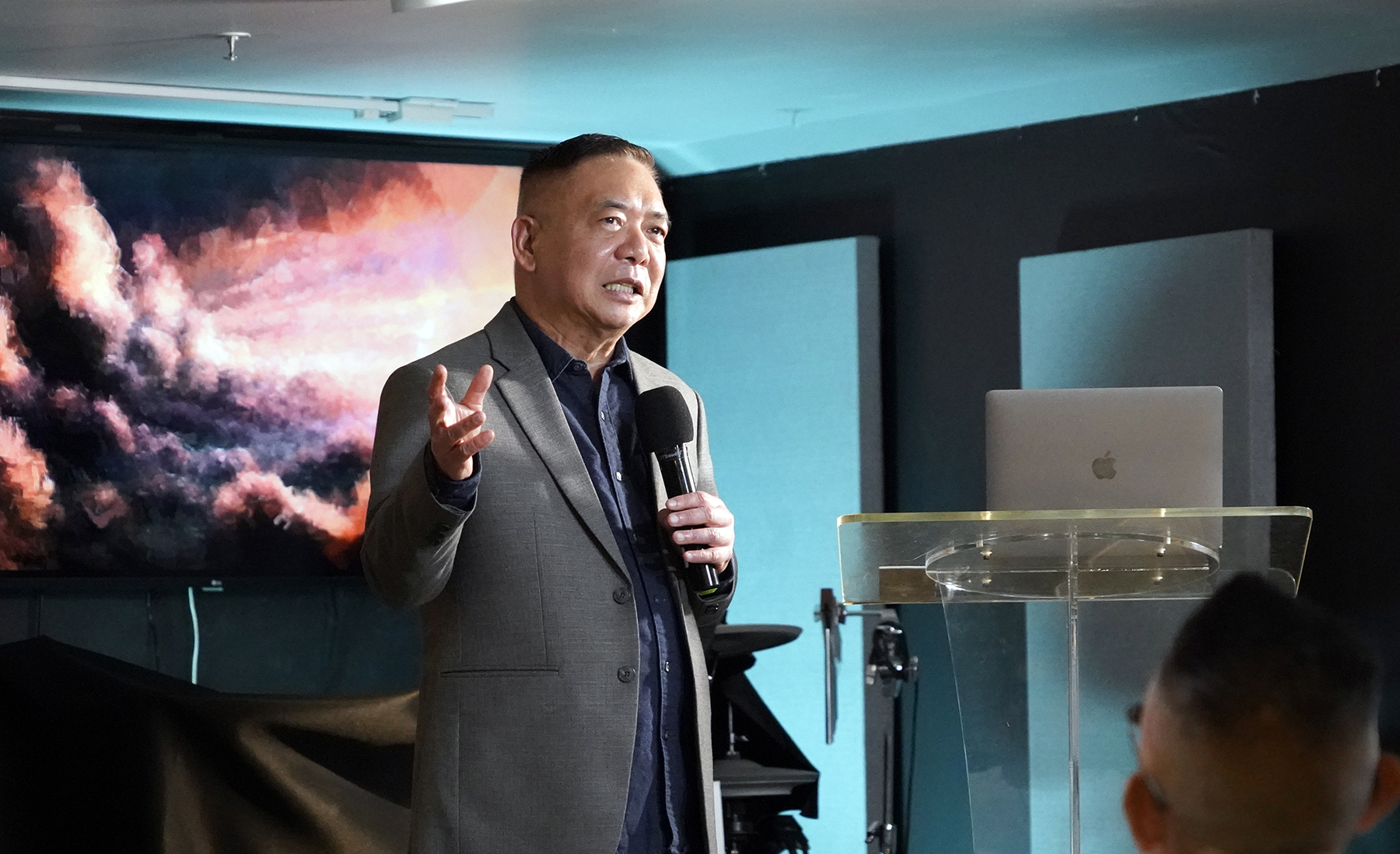
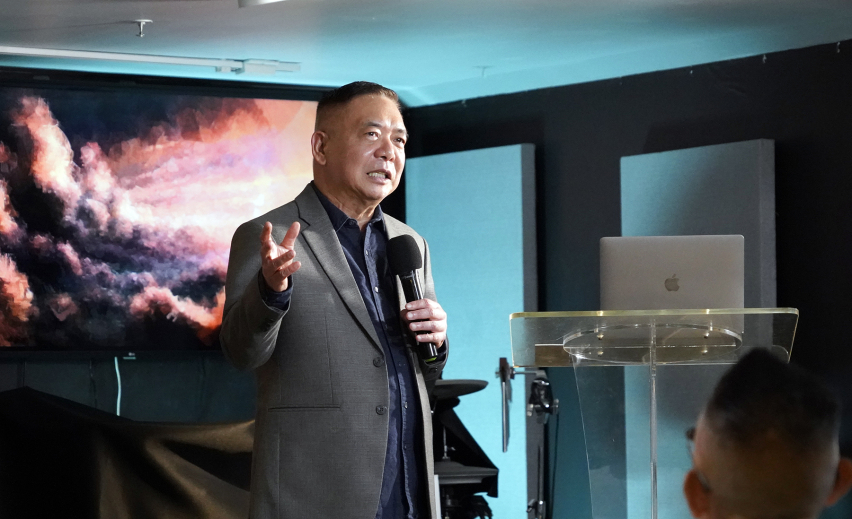
Dr. Bambang Budijanto, chair of ALUSIA and general secretary of the Asia Evangelical Alliance, speaks to Indonesian diaspora church leaders in Queens, New York, on Oct. 21, 2026. Budijanto noted that people from about 120 nations live in a single area of the borough. Christian Daily International Photo: christiandaily.com (aguardando autorização)
During meetings with Indonesian diaspora leaders in New York and Philadelphia, Dr. Budijanto, who also serves as general secretary of the Asia Evangelical Alliance, explained that the local church owes a moral debt to the rest of the world. He emphasized that the growth of faith across the archipelago was sustained by the sacrifices of foreign missionaries, and that the time has come to honor that legacy by sending workers to cross-cultural fields.
The mission leader pointed to the biblical words of Isaiah 52:7, also quoted by the Apostle Paul in Romans 10:15, declaring the honor of those who bring good news and proclaim peace. Budijanto noted that numerical growth in local churches has plateaued in recent years because leadership focused excessively on internal needs, making a renewed vision for global outreach essential.
Waves of revival in the jungles and metropolises
The preparation of the Indonesian church for cross-cultural sending began decades ago, fueled by seasons of intense spiritual renewal. A foundational landmark occurred with the 1965 revival in the town of Soe on the island of Timor, an event documented internationally by evangelist Mel Tari in accounts that detailed mass conversions and spiritual awakenings across the region.
During the 1970s, the revival movement swept through the Dayak people in the rainforests of Borneo, transforming tribal and riverbank communities. By the late 1970s and 1980s, the renewal reached the country's major urban centers. By 1984, estimates indicated there were more than 5,000 prayer groups active in the capital Jakarta alone, establishing a deep spiritual base that would sustain the church through subsequent trials.
These experiences of spiritual renewal forged the identity of the church across the archipelago, teaching believers to draw strength from corporate prayer and personal evangelism even under challenging social conditions.
Prayer for persecution and the unity of the church
In the 1980s, while working as a translator for Brother Andrew, founder of Open Doors, the young Budijanto accompanied the Dutch missionary on journeys through rural Indonesia. On one occasion, Brother Andrew had to travel on foot to reach the roadless village where Budijanto lived.
During a pastors' conference marked by denominational division and rivalry, Brother Andrew offered a striking prayer. Seeing the lack of unity among the leaders, the Open Doors founder asked the assembled pastors to pray that God would allow persecution, if that was the only way to unite the Indonesian church around the cause of Christ.
In the years that followed, Indonesia endured waves of severe sectarian violence. Between the late 1990s and early 2000s, armed conflicts and extremist attacks destabilized regions, causing loss of life and deep community trauma. During this turbulent period, more than 500 Christian churches were burned in waves of violence, particularly in the Maluku Islands, where intercommunal clashes left deep scars.
The tragedy produced the unity Brother Andrew had envisioned. Denominational barriers broke down, and evangelical leaders joined together in a national prayer movement launched in 1991 by seven regional coordinators. Today, exactly 534 Indonesian cities maintain prayer towers with continuous 24-hour intercession, a model that has spread to other Asian nations such as Myanmar.
Maturing a vision that stalled in the past
The vision of turning Indonesia into a missionary-sending nation is not entirely new. In the 1990s, Budijanto attempted to establish a missionary training network in Europe, drawing on thousands of Indonesian students pursuing graduate degrees in the Netherlands and Germany through government scholarships.
Many of those students had come to faith while studying in Europe but faced difficulty securing suitable employment upon returning home. The initiative sought to deploy these qualified graduates into mission work across the Middle East and China, leveraging Indonesian passports and cultural adaptability in Muslim-majority settings. However, the organization did not survive due to institutional immaturity and lack of structural unity among participating groups.
By 2023, the landscape had changed significantly. Budijanto convened leaders from 14 established Indonesian sending agencies, all of whom agreed that the church had reached an opportune moment for coordinated action.
ALUSIA was legally incorporated as an association governed by a general assembly, modeled after the structure of the World Evangelical Alliance. Following a soft launch in Jakarta and a national release in Bali, the alliance organized regional gatherings in provinces such as Central Java and North Sumatra to mobilize local pastors.
An ambitious goal backed by clear metrics
The numerical challenge undertaken by the alliance is substantial. Baseline research conducted by the organization revealed that only 800 Indonesian missionaries served abroad in 2020, with more than half ministering to Indonesian diaspora communities rather than cross-cultural populations.
The goal of sending 30,000 missionaries by 2033 represents approximately 0.1% of the nation's total Christian population. To achieve this, ALUSIA set a target of reaching at least 20% of the country's 100,000 congregations, guiding them to become active missional churches.
Official government records list approximately 73,000 recognized Protestant church buildings, but researchers estimate the actual total exceeds 100,000 when counting house churches and congregations meeting in commercial spaces.
For a congregation to qualify as a missional church under ALUSIA's framework, it must fulfill at least four of five criteria: financial giving to global missions, sending workers, regular intercession for global fields, internal capacity building, and practical collaboration with other bodies.
As ALUSIA continues its regional conferences across Indonesian provinces, its leadership provides data and resources to local pastors. In his talks in Queens and Philadelphia, Dr. Budijanto reiterated that the main objective goes beyond counting individuals abroad to establishing a lasting culture of global service involving professionals, students, and families across the world.